


Aliev discusses possible future status of Karabakh as an autonomous republic within Azerbaijan(updated with Stepanakert reaction)

Updated

The president of Azerbaijan, Ilham Aliev, has given a glimpse of his thinking on how a settlement of the Nagorno-Karabakh conflict can happen, and his view of possible future status of the territory. Speaking in an interview with the Russian news agency Sputnik, as quoted by APA, the president said that he saw Nagorno-Karabakh status as being that of an autonomous republic within Azerbaijan, whilst all the other adjoining territories currently occupied by Armenia should be returned back to Azerbaijan. The President dismissed any prospect that Azerbaijan will agree to the independence of Nagorno-Karabakh.

"A reasonable compromise is possible - ensuring security of the people of Nagorno-Karabakh, their livelihoods, local government, the implementation of various investment projects on the part of Azerbaijan and peaceful interaction between the two nations on the condition of liberation of territories outside Nagorno-Karabakh autonomous region. This is how we see the settlement of the conflict. This overlaps with the proposals which are put forth by the co-chairs [of the OSCE Minsk Prrocess] and which we are currently working on," APA quoted president Aliev as saying.

According to the president, Azerbaijan's position is that people should be allowed to live where they once used to live, because they had been living there for a long period.

According to the president, there can be no compromise on the territorial integrity of Azerbaijan, as Baku would never agree to Nagorno-Karabakh's independence.

"We will never agree to the granting of independence to Nagorno-Karabakh. The Armenian side knows it too well," said Ilham Aliyev. But there can be compromise on the issues of local self-government. In the future, if we manage to agree, it [Karabakh] may become an autonomous republic. We cannot make more compromises", he added.

In a swift reaction, a spokesperson for the self-declared Nagorno-Karabakh Republic (NKR) said Aliev's statement "yet again demonstrates to what extent Baku is not ready for a comprehensive and lasting settlement of the conflict". Davit Babayan told Armenian media that "this latest statement by Aliev is destructive, and causes nothing but laughter and pity".

source: commonspace.eu with APA

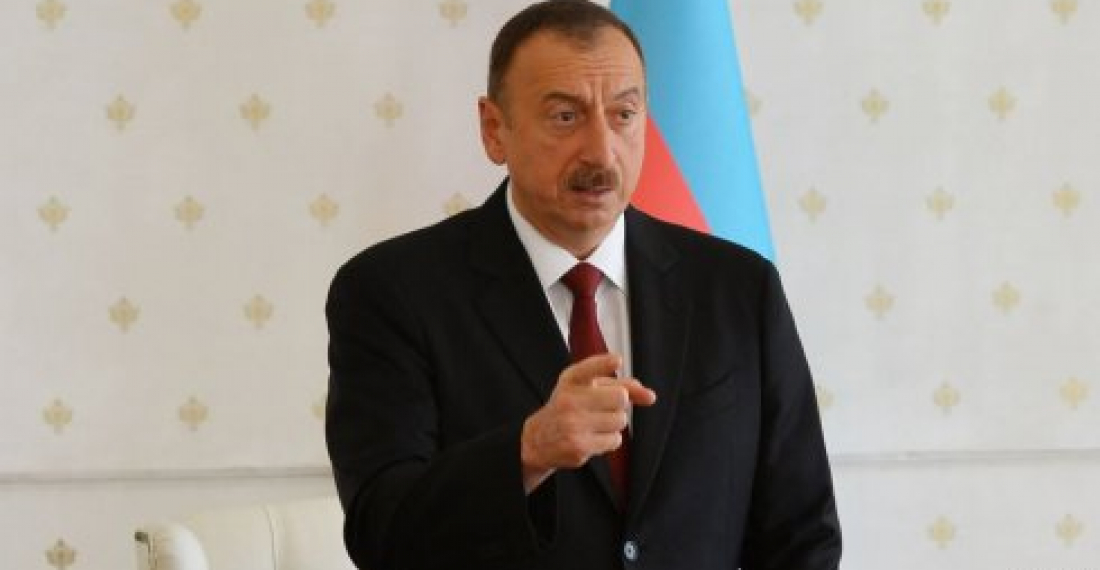
photo: Ilham Aliev (archive picture)


Related articles

Editor's choice
News
Pope on Christmas Day: "Peace is a shared responsibility"

Pope on Christmas Day: "Peace is a shared responsibility"

In his Christmas address on St Peter's Square, Pope Leo XIV renewed his plea for peace, reminding the world that it is both God’s gift and humanity’s shared responsibility. Pope Leo XIV renewed his appeal for peace, dialogue, and responsibility, turning to those regions where violence and instability continue to claim innocent lives. The Pope prayed for “justice, peace, and stability for Lebanon, Palestine, Israel, and Syria,” and urged that the promise of peace rooted in righteousness be renewed. He appealed in a particular way for Ukraine, asking that “the clamor of weapons cease,” and that all those involved, with the support of the international community, find the courage to engage in “sincere, direct, and respectful dialogue.” Remembering conflicts that risk being forgotten, Pope Leo XIV expressed closeness to the victims of war and violence in Sudan, South Sudan, Mali, Burkina Faso, and the Democratic Republic of Congo, as well as to all those who suffer as a result of injustice, political instability, religious persecution, and terrorism. The Pope also prayed for Haiti, calling for an end to violence and progress along the path of peace and reconciliation. He also invoked peace for Myanmar, asking that the country be guided towards reconciliation and hope, especially for its younger generations. Turning to Latin America, he encouraged those with political responsibilities to give space to dialogue for the common good, rather than to ideological and partisan divisions. The Pope also prayed for the restoration of the "ancient friendship" between Thailand and Cambodia, and entrusted to God the peoples of South Asia and Oceania, who have been severely affected by recent natural disasters, calling for renewed commitment to assisting those who suffer.

Popular

Editor's choice
News
Pope on Christmas Day: "Peace is a shared responsibility"

Pope on Christmas Day: "Peace is a shared responsibility"

In his Christmas address on St Peter's Square, Pope Leo XIV renewed his plea for peace, reminding the world that it is both God’s gift and humanity’s shared responsibility. Pope Leo XIV renewed his appeal for peace, dialogue, and responsibility, turning to those regions where violence and instability continue to claim innocent lives. The Pope prayed for “justice, peace, and stability for Lebanon, Palestine, Israel, and Syria,” and urged that the promise of peace rooted in righteousness be renewed. He appealed in a particular way for Ukraine, asking that “the clamor of weapons cease,” and that all those involved, with the support of the international community, find the courage to engage in “sincere, direct, and respectful dialogue.” Remembering conflicts that risk being forgotten, Pope Leo XIV expressed closeness to the victims of war and violence in Sudan, South Sudan, Mali, Burkina Faso, and the Democratic Republic of Congo, as well as to all those who suffer as a result of injustice, political instability, religious persecution, and terrorism. The Pope also prayed for Haiti, calling for an end to violence and progress along the path of peace and reconciliation. He also invoked peace for Myanmar, asking that the country be guided towards reconciliation and hope, especially for its younger generations. Turning to Latin America, he encouraged those with political responsibilities to give space to dialogue for the common good, rather than to ideological and partisan divisions. The Pope also prayed for the restoration of the "ancient friendship" between Thailand and Cambodia, and entrusted to God the peoples of South Asia and Oceania, who have been severely affected by recent natural disasters, calling for renewed commitment to assisting those who suffer.

