World reacts to Karabakh fighting

World leaders have been quick to condemn this weekend’s fighting between Armenia and Azerbaijan in Nagorno-Karabakh, with Russia, the USA and the EU calling for an immediate ceasefire. Some regional actors, such as Turkey and the Collective Treaty Security Organisation, have apportioned blame. 

The fighting, violating a truce which had been observed over the Easter and Novruz holiday period, is the worst to hit the province since a 1994 ceasefire.

The Armenian president said 18 Armenian troops have been killed and 35 wounded. Azerbaijan’s defence ministry said 12 of its troops are dead. Both sides are claiming civilian casualties, and to have killed many more of the enemy.

Russia’s president Vladimir Putin called for both sides to stop fighting on Saturday, while the country’s foreign minister, Sergei Lavrov, and defence minister, Sergey Shoygu, spoke with their Armenian and Azerbaijani counterparts by phone. Russia has close relations with both Armenia and Azerbaijan, and sells weapons to both. 

There are reports that Russia brokered a cessation of hostilities around 11.00 GMT on Saturday morning, but that this agreement unravelled soon after.

The co-chairs of the OCSE Minsk Group, which has been attempting to resolve the conflict since 1994, will meet in Vienna tomorrow ahead of a full meeting of the Minsk Group on Tuesday. This extraordinary step was confirmed yesterday by Ambassador James Warlick, the American co-chair.

In recent years, both sides have built up large military positions on either side of the disputed border, and there have been many small skirmishes resulting in casualties. However this round of fighting appears to be the worst in two decades.

Europe’s foreign policy chief Federica Mogherini also called for both parties to stop fighting and observe the 1994 ceasefire. “The European Union fully supports the efforts of the OSCE Minsk Group and the three Co-Chairs,” she said.

Her comments were echoed by US Secretary of State John Kerry. “The unstable situation on the ground demonstrates why the sides must enter into an immediate negotiation under the auspices of the OSCE Minsk Group Co-Chairs on a comprehensive settlement of the conflict,” he said.

The Russian-led Collective Treaty Security Organisation (CSTO), which Armenia is a member of but Azerbaijan left in 1999, explicitly blamed Azerbaijan for the fighting, while calling for peace.

“Azerbaijani party's actions in this case lead to an aggravation of the situation and the conflict,” CSTO spokesman Vladimir Zainetdinov said

 in an interview with Interfax, a Russian newspaper.

However he also said that matters should be resolved through negotiations, and that "armed military solution to Nagorno Karabakh conflict does not exist”.

Meanwhile Turkey, which has strong cultural and linguistic ties to Azerbaijan, and no diplomatic relations with Armenia, says Armenia is responsible for the outbreak of fighting.

"We pray our Azerbaijani brothers will prevail in these clashes with the least casualties," said Turkish President Recep Erdogan said in Washington DC on Sunday. “We will support Azerbaijan to the end," he said.

Erdogan also blamed the Minsk Group co-Chairs, saying that their lack of activity resulted in the fresh fighting.

"If the Minsk Group had taken fair and decisive steps over this, such incidents would not have happened. However, the weaknesses of the Minsk Group unfortunately led the situation to this point,” he said.

Azerbaijan’s defence minister has also been speaking to his Turkish counterpart and the head of the Turkish armed forces, while President Ilham Aliyev of Azerbaijan spoke with his Turkish counterpart Ahmed Davutoglu.

Relations between Russia and Turkey are tense after a Russian plane was shot down on the Turkey-Syria border in November.

Sergei Zheleznyak, vice speaker of the Russian state Duma, has blamed an unspecified "third force" for the fighting.  

"That’s why the Russian president and our government agencies urge Armenia and Azerbaijan to cease fire and not to allow to draw them into someone else’s insidious game," he said.

SOURCES: commonspace.eu and agencies

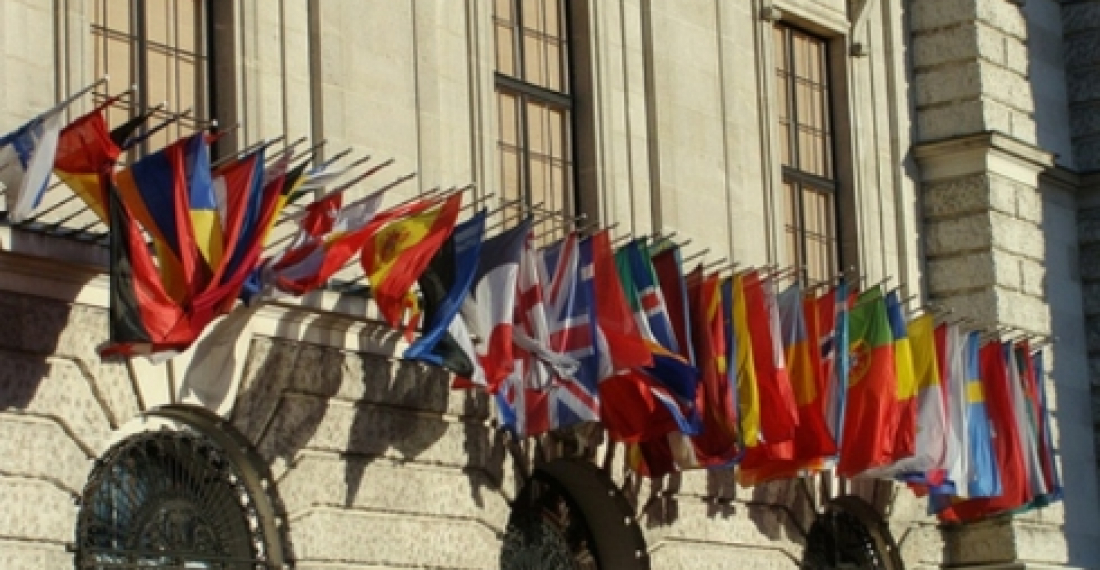
PHOTO: OSCE headquarters in Vienna, Austria
Related articles

Editor's choice
News
Council of Europe launches new International Claims Commission for Ukraine

Council of Europe launches new International Claims Commission for Ukraine

Thirty-four countries and the European Union have signed a new convention establishing an International Claims Commission for Ukraine at a diplomatic conference co-hosted by the 46-nation Council of Europe and the Netherlands in the Hague. The diplomatic conference was attended by leaders and high-level representatives from over 50 states, including the President of Ukraine, Volodymyr Zelenskyy, the President of the Republic of Moldova, Maia Sandu, and the Prime Minister of the Netherlands, Dick Schoof.  “Today marks a major step forward in ensuring accountability for Ukraine. The International Claims Commission represents justice and hope for tens of thousands of victims—our determination that those who have suffered will not be forgotten. I call for quick ratifications so we can get the commission rapidly up and running for the people of Ukraine,” said Council of Europe Secretary General Alain Berset. Ukrainian President Volodymyr Zelenskyy said: “We expect that every mechanism for compensation from the Register of Damage and Claims Commission to the actual payments – will start working and receive strong and sufficient international support, so that people can truly feel that any kind of damage caused by the war can be compensated. This war, and Russia’s responsibility for it, MUST become a clear example – so that others learn not to choose aggression.” “Accountability is about creating the conditions for peace that endures. And therefore, accountability is a condition of security – today and for the future. But accountability is not only about Ukraine. And it is not only about one aggressor and one victim. Accountability is about Europe. About every country in Europe. It is about whether Europe, as a whole, is willing to defend its peace,” said Maia Sandu, President of the Republic of Moldova, which currently holds the Presidency of the Council of Europe’s Committee of Ministers. The Prime Minister of the Netherlands, Dick Schoof, said: “Every day Russia is deliberately bombarding homes, destroying businesses and damaging infrastructure in Ukraine. Russia must compensate Ukraine for the damage caused. That is why we have launched the International Claims Commission for Ukraine and we are honoured to host it.” The International Claims Commission will be the second part of a comprehensive compensation mechanism related to Russia’s war of aggression, building on the existing Register of Damage for Ukraine. The claims commission will be established within the framework of the Council of Europe and will also be open to other countries. The Register of Damage for Ukraine, created in 2023, collects and records compensation claims submitted by individuals, organisations and public bodies in Ukraine. Forty-four states and the European Union have so far joined the Register, which has already received 86,000 claims. The International Claims Commission will review, assess and decide upon claims submitted to the Register of Damage for Ukraine and determine the amount of compensation, if any, which is due in each case. The convention establishing the commission will enter into force once it has been ratified by 25 signatories, as long as sufficient funds have been secured to support its initial work.

Popular

Editor's choice
News
Council of Europe launches new International Claims Commission for Ukraine

Council of Europe launches new International Claims Commission for Ukraine

Thirty-four countries and the European Union have signed a new convention establishing an International Claims Commission for Ukraine at a diplomatic conference co-hosted by the 46-nation Council of Europe and the Netherlands in the Hague. The diplomatic conference was attended by leaders and high-level representatives from over 50 states, including the President of Ukraine, Volodymyr Zelenskyy, the President of the Republic of Moldova, Maia Sandu, and the Prime Minister of the Netherlands, Dick Schoof.  “Today marks a major step forward in ensuring accountability for Ukraine. The International Claims Commission represents justice and hope for tens of thousands of victims—our determination that those who have suffered will not be forgotten. I call for quick ratifications so we can get the commission rapidly up and running for the people of Ukraine,” said Council of Europe Secretary General Alain Berset. Ukrainian President Volodymyr Zelenskyy said: “We expect that every mechanism for compensation from the Register of Damage and Claims Commission to the actual payments – will start working and receive strong and sufficient international support, so that people can truly feel that any kind of damage caused by the war can be compensated. This war, and Russia’s responsibility for it, MUST become a clear example – so that others learn not to choose aggression.” “Accountability is about creating the conditions for peace that endures. And therefore, accountability is a condition of security – today and for the future. But accountability is not only about Ukraine. And it is not only about one aggressor and one victim. Accountability is about Europe. About every country in Europe. It is about whether Europe, as a whole, is willing to defend its peace,” said Maia Sandu, President of the Republic of Moldova, which currently holds the Presidency of the Council of Europe’s Committee of Ministers. The Prime Minister of the Netherlands, Dick Schoof, said: “Every day Russia is deliberately bombarding homes, destroying businesses and damaging infrastructure in Ukraine. Russia must compensate Ukraine for the damage caused. That is why we have launched the International Claims Commission for Ukraine and we are honoured to host it.” The International Claims Commission will be the second part of a comprehensive compensation mechanism related to Russia’s war of aggression, building on the existing Register of Damage for Ukraine. The claims commission will be established within the framework of the Council of Europe and will also be open to other countries. The Register of Damage for Ukraine, created in 2023, collects and records compensation claims submitted by individuals, organisations and public bodies in Ukraine. Forty-four states and the European Union have so far joined the Register, which has already received 86,000 claims. The International Claims Commission will review, assess and decide upon claims submitted to the Register of Damage for Ukraine and determine the amount of compensation, if any, which is due in each case. The convention establishing the commission will enter into force once it has been ratified by 25 signatories, as long as sufficient funds have been secured to support its initial work.