Azerbaijan is preparing tough legislation that aims to stop all contacts between its citizens and the citizens of Armenia. A new law is being considered by the Azerbaijan Parliament and will be put in front of the full session of the Parliament soon.
According to the Azerbaijani news Agency, APA, the 7th article of the new draft law states that
"Any Azerbaijani citizen, who cooperates with any organization and agency of the aggressor state, as well as their representatives until the occupied the territories are liberated, will be brought to justice".
The agency states that "The article says that except for representatives of central executive authorities and diplomatic missions who participate in the negotiations on the liberation of Azerbaijan's occupied territories, and persons empowered under the Azerbaijani Parliament's decision, citizens of the Republic of Azerbaijan, who cooperate with the aggressor country's government and non-government agencies, judicial and legislative bodies, political parties, public unions, media outlets, state and private companies and their representatives, will be brought to justice."
APA further reports that the second part of the article covers restrictions on foreign citizens similarly engaged:
"Government and non-government agencies of all foreign countries, their representatives, foreign nationals cooperating with the aggressor state in ways envisaged in the first paragraph of Article 6, or directly and indirectly involved in implementation of these activities, as well as decision-making regarding the implementation will be banned from operating in Azerbaijan. The sanctions determined in both sections will be applied to all legal entities and civilians."
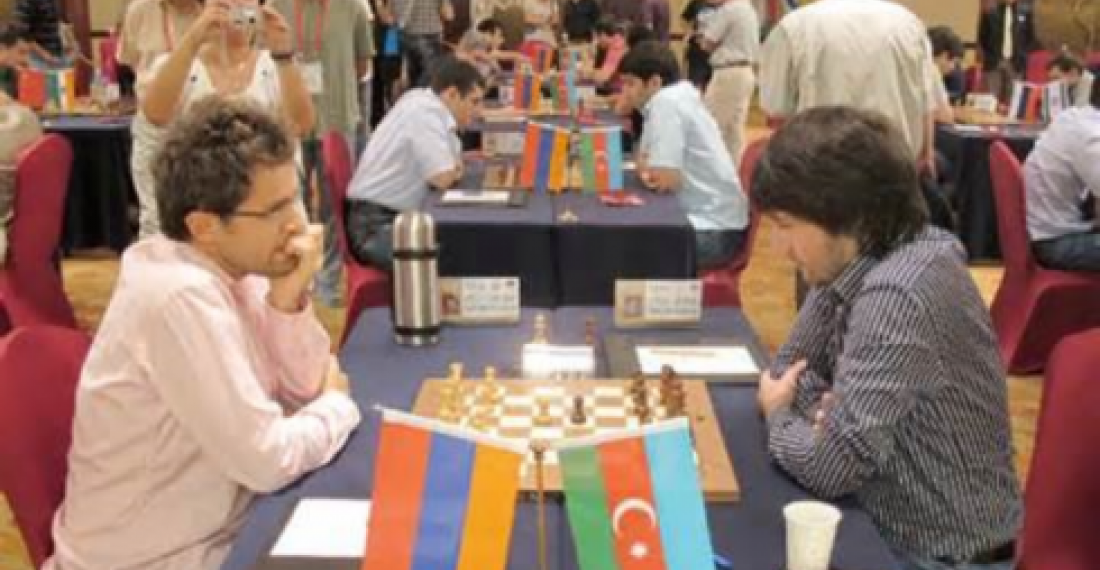
There are still a lot of ambiguities about the extent of the new law. For example it is not clear what will be the position of Azerbaijanis participating in sports and cultural competitions at which Armenians are present.
According to APA the 4th article of the newly-developed law "On the occupied territories of the Republic of Azerbaijan" also makes restrictions on the travel of foreign citizens "to the occupied territories of Azerbaijan" The first article states that citizens of states which have no visa-free travel agreements with Azerbaijan Republic, and stateless persons, can travel to the occupied territories of Azerbaijan having got visa from Azerbaijan's Ministry of Foreign Affairs or its diplomatic missions, and passing through the territory of Azerbaijan.
Moreover, the citizens of states, which have visa-free travel agreements with Azerbaijan can visit the occupied lands of Azerbaijan through the territory of Azerbaijan Republic with the consent of the Ministry of Foreign Affairs, Interior Ministry and Defense Ministry. The persons violating this term will be punished in accordance with the articles to be regulated in the Criminal Code of Azerbaijan.
In the meantime the foreign ministers of Armenia and Azerbaijan, who are currently in Poland attending a meeting of the Vizegrad countries, held a side meeting under the auspices of the OSCE Minsk Group. A statement issued by the OSCE stated:
"The Co-Chairs of the OSCE Minsk Group (Ambassadors Igor Popov of the Russian Federation, Jacques Faure of France, and Ian Kelly of the United States of America) met on May 17 with the Foreign Minister of Azerbaijan, Elmar Mammadyarov, and the Foreign Minister of Armenia, Edward Nalbandian. The Personal Representative of the OSCE Chairperson-in-Office, Ambassador Andrzej Kasprzyk, also participated in the meetings.
The Co-Chairs and the Foreign Ministers discussed possible ways to advance the peace process.
The Ministers exchanged views on the current situation and reaffirmed their commitment to promoting peace in the region.
The Co-Chairs reiterated the need to avoid actions or rhetoric that could raise tensions or damage the peace process, and discussed with the Ministers a number of confidence building measures to help create an atmosphere conducive to reconciliation. The Co-Chairs will travel to the region later this month to discuss these issues further with the Presidents of Azerbaijan and Armenia"
source: commonspace.eu with APA and the OSCE
photo: Armenian and Azerbaijani chess players at an international tournament. It is not clear if new legislation currently being discussed in Baku will prohibit these contacts too. (archive picture).