The ticking time-bomb in the Caucasus

This is a commentary by the editorial team of commonspace.eu

Whilst the onus for a resolution of the Karabakh conflict is primarily with the governments of Armenia and Azerbaijan the international community needs to prioritise efforts to help resolve the conflict peacefully before it turns nastier

In a world caught in turmoil, with ongoing conflicts in Syria, Libya and Yemen claiming hundreds of lives daily, and the potential threat of an even larger conflagration on the Korean peninsula, the Karabakh conflict may seem, from the perspective of the world Chancelleries, more like a minor inconvenience rather than a serious threat to world peace. The semblance of a cease fire, even if often violated, and the fact that both sides in the conflict are often seen going through the motions of negotiations, has helped re-enforce the impression that the problem is containable, and there are even those who suggest that it is better to let time heal it because if you try to speed up the process it may backfire.

The facts do not add up to this logic. The situation in the Nagorno-Karabakh conflict zone has been deteriorating - from year to year, and from week to week -  for some time. Violations of the cease fire now occur on a daily basis, and casualties, although not quite yet on a daily basis, are now recorded at least every week.

This is the visible part of an even more worrisome reality.

Both Armenia and Azerbaijan are now actively preparing for war. Their commitment to this effort remains absolute and takes a high toll on their finances, and more broadly on their societies. Now both sides are armed to their teeth with modern weaponry, thanks to Russia and one or two other unscrupulous arms supplying countries. A certain fatalism, that war is now inevitable is creeping in, both among decision makers, as well as more widely within their societies.

Until recently the arms race, and the clamour for war that it triggers, was somewhat countered by an active peace effort, which whilst never maturing into a proper peace process, at least gave some hope, and for fleeting moments even looked as if it was working. This peace effort - the domain of the OSCE Minsk Process co-chair countries, France, Russia and the United States, is currently stalled. Their envoys are due in the region next month, and they hope to be able to revive the negotiations, but no one dares suggest how this may happen, and the mood is not conducive to a breakthrough. Indeed, on 18 May the co-Chair countries diplomats were obliged to issue a statement in which they warned that events that had occurred in the days before "represent significant violations of the ceasefire and are cause for alarm".

Both Armenian and Azerbaijani leaderships weigh their options carefully, and for the moment neither side is excluding anything. This includes peace on reasonable terms, but given that this has eluded them for a long time a dangerous sense of cynicism has now gripped both sides. It is going to take a much more determined, and much more creative, effort by the international community than we have seen so far to shake the sides out of this cynicism, and return them to constructive discussion around the conference table. The notion that it is up to the sides to find the political will to engage in serious negotiations, armed with a willingness to compromise, has been repeated so much that it is has become something of a cliché. But it is a hard reality no one can deny. Yet it is only part of the story. Others need to do their part too, and in international diplomacy this means bluntly that the solution of the Karabakh conflict needs to be prioritised. Clearly, at the moment,  this is not the case.

In the meantime, the Karabakh bomb ticks along, and with it the spectre that renewed violence will wipe out in a very short time the important achievements that have been registered in the South Caucasus in the last two and half decades. 

This commentary was prepared by the editorial team of commonspace.eu

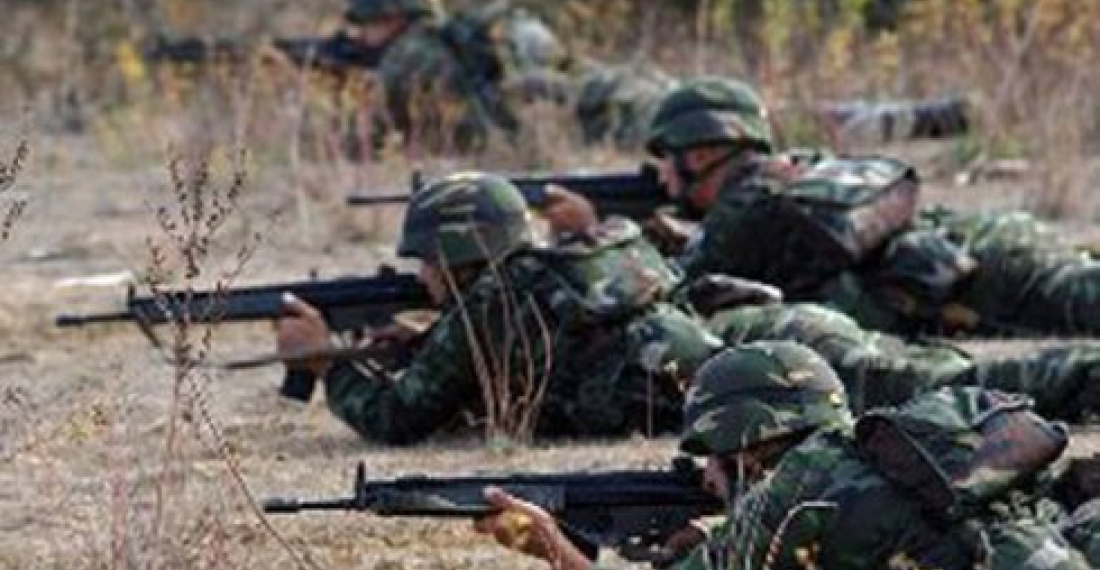
photo: Soldiers near the Karabakh line of contact (archive picture)

Related articles

Editor's choice
News
Council of Europe launches new International Claims Commission for Ukraine

Council of Europe launches new International Claims Commission for Ukraine

Thirty-four countries and the European Union have signed a new convention establishing an International Claims Commission for Ukraine at a diplomatic conference co-hosted by the 46-nation Council of Europe and the Netherlands in the Hague. The diplomatic conference was attended by leaders and high-level representatives from over 50 states, including the President of Ukraine, Volodymyr Zelenskyy, the President of the Republic of Moldova, Maia Sandu, and the Prime Minister of the Netherlands, Dick Schoof.  “Today marks a major step forward in ensuring accountability for Ukraine. The International Claims Commission represents justice and hope for tens of thousands of victims—our determination that those who have suffered will not be forgotten. I call for quick ratifications so we can get the commission rapidly up and running for the people of Ukraine,” said Council of Europe Secretary General Alain Berset. Ukrainian President Volodymyr Zelenskyy said: “We expect that every mechanism for compensation from the Register of Damage and Claims Commission to the actual payments – will start working and receive strong and sufficient international support, so that people can truly feel that any kind of damage caused by the war can be compensated. This war, and Russia’s responsibility for it, MUST become a clear example – so that others learn not to choose aggression.” “Accountability is about creating the conditions for peace that endures. And therefore, accountability is a condition of security – today and for the future. But accountability is not only about Ukraine. And it is not only about one aggressor and one victim. Accountability is about Europe. About every country in Europe. It is about whether Europe, as a whole, is willing to defend its peace,” said Maia Sandu, President of the Republic of Moldova, which currently holds the Presidency of the Council of Europe’s Committee of Ministers. The Prime Minister of the Netherlands, Dick Schoof, said: “Every day Russia is deliberately bombarding homes, destroying businesses and damaging infrastructure in Ukraine. Russia must compensate Ukraine for the damage caused. That is why we have launched the International Claims Commission for Ukraine and we are honoured to host it.” The International Claims Commission will be the second part of a comprehensive compensation mechanism related to Russia’s war of aggression, building on the existing Register of Damage for Ukraine. The claims commission will be established within the framework of the Council of Europe and will also be open to other countries. The Register of Damage for Ukraine, created in 2023, collects and records compensation claims submitted by individuals, organisations and public bodies in Ukraine. Forty-four states and the European Union have so far joined the Register, which has already received 86,000 claims. The International Claims Commission will review, assess and decide upon claims submitted to the Register of Damage for Ukraine and determine the amount of compensation, if any, which is due in each case. The convention establishing the commission will enter into force once it has been ratified by 25 signatories, as long as sufficient funds have been secured to support its initial work.

Popular

Editor's choice
News
Council of Europe launches new International Claims Commission for Ukraine

Council of Europe launches new International Claims Commission for Ukraine

Thirty-four countries and the European Union have signed a new convention establishing an International Claims Commission for Ukraine at a diplomatic conference co-hosted by the 46-nation Council of Europe and the Netherlands in the Hague. The diplomatic conference was attended by leaders and high-level representatives from over 50 states, including the President of Ukraine, Volodymyr Zelenskyy, the President of the Republic of Moldova, Maia Sandu, and the Prime Minister of the Netherlands, Dick Schoof.  “Today marks a major step forward in ensuring accountability for Ukraine. The International Claims Commission represents justice and hope for tens of thousands of victims—our determination that those who have suffered will not be forgotten. I call for quick ratifications so we can get the commission rapidly up and running for the people of Ukraine,” said Council of Europe Secretary General Alain Berset. Ukrainian President Volodymyr Zelenskyy said: “We expect that every mechanism for compensation from the Register of Damage and Claims Commission to the actual payments – will start working and receive strong and sufficient international support, so that people can truly feel that any kind of damage caused by the war can be compensated. This war, and Russia’s responsibility for it, MUST become a clear example – so that others learn not to choose aggression.” “Accountability is about creating the conditions for peace that endures. And therefore, accountability is a condition of security – today and for the future. But accountability is not only about Ukraine. And it is not only about one aggressor and one victim. Accountability is about Europe. About every country in Europe. It is about whether Europe, as a whole, is willing to defend its peace,” said Maia Sandu, President of the Republic of Moldova, which currently holds the Presidency of the Council of Europe’s Committee of Ministers. The Prime Minister of the Netherlands, Dick Schoof, said: “Every day Russia is deliberately bombarding homes, destroying businesses and damaging infrastructure in Ukraine. Russia must compensate Ukraine for the damage caused. That is why we have launched the International Claims Commission for Ukraine and we are honoured to host it.” The International Claims Commission will be the second part of a comprehensive compensation mechanism related to Russia’s war of aggression, building on the existing Register of Damage for Ukraine. The claims commission will be established within the framework of the Council of Europe and will also be open to other countries. The Register of Damage for Ukraine, created in 2023, collects and records compensation claims submitted by individuals, organisations and public bodies in Ukraine. Forty-four states and the European Union have so far joined the Register, which has already received 86,000 claims. The International Claims Commission will review, assess and decide upon claims submitted to the Register of Damage for Ukraine and determine the amount of compensation, if any, which is due in each case. The convention establishing the commission will enter into force once it has been ratified by 25 signatories, as long as sufficient funds have been secured to support its initial work.