Theme

Diplomacy

Editor's choice
Monday Commentary
Monday Commentary: 2025 was a momentous year for the South Caucasus

Monday Commentary: 2025 was a momentous year for the South Caucasus

The year 2025 has ended up being a momentous year for the South Caucasus, writes Dennis Sammut in his Monday Commentary. Armenia-Azerbaijan relations have been redefined, with consequences for the whole region and beyond. That huge development overshadowed key moments in the domestic trajectory of the two countries, which however have deep consequences for the two countries, and even beyond. It has also been a tumultuous year for Georgia too. The country has been gripped in a political crisis throughout 2025, with no obvious end in sight. Whatever the domestic arguments, on the international stage Georgia is today a shadow of what it used to be until recently. It not only has lost the chance of joining the European Union any time soon, but it has also lost its position as the leading South Caucasus country. Today, in the new reality of the region, it lags as a tired third. Important as 2025 was, it ended with a lot of unfinished business. So 2026 will also be crucial for the three countries. Since regaining its statehood in 1991 after the dissolution of the Soviet Union, Armenia-Azerbaijan relations have been defined by war. The two fought open wars, wars of attrition, and propaganda wars, incessantly. Tens of thousands of people lost their lives, and hundreds of thousands were displaced. Many had lost hope that the two could try the alternative – i.e. peaceful co-existence. Yet in 2025 they were proven wrong.
Editor's choice
News
Germany accuses Russia of cyberattacks and disinformation campaign

Germany accuses Russia of cyberattacks and disinformation campaign

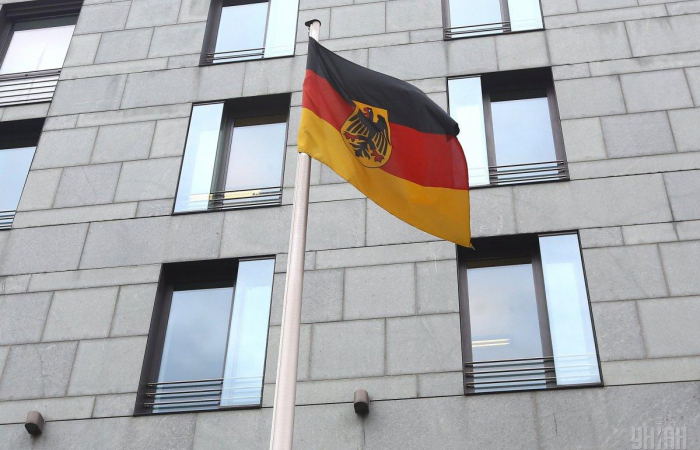
The German government holds Russia responsible for a cyberattack on German air traffic control, and for targeted disinformation campaigns before the last federal election. According to the German Foreign Office in Berlin, the incidents could be clearly attributed to the Russian military intelligence service, the GRU. In response, the Russian ambassador to Berlin was summoned to the Foreign Ministry. "We have been observing a massive increase in threatening hybrid activities by Russia for some time now," a spokesperson for the Foreign Ministry stated. These range from disinformation campaigns and espionage to cyberattacks and sabotage attempts. The aim is to divide society, sow distrust, and undermine confidence in democratic institutions. The spokesperson added that with these actions, Russia is "very concretely threatening our security, not only through its war of aggression against Ukraine, but also here in Germany."  The Foreign Ministry spokesperson explained that the cyberattack on air traffic control in August 2024 was clearly attributed to the hacker collective "APT28," known as "Fancy Bear," and to the responsibility of the Russian military intelligence service, the GRU. Furthermore, it could now be "conclusively stated" that Russia had attempted "to influence and destabilize both the last Federal election and the ongoing internal affairs of the Federal Republic of Germany." There was "absolutely irrefutable evidence" for this". The so-called "Storm 1516" campaign, which has been running since 2024, is allegedly backed by "reliable information" that the Moscow-based think tank "Center for Geopolitical Expertise" is behind it. The Center is also said to be supported by Russian military intelligence. Its primary aim is to influence democratic elections in the West. (Click the image to read more).

Filter archive

Publication date
Editor's choice
News
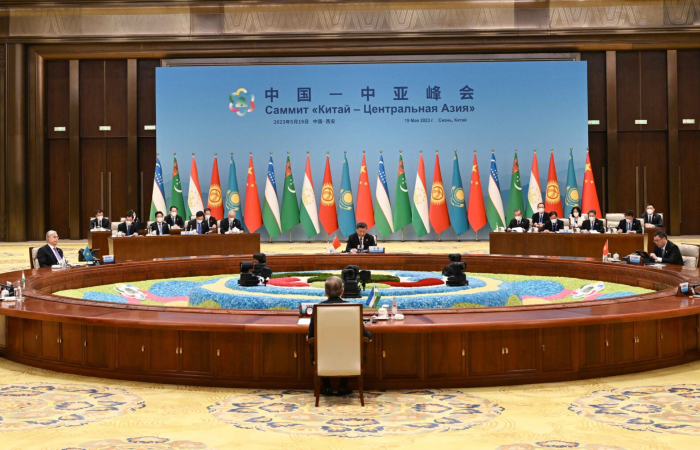
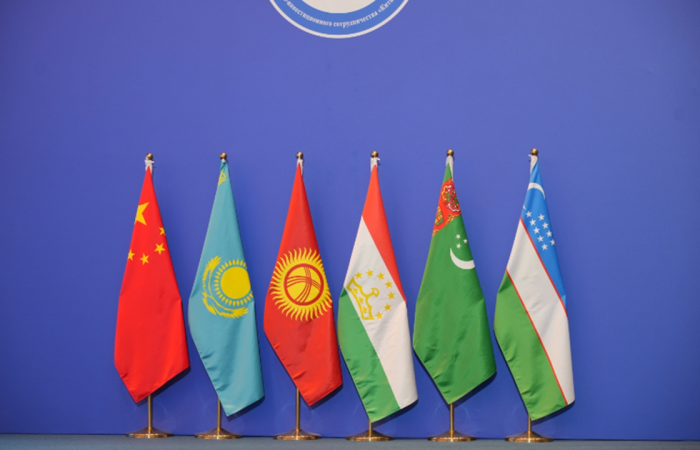
Xi outlines grand plan on how China and Central Asian states can develop together

Xi outlines grand plan on how China and Central Asian states can develop together

Leaders of China and Central Asian countries on Friday (19 May) signed and released the Xian Declaration following the first China-Central Asia Summit. The Declaration hailed the cooperation between the two sides as all-round and productive, stressing that the six countries agreed to build a closer community with a shared future between China and Central Asian countries. "This summit has added new impetus to the development and revitalisation of the six counties, and injected strong positive energy into regional peace and stability," Xi said later at a press conference with his Central Asian counterparts. "We will jointly foster a new paradigm of deeply complementary and high-level win-win cooperation." Xi said China and the Central Asian countries should deepen trust and offer "clear and strong support" on core interests such as sovereignty, independence, national dignity and long-term development. "China is ready to help Central Asian countries improve their law enforcement, security, and defence capability construction," he said. In what appears to be a concession to Central Asian states who are keen to diversify their export routes, China said that "in the longer term", it supports construction of a cross-Caspian Sea international transport corridor, and would strengthen the construction of transport hubs of China-Europe freight train services.
Editor's choice
News
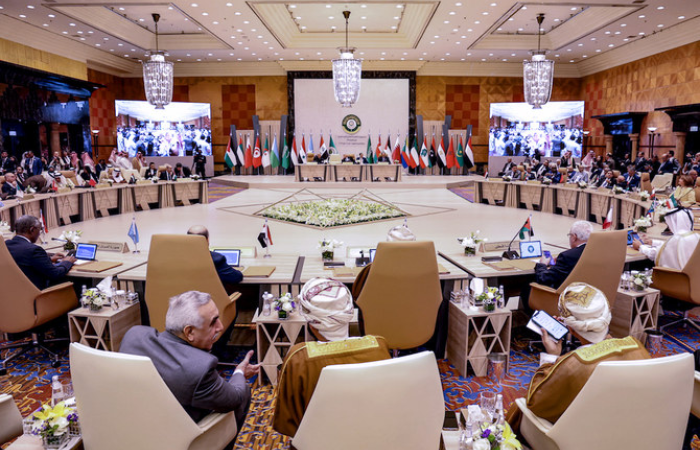
Arab League welcomes back Syrian President Assad at 32nd summit in Jeddah

Arab League welcomes back Syrian President Assad at 32nd summit in Jeddah

Syrian President Bashar al-Assad is attending his first Arab League summit in Jeddah, Saudi Arabia, on Friday (19 May) since his country was suspended from the group over the government's violent crackdown of pro-democracy protests in 2011 that led to the outbreak of the Syrian Civil War. In the latest of a number of regional rapprochements, Syria was formally readmitted to the Arab League on 7 May after member states' foreign ministers voted to "resume the participation of the delegations of the government of the Syrian Arab Republic in the meetings of the Council of the League of Arab States", according to a statement. The 32nd Arab League summit in the Saudi port city of Jeddah comes amid a renewed sense of purpose and unity across the Arab world. In an interview with Asharq Al-Awsat newspaper, the President of Djibouti Ismail Omar Guelleh said that he hoped the summit in Saudi Arabia "will lead to recommendations and decisions that contribute to resolving critical situations and difficult conditions faced by the Arab world, while preserving unity and solidarity among Arab brothers."
Editor's choice
Editorial
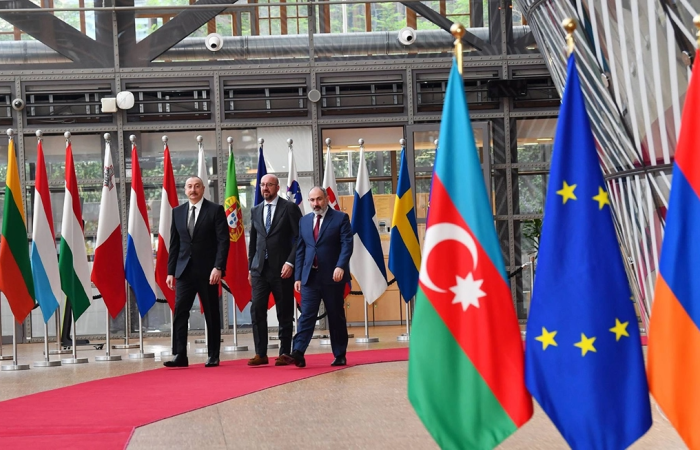
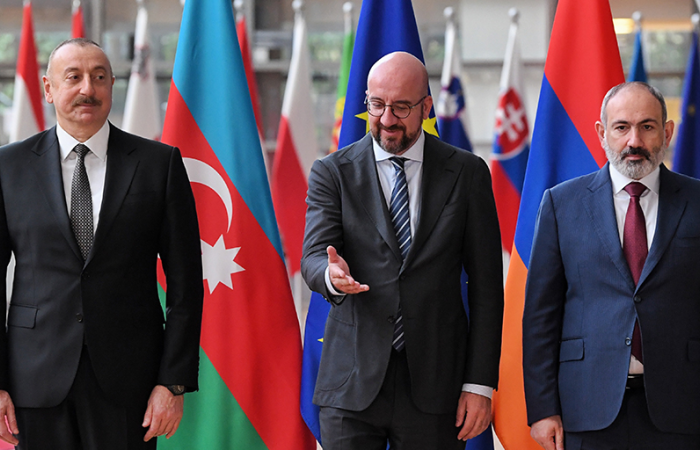
Editorial: light at the end of the tunnel for Armenia and Azerbaijan

Editorial: light at the end of the tunnel for Armenia and Azerbaijan

The European Union continues to play an instrumental part in helping Armenia and Azerbaijan to narrow the differences between them and move closer to signing a peace agreement normalising relations, writes commonspace.eu in this editorial.  On Sunday (14 May), European Council president Charles Michel, hosted Azerbaijani president Ilham Aliyev and Armenian Prime Minister Nikol Pashinyan in Brussels for several hours of talks which Michel described as being “frank, open and result-oriented” and “focused on progress on the path towards Armenia-Azerbaijan normalization.” Michel said that “the leaders shared a common willingness for a South Caucasus at peace. I commend their respective efforts. Together, we reviewed all issues on our agenda.” commonspace.eu political editor commenting on the results of the 14 May Brussels meeting said that clearly the negotiations have reached a decisive stage. This is now not a discussion on abstract principles but on tangible and practical issues that will have an impact on the lives of Armenians and Azerbaijanis across the region.
Editor's choice
News
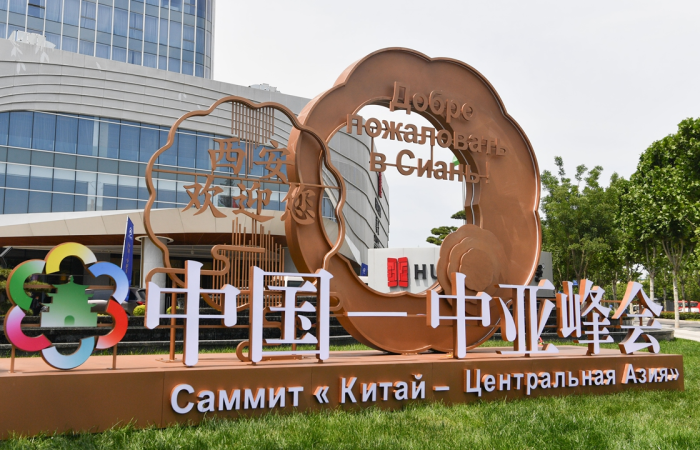
President Xi hosts first ever China-Central Asia summit in Xi'an

President Xi hosts first ever China-Central Asia summit in Xi'an

The President of China Xi Jinping is hosting the first ever China-Central Asia summit on Thursday and Friday (18 and 19 May). President Xi will host the presidents of Kazakhstan, Uzbekistan, Kyrgyzstan, Tajikistan and Turkmenistan in the historic city of Xi'an, which once marked the beginning of the Silk Road trade route stretching from China to Europe. It will be the first in-person meeting between the presidents of the six countries after they held an online summit in January 2022 marking 30 years of relations. Chinese officials have said that the meeting will mark "a new era of cooperation" as Central Asia looks to expand ties both to its east and west as Russian influence in the region wanes as a result of its ongoing full-scale invasion of Ukraine. According to the Chinese government newspaper Global Times, the presidents of the six countries will "exchange views on establishing mechanisms, cooperation and international, regional issues with respective concerns, as well as signing a slew of important political documents on trade, investment, connectivity and other areas".