Theme

Diplomacy

Editor's choice
News
Germany accuses Russia of cyberattacks and disinformation campaign

Germany accuses Russia of cyberattacks and disinformation campaign

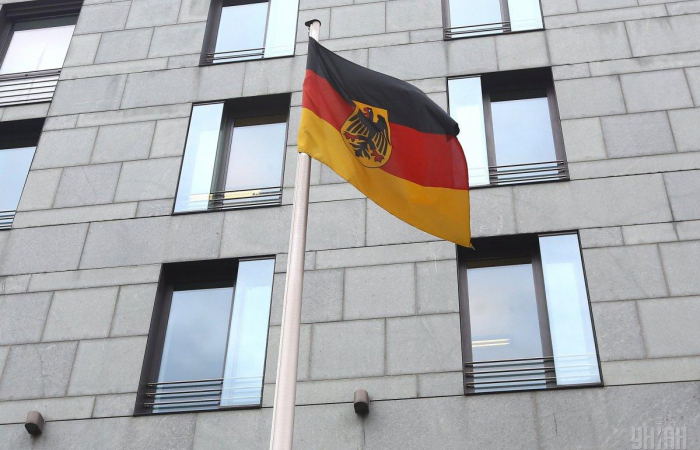
The German government holds Russia responsible for a cyberattack on German air traffic control, and for targeted disinformation campaigns before the last federal election. According to the German Foreign Office in Berlin, the incidents could be clearly attributed to the Russian military intelligence service, the GRU. In response, the Russian ambassador to Berlin was summoned to the Foreign Ministry. "We have been observing a massive increase in threatening hybrid activities by Russia for some time now," a spokesperson for the Foreign Ministry stated. These range from disinformation campaigns and espionage to cyberattacks and sabotage attempts. The aim is to divide society, sow distrust, and undermine confidence in democratic institutions. The spokesperson added that with these actions, Russia is "very concretely threatening our security, not only through its war of aggression against Ukraine, but also here in Germany."  The Foreign Ministry spokesperson explained that the cyberattack on air traffic control in August 2024 was clearly attributed to the hacker collective "APT28," known as "Fancy Bear," and to the responsibility of the Russian military intelligence service, the GRU. Furthermore, it could now be "conclusively stated" that Russia had attempted "to influence and destabilize both the last Federal election and the ongoing internal affairs of the Federal Republic of Germany." There was "absolutely irrefutable evidence" for this". The so-called "Storm 1516" campaign, which has been running since 2024, is allegedly backed by "reliable information" that the Moscow-based think tank "Center for Geopolitical Expertise" is behind it. The Center is also said to be supported by Russian military intelligence. Its primary aim is to influence democratic elections in the West. (Click the image to read more).
Editor's choice
Opinion
Opinion: A sustainable peace requires consistent long-term European involvement

Opinion: A sustainable peace requires consistent long-term European involvement

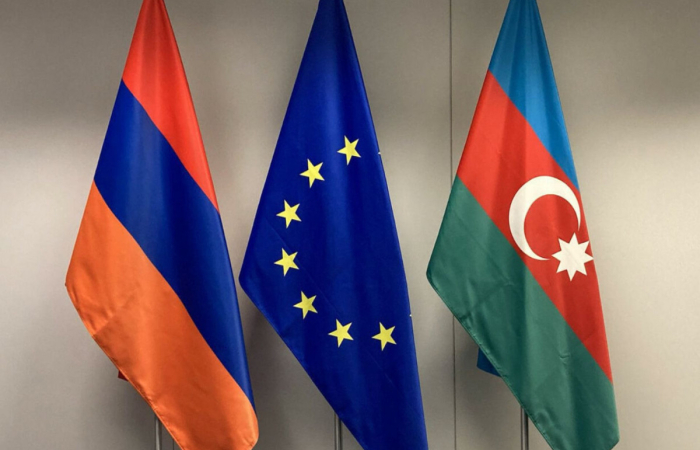
There is no denying that the EU, especially key member states acting in support, helped bring Baku and Yerevan closer to the Washington Declaration of August 8, 2025. But a declaration is not a treaty. Turning principles into a peace deal and eventually to a sustainable peace requires consistent long-term European involvement, writes Yalchin Mammadov in this-op-ed for commonspace.eu Before facilitating trust between Armenia and Azerbaijan, the EU is first expected to address its own credibility gap with Baku. A more balanced approach—such as including Azerbaijan, alongside Armenia, in the European Peace Facility—could be a useful first step. Diplomats can negotiate peace; societies must build peace. In this context, the EU can do what it does the best: long-term societal engagement. By expanding youth and academic exchange programmes, investing in cross-border civil society initiatives, and fostering people-to-people cooperation, Brussels can help shape a new generation equipped to sustain peace beyond political cycles. Such tools are slow and unglamorous, but if ignored, even the strongest treaty risks collapse. And obviously, these aspects require two-way engagement and genuine willingness by both governments to facilitate contact. If Brussels wants to remain influential, it needs to replace outdated one-size-fits-all policies with ambitious, interest-driven and differentiated approaches. Without a clear regional strategy, which appears to be the current situation, the South Caucasus will continue to sit at the margins of Europe’s security architecture—leaving space for other powers to take the lead. (You can read the op-ed in full by clicking the image.)

Filter archive

Publication date
Editor's choice
News
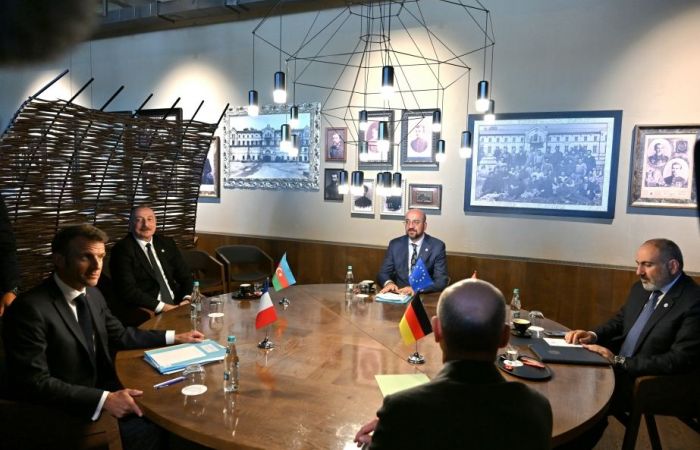
European Political Community summit taking place in Moldova, Pashinyan and Aliyev to meet

European Political Community summit taking place in Moldova, Pashinyan and Aliyev to meet

The second summit of the European Political Community (EPC) is taking place today in Moldova (Thursday 1 June). During the summit, the Armenian Prime Minister Nikol Pashinyan and the Azerbaijani President Ilham Aliyev will meet with European Council President Charles Michel, French President Emmanuel Macron, and German Chancellor Olaf Scholz. The brainchild of Emmanuel Macron, the European Political Community's first summit took place in Prague, in October 2022. The EPC says that it is "a platform for political coordination among European countries across the continent," adding that it "aims to promote political dialogue and cooperation to address issues of common interest and to strengthen the security, stability, and prosperity of the European continent." The EPC says that there are three main topics expected to be addressed by the 47 member states, which include every European country except Russia and Belarus. Those three topics are: joint efforts for peace and security; energy resilience and climate action; and interconnections in Europe for a better connected and more stable continent.
Editor's choice
Editorial
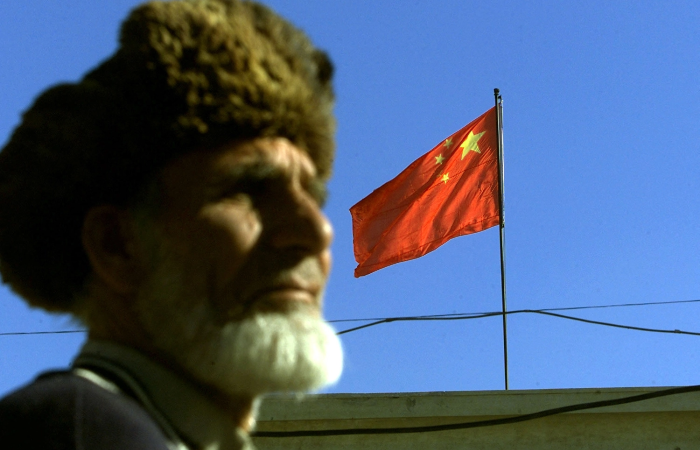
Editorial: China moves in where angels fear to tread

Editorial: China moves in where angels fear to tread

It seems as if you cannot be respected as a superpower unless you burn your fingers trying to pacify Afghanistan, writes commonspace.eu in this editorial. The British in the heyday of the Raj, tried it in the 19th century; the Soviets tried it at the peak of their power in the 20th century, and the Americans had a go at a time when they were the only superpower, in the early 21st century. Now it seems it's China’s turn, and of course it is being done the Chinese way. There are no armies swarming across the Khyber Pass, nor forward military bases established across Central Asia. Instead, the Chinese are using their time tested tool – the Belt and Road Initiative. The first announcement came on 8 May following the 4th round of the Pakistan-China Strategic Dialogue in Islamabad with the participation of Chinese foreign minister Qin Gang and his Pakistani counterpart Bilawal Bhutto Zardari. In essence, the two sides agreed that the China-Pakistan Economic Corridor (CPEC), a part of the Belt and Road Initiative, will be extended into Afghanistan. At that meeting it was also agreed that both sides will “continue their humanitarian and economic assistance for the Afghan people and enhance development cooperation in Afghanistan”.
Editor's choice
Analysis
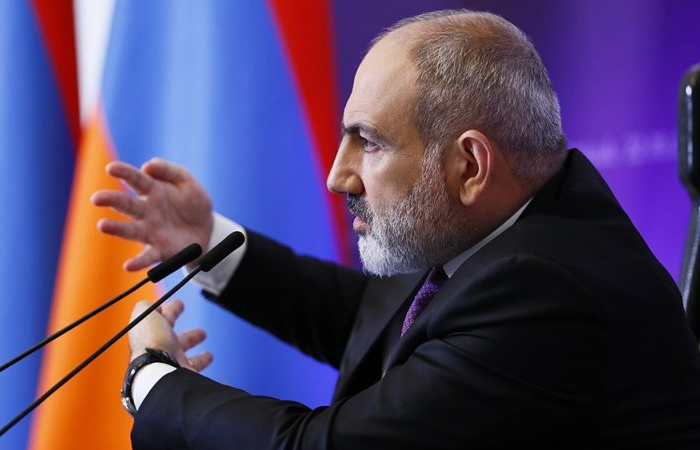
Briefing: Pashinyan ready to sign, not everyone in Stepanakert is happy, Baku hopeful but keeping up pressure

Briefing: Pashinyan ready to sign, not everyone in Stepanakert is happy, Baku hopeful but keeping up pressure

As Armenia and Azerbaijan edge closer to signing an agreement ending decades of conflict between them, the future of the Armenian population in Nagorno-Karabakh remains one of the most crucial outstanding issues, writes commonspace.eu. Intense discussions and negotiations have been ongoing throughout May, with meetings in Washington, Brussels and Moscow involving the leaders of the two countries, their foreign ministers, and other senior officials. In a lengthy press conference on 22 May, Armenian Prime Minister Nikol Pashinyan said that he wants to reach an agreement "as soon as possible". The international community's perception of the negotiations is that Armenia and Azerbaijan should, without reservations, recognise each other's territorial integrity of 29,800 square kilometers and 86,600 square kilometers, respectively, said Pashinyan.
Editor's choice
News
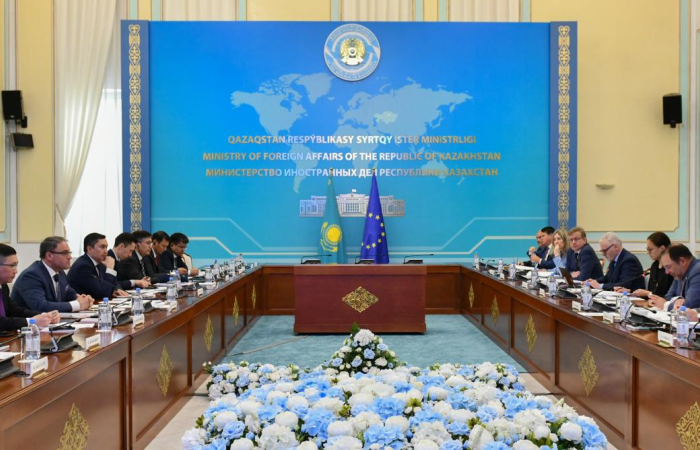
Kazakhstan and EU discuss next steps to deepen cooperation in key areas

Kazakhstan and EU discuss next steps to deepen cooperation in key areas

Representatives of Kazakhstan and the European Union met in the Kazakh capital Astana on Tuesday (23 May) to discuss the next steps for deeping their partnership at the 20th meeting of their mutual Cooperation Committee. The meeting was chaired by the Deputy Minister of Foreign Affairs of Kazakhstan, Roman Vassilenko, and Luc Devigne, the Deputy Managing Director for Russia, Eastern Partnership, Central Asia and OSCE from the European External Action Service. Also present at the meeting were representatives of Kazakh ministries and agencies, various directorates of the European Commission, as well as representatives of the diplomatic corps of EU member states. The Kazakh Ministry of Foreign Affairs reports that the discussion focused on the practical implementation of the Enhanced Partnership and Cooperation Agreement (EPCA) between Kazakhstan and the EU and its member states, which covers 29 areas. Kazakhstan and the EU discussed cooperation in political, trade and economic spheres, the rule of law and human rights, as well as interaction in transport, energy, education and science, environmental protection and combating climate change.
Editor's choice
News
Georgia and Qatar to sign agreement on innovation and technology cooperation after leaders meet in Doha

Georgia and Qatar to sign agreement on innovation and technology cooperation after leaders meet in Doha

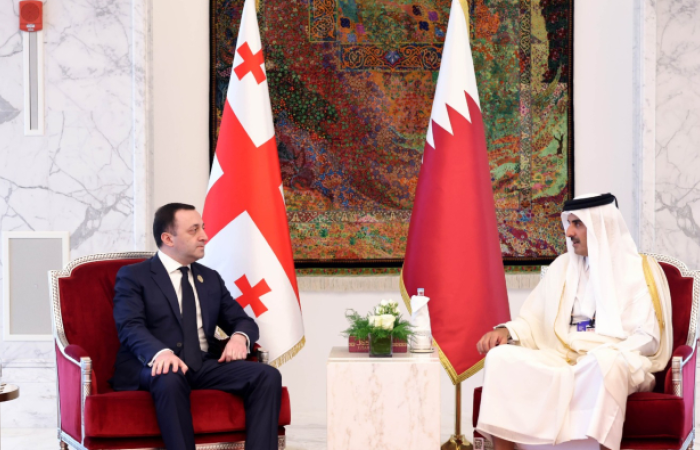
Georgia and Qatar are to sign an agreement on innovation and technology cooperation, the Georgian Economy Minister Levan Davitashvili announced on Tuesday (23 May). The announcement came after the Georgian Prime Minister Irakli Garibashvili and the Emir of Qatar Sheikh Tamim bin Hamad bin Khalifa Al Thani met in Doha on the sidelines of the Qatar Economic Forum that is running from 23-25 May. Davitashvili said that the Georgian delegation had meetings with a number of sectoral ministries in which they discussed opportunities for cooperation between Georgia and Qatar. Transport, logistics, and Georgia's key role in the Middle Corridor facilitating east-west trade were emphasised in the meetings, according to Davitashvili, who said that there is an increased interest in the country from "many states of the world, including Qatari investors", amid geopolitical challenges. The meetings also touched on trade and economic issues, as well as the the agreements on Mutual Support and Protection of Investments and on Economic, Trade and Technical Cooperation, signed last year between Georgia and Qatar.
Editor's choice
Editorial
Editorial: Saudi Arabia injects new energy into a moribund Arab League

Editorial: Saudi Arabia injects new energy into a moribund Arab League

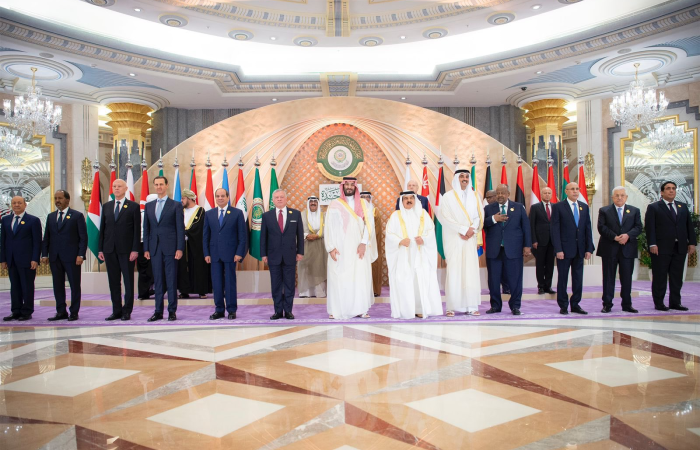
Following last week's Arab League summit in Jeddah, "it is expected that Saudi Arabia will continue to use its year-long chairmanship of the Arab League to reshape the institution, and more broadly to reconfigure pan Arab-affairs, of course with Saudi Arabia at the helm," writes commonspace.eu in this editorial. "For it is this new ambition of the Kingdom to become a leading regional and global player that has defined the summit, and will define its chairmanship of the Arab League over the next year." The summit formally healed some of the divisions of the last decade. Syria’s President Bashar al Assad attended, marking the full return of Syria into the Arab fold. There was a lot of talk of a new era of peace in the Middle East, and even Iran was now perceived as more of a partner rather than an enemy. Yet the summit gathered whilst a few miles away, across the waters of the Red Sea from Jeddah, a bloody civil war raged on in Sudan.
Editor's choice
News
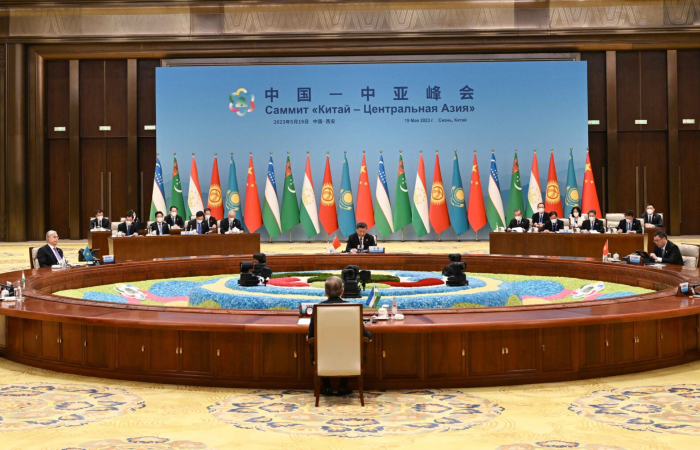
Xi outlines grand plan on how China and Central Asian states can develop together

Xi outlines grand plan on how China and Central Asian states can develop together

Leaders of China and Central Asian countries on Friday (19 May) signed and released the Xian Declaration following the first China-Central Asia Summit. The Declaration hailed the cooperation between the two sides as all-round and productive, stressing that the six countries agreed to build a closer community with a shared future between China and Central Asian countries. "This summit has added new impetus to the development and revitalisation of the six counties, and injected strong positive energy into regional peace and stability," Xi said later at a press conference with his Central Asian counterparts. "We will jointly foster a new paradigm of deeply complementary and high-level win-win cooperation." Xi said China and the Central Asian countries should deepen trust and offer "clear and strong support" on core interests such as sovereignty, independence, national dignity and long-term development. "China is ready to help Central Asian countries improve their law enforcement, security, and defence capability construction," he said. In what appears to be a concession to Central Asian states who are keen to diversify their export routes, China said that "in the longer term", it supports construction of a cross-Caspian Sea international transport corridor, and would strengthen the construction of transport hubs of China-Europe freight train services.