


Editorial: Saudi Arabia injects new energy into a moribund Arab League

This editorial first appeared in the 23 May 2023 issue of our newsletter, Arabia Concise. If you would like to subscribe to Arabia Concise, or any other of our newsletters, please click here.

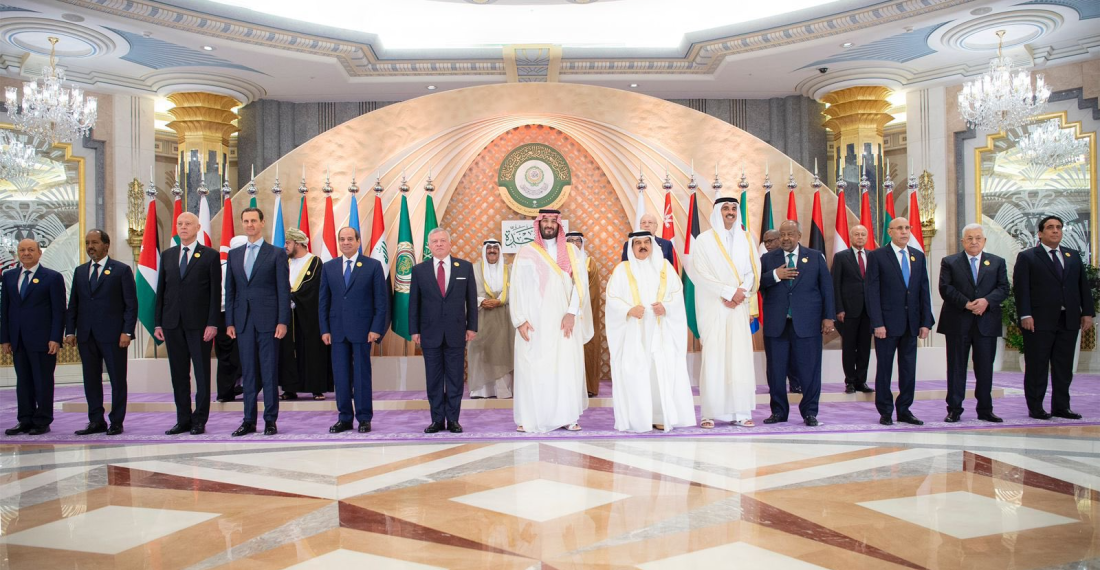
Following last week's Arab League summit in Jeddah, "it is expected that Saudi Arabia will continue to use its year-long chairmanship of the Arab League to reshape the institution, and more broadly to reconfigure pan Arab-affairs, of course with Saudi Arabia at the helm," writes commonspace.eu in this editorial. "For it is this new ambition of the Kingdom to become a leading regional and global player that has defined the summit, and will define its chairmanship of the Arab League over the next year."

Many, both in the Arab World and beyond, have long written off the Arab League as a moribund organisation, fit only as a forum for squabbling Arab Governments - a showcase of the failures of the Arabs rather than their achievements.

Its first quarter-century of existence since its foundation in 1945 coincided with a wave of nationalism that swept across the Arab world, a resurgence of an Arab identity, and a quest for unity. In Gamal Abdel Nasser who led Egypt from 1953-1970, the Arabs found a leader who could talk the language of the masses, and inspire them. The Arab League became the torch bearer of the dreams of the Arabs, inspiring those still under the toil of colonialism - from Algiers to Aden - and offering hope for displaced Palestinians longing to return to their homeland. 

The devastating defeat at the hands of the Israelis in the 1967 six-day war left the Arabs weak and humiliated. Arab nationalist rhetoric lasted a while longer, but it had lost its sting. The Arab League from its headquarters in Cairo, and in its yearly summits held in different Arab capitals, reflected these trends. From being the vanguard of the dreams of the Arabs it became an expression of their failures, exposing the divisions, the problems in governance, the economic failures and the general lethargy. For a while it even became difficult to find countries willing to host the once prestigious summits.

All this appeared to have changed last week, at the League’s 32nd summit, held on 18-19 May in the Saudi port city of Jeddah, which also ushered in a year in which Saudi Arabia will chair the organisation.

The summit formally healed some of the divisions of the last decade. Syria’s President Bashar al Assad attended, marking the full return of Syria into the Arab fold. There was a lot of talk of a new era of peace in the Middle East, and even Iran was now perceived as more of a partner rather than an enemy.

Yet the summit gathered whilst a few miles away, across the waters of the Red Sea from Jeddah, a bloody civil war raged on in Sudan.

Observers of Arab politics noted in the Jeddah summit, and its subsequent final declaration, a change of tone which they considered significant. The Palestinian academic, Daoud Kuttab, writing for Arab News, said that “anyone who analyses the final statement in Jeddah and compares it, for example, to the Algiers Declaration of the 31st Arab League Summit will notice a vast difference. The differences include initiatives and concerns that were not mentioned in any previous Arab summit statement.” 

He adds that “the Arab countries that signed the Jeddah Declaration may have begun the journey of thousands of miles of Arab Renaissance with steady steps. The big test will be in the implementation of these promises”. (Read his op-ed on Arab News here). 

The Arab League has a long history of agreements that were broken as soon as they were signed, unfulfilled promises, and the use of flowery language that bears little resemblance to reality. It is therefore significant that many Arab columnists felt that this summit and its declaration were different. For sure there were the usual statements on Arab solidarity, Palestine, Jerusalem and so on, but there were also references to other issues including in areas of economy and innovation.

The change reflects the new, assertive and pragmatic Saudi diplomacy, inspired by Crown Prince Mohamed bin Salman, and currently being executed by Saudi diplomacy - an institution that until recently was more characterised by its lethargy than its dynamism. It is expected that Saudi Arabia will continue to use its year-long chairmanship of the Arab League to reshape the institution, and more broadly to reconfigure pan Arab-affairs, of course with Saudi Arabia at the helm. For it is this new ambition of the Kingdom to become a leading regional and global player that has defined the summit, and will define its chairmanship of the Arab League over the next year. 

Not all Arab countries, be they near or far, are keen on this Saudi role, but for the moment they are all mostly playing along. Mohammed bin Salman will soon find out that keeping everyone around the table is an achievement in itself, though it is unlikely he will be satisfied with that.

A surprise guest at the Jeddah summit

The appearance of the President of Ukraine, Volodymyr Zelensky, at the Arab Summit in Jeddah took many by surprise, not least some of the Arab Heads of States present who apparently were told of the visitor only shortly before he popped into their meeting room to address them.

Arab countries have been amongst the most tepid in their support for Ukraine following its full-scale invasion by Russia in February 2022. For Zelensky therefore the invitation by Saudi Arabia to attend and speak at the summit was a victory. The Russians would certainly have preferred that he was not there. Some Arab allies of Russia in the room were not happy either. Syria’s president took off his headphones whilst Zelensky was speaking. This did not stop Zelensky making the case of his country in his usual eloquent style. 

For the Saudis, Zelensky’s presence was yet another confirmation of their increased importance on the world stage. Saudi Arabia has offered its good offices in mediating between Russia and Ukraine. Neither side is likely to take up the offer, but both sides see some value in keeping the Saudi channel open to deal with specific issues that may arise, and where Saudi Arabia may have the clout to influence circumstances.
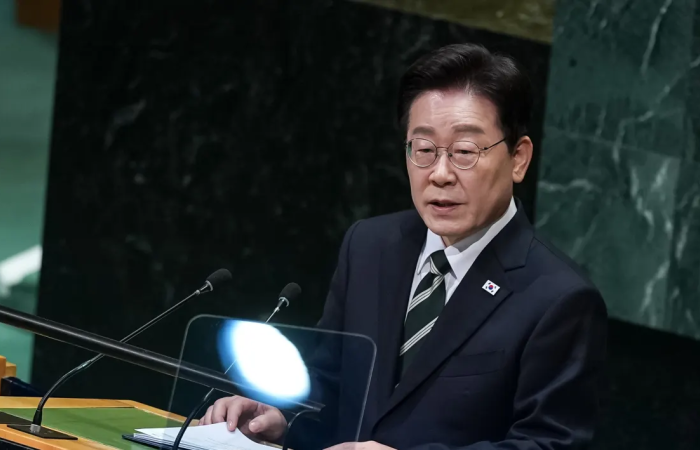
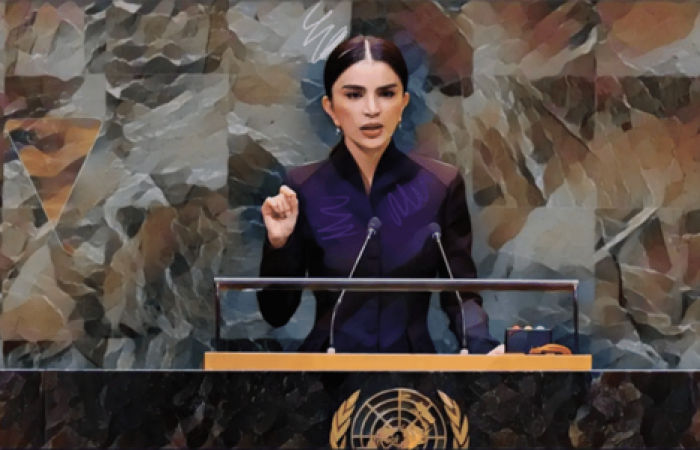
source: commonspace.eu editorial team
photo: Arab News

Related articles

Editor's choice
News
Russia adds pressure on Armenia ahead of key elections; recalls Ambassador in Yerevan for consultations

Russia adds pressure on Armenia ahead of key elections; recalls Ambassador in Yerevan for consultations

Ahead of key parliamentary elections,scheduled to be held in Armenia on Sunday, 7 June, Russia continues to attempt to put pressure on the Armenian Government led by prime minister Nikol Pashinyan. On 30 May, Russia recalled its Ambassador to Yerevan for consultations. A terse statement, published on the website of the Russian Foreign Ministry, said, "The Ambassador of the Russian Federation to the Republic of Armenia , S.P. Kopyrkin, has been summoned to Moscow for consultations in connection with the steps taken by the Armenian leadership to move closer to the European Union, which are detrimental to cooperation within the EAEU." This followed a statement issued the day before, by the leaders of the Eurasian Economic Union (EAEU) that challenges the Armenian trajectory towards approximating to the European Union. Vladimir Putin is undertood to have personally pushed the other four EAEU leaders to issue the statement, which said: "Taking into account the significant risks to the economic security of the member states of the Eurasian Economic Union (hereinafter referred to as the Union) arising in connection with the preparation of the Republic of Armenia for accession to the European Union, as well as the need to prevent the associated damage to the member states of the Union: decided that the members of the Eurasian Intergovernmental Council from the Republic of Belarus, the Republic of Kazakhstan, the Kyrgyz Republic and the Russian Federation will report at the next meeting of the Supreme Eurasian Economic Council in December 2026 on the possible consequences of the suspension of the Treaty on the Eurasian Economic Union with respect to the Republic of Armenia. We share the position on the need to hold a national referendum in the Republic of Armenia as soon as possible on joining the European Union or continuing to be part of the Eurasian Economic Union."
Editor's choice
News
The leaders of the states of the Eurasian Economic Union issued a tough statement warning fellow-member state Armenia of the consequences of its desire to join the European Union.

The leaders of the states of the Eurasian Economic Union issued a tough statement warning fellow-member state Armenia of the consequences of its desire to join the European Union.

The leaders of the states of the Eurasian Economic Union (EEAS) issued a tough statement warning fellow-member state Armenia of the consequences of its desire to join the European Union. The stark, sharply worded,  warning, comes days before crucial parliamentary elections in Armenia, scheduled for 7 June. The full statement said, “We, the Presidents of the Republic of Belarus, the Republic of Kazakhstan, the Kyrgyz Republic and the Russian Federation, Taking into account the actions of the Republic of Armenia aimed at joining the European Union, including the approval in 2025 by the National Assembly of the Republic of Armenia and the signing by the President of the Republic of Armenia of the Law of the Republic of Armenia "On the Start of the Process of Accession of the Republic of Armenia to the European Union", as well as the confirmation by the European Union of the European aspirations of the Government of the Republic of Armenia, expressed in the joint declaration following the first Armenia-European Union summit, adopted on 5 May 2026, Taking into account the significant risks to the economic security of the member states of the Eurasian Economic Union (hereinafter referred to as the Union) arising in connection with the preparation of the Republic of Armenia for accession to the European Union, as well as the need to prevent the associated damage to the member states of the Union: decided that the members of the Eurasian Intergovernmental Council from the Republic of Belarus, the Republic of Kazakhstan, the Kyrgyz Republic and the Russian Federation will report at the next meeting of the Supreme Eurasian Economic Council in December 2026 on the possible consequences of the suspension of the Treaty on the Eurasian Economic Union with respect to the Republic of Armenia. We share the position on the need to hold a national referendum in the Republic of Armenia as soon as possible on joining the European Union or continuing to be part of the Eurasian Economic Union. Astana, May 29, 2026” A meeting of the Supreme Eurasian Economic Council was held in Astana, Kazakhstan, on May 29, 2026. The meeting of the Supreme Eurasian Economic Council in a restricted format was attended by Russian President Vladimir Putin, Belarusian President Alexander Lukashenko , Kazakh President Kassym-Jomart Tokayev , Kyrgyz President Sadyr Japarov , Armenian Deputy Prime Minister Mher Grigoryan, and Chairman of the Board of the Eurasian Economic Commission Bakytzhan Sagintayev. From the Russian side, the meeting was also attended by Deputy Prime Minister and member of the Council of the Eurasian Economic Commission Alexey Overchuk and Presidential Aide Yury Ushakov . The heads of delegations from EAEU observer states, including President of Uzbekistan Shavkat Mirziyoyev , Vice President of Cuba Salvador Valdés Mesa, Minister of Industry, Mines, and Trade of Iran Mohammad Atabak, and CIS Secretary General Sergei Lebedev, joined the expanded meeting . Following the meeting of the Supreme Eurasian Economic Council, a number of documents were signed .

Popular

Editor's choice
Interview
Thursday Interview: Murad Muradov

Thursday Interview: Murad Muradov

Today, commonspace.eu starts a new regular weekly series. THURSDAY INTERVIEW, conducted by Lauri Nikulainen, will host  persons who are thinkers, opinion shapers, and implementors in their countries and spheres. We start the series with an interview with Murad Muradov, a leading person in Azerbaijan's think tank community. He is also the first co-chair of the Action Committee for a new Armenian-Azerbaijani Dialogue. Last September he made history by being the first Azerbaijani civil society activist to visit Armenia after the 44 day war, and the start of the peace process. Speaking about this visit Murad Muradov said: "My experience was largely positive. My negative expectations luckily didn’t play out. The discussions were respectful, the panel format bringing together experts from Armenia, Azerbaijan, and Turkey was particularly valuable during the NATO Rose-Roth Seminar in Yerevan, and media coverage, while varied in tone, remained largely constructive. Some media outlets though attempted to represent me as more of a government mouthpiece than an independent expert, which was totally misleading.  Overall, I see these initiatives as important steps in rebuilding trust and normalising professional engagement. The fact that soon a larger Azerbaijani civil society visits to Armenia followed, reinforces the sense that this process is moving in the right direction." (click the image to read the interview in full)

