Theme

Diplomacy

Editor's choice
News
Germany accuses Russia of cyberattacks and disinformation campaign

Germany accuses Russia of cyberattacks and disinformation campaign

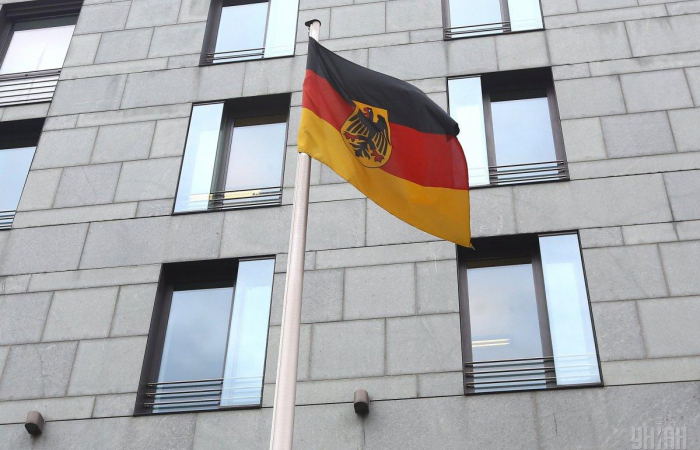
The German government holds Russia responsible for a cyberattack on German air traffic control, and for targeted disinformation campaigns before the last federal election. According to the German Foreign Office in Berlin, the incidents could be clearly attributed to the Russian military intelligence service, the GRU. In response, the Russian ambassador to Berlin was summoned to the Foreign Ministry. "We have been observing a massive increase in threatening hybrid activities by Russia for some time now," a spokesperson for the Foreign Ministry stated. These range from disinformation campaigns and espionage to cyberattacks and sabotage attempts. The aim is to divide society, sow distrust, and undermine confidence in democratic institutions. The spokesperson added that with these actions, Russia is "very concretely threatening our security, not only through its war of aggression against Ukraine, but also here in Germany."  The Foreign Ministry spokesperson explained that the cyberattack on air traffic control in August 2024 was clearly attributed to the hacker collective "APT28," known as "Fancy Bear," and to the responsibility of the Russian military intelligence service, the GRU. Furthermore, it could now be "conclusively stated" that Russia had attempted "to influence and destabilize both the last Federal election and the ongoing internal affairs of the Federal Republic of Germany." There was "absolutely irrefutable evidence" for this". The so-called "Storm 1516" campaign, which has been running since 2024, is allegedly backed by "reliable information" that the Moscow-based think tank "Center for Geopolitical Expertise" is behind it. The Center is also said to be supported by Russian military intelligence. Its primary aim is to influence democratic elections in the West. (Click the image to read more).
Editor's choice
Opinion
Opinion: A sustainable peace requires consistent long-term European involvement

Opinion: A sustainable peace requires consistent long-term European involvement

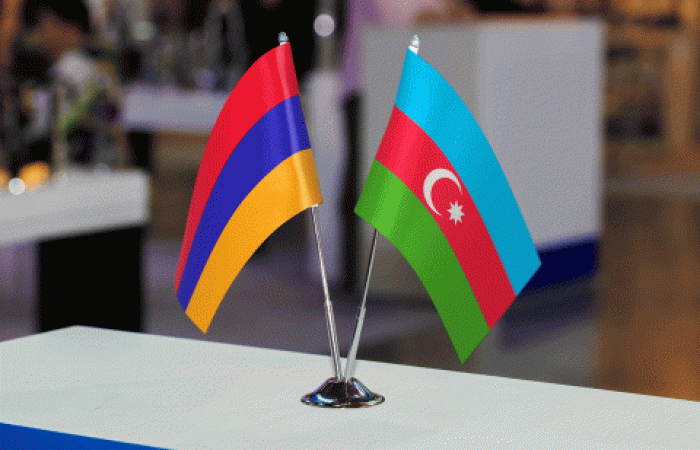
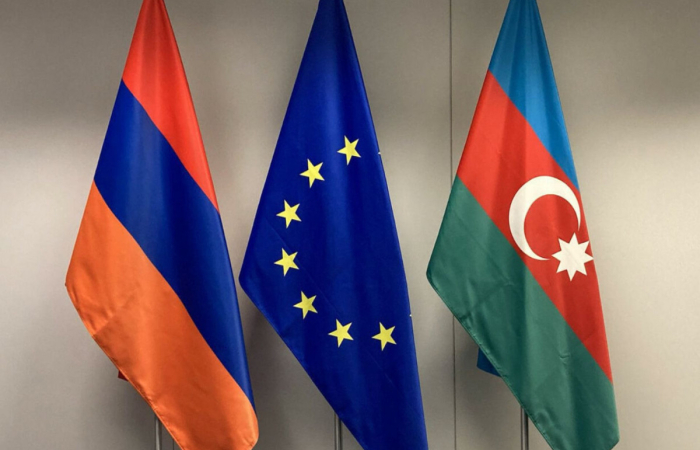
There is no denying that the EU, especially key member states acting in support, helped bring Baku and Yerevan closer to the Washington Declaration of August 8, 2025. But a declaration is not a treaty. Turning principles into a peace deal and eventually to a sustainable peace requires consistent long-term European involvement, writes Yalchin Mammadov in this-op-ed for commonspace.eu Before facilitating trust between Armenia and Azerbaijan, the EU is first expected to address its own credibility gap with Baku. A more balanced approach—such as including Azerbaijan, alongside Armenia, in the European Peace Facility—could be a useful first step. Diplomats can negotiate peace; societies must build peace. In this context, the EU can do what it does the best: long-term societal engagement. By expanding youth and academic exchange programmes, investing in cross-border civil society initiatives, and fostering people-to-people cooperation, Brussels can help shape a new generation equipped to sustain peace beyond political cycles. Such tools are slow and unglamorous, but if ignored, even the strongest treaty risks collapse. And obviously, these aspects require two-way engagement and genuine willingness by both governments to facilitate contact. If Brussels wants to remain influential, it needs to replace outdated one-size-fits-all policies with ambitious, interest-driven and differentiated approaches. Without a clear regional strategy, which appears to be the current situation, the South Caucasus will continue to sit at the margins of Europe’s security architecture—leaving space for other powers to take the lead. (You can read the op-ed in full by clicking the image.)

Filter archive

Publication date
Editor's choice
Interview
Armenian Prime Minister Nikol Pashinyan discusses the prospects of a peace treaty with Azerbaijan

Armenian Prime Minister Nikol Pashinyan discusses the prospects of a peace treaty with Azerbaijan

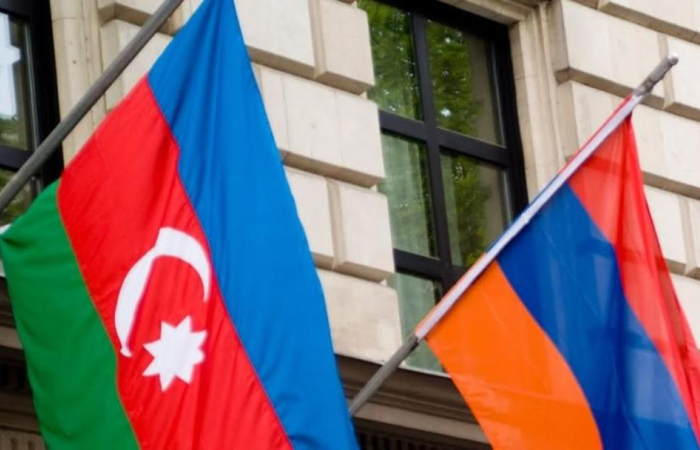
In an interview with Armenpress Armenian Prime Minister Nikol Pashinyan discussed a number of critical aspects of the pending peace treaty with Azerbaijan. In his view, the Armenia-Azerbaijan peace treaty would gain superior legal force over Armenian laws and the topic of territorial demands would be closed forever. Prime Minister Pashinyan stated that the same would happen in Azerbaijan meaning that the signing of the peace treaty would practically dispel the concerns of both Armenia and Azerbaijan particularly in relation to their respective constitutions. The Prime Minister also noted that Armenia was not engaged in an arms race with any country but was acquiring armaments exclusively for defending Armenia’s borders and territorial integrity.
Editor's choice
News
Georgia takes centre stage in Brussels and Strasbourg

Georgia takes centre stage in Brussels and Strasbourg

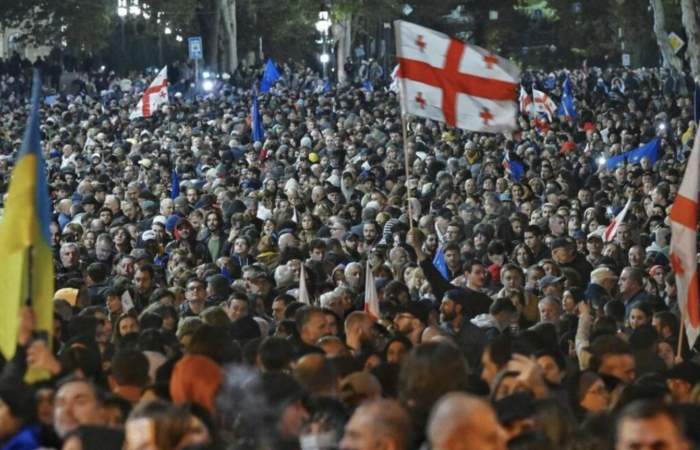
Events in Georgia are in the spotlight in Brussels this week with European leaders putting the political situation in Tbilisi on their agenda during the EU Council meeting for Heads of Government on Thursday. On Wednesday, the President of Georgia Salome Zourabichvili delivered a speech to the European Parliament in Strasbourg.
Editor's choice
Opinion
Opinion: Breaking the Present Deadlock in the Armenia-Azerbaijan Peace Process Will Remain a Formidable Task in 2025

Opinion: Breaking the Present Deadlock in the Armenia-Azerbaijan Peace Process Will Remain a Formidable Task in 2025

On 10 December, the Center for Analysis of International Relations (AIR Center), a Baku-based political think tank closely affiliated with the Azerbaijani government, held a high-level international conference titled “The Main Obstacle to a Peace Agreement Between Azerbaijan and Armenia.” The conference identified the territorial claims in Armenia’s constitution against Azerbaijan as the primary obstacle to peace.
Editor's choice
News
EU prepares to suspend visa-free travel for Georgian diplomats

EU prepares to suspend visa-free travel for Georgian diplomats

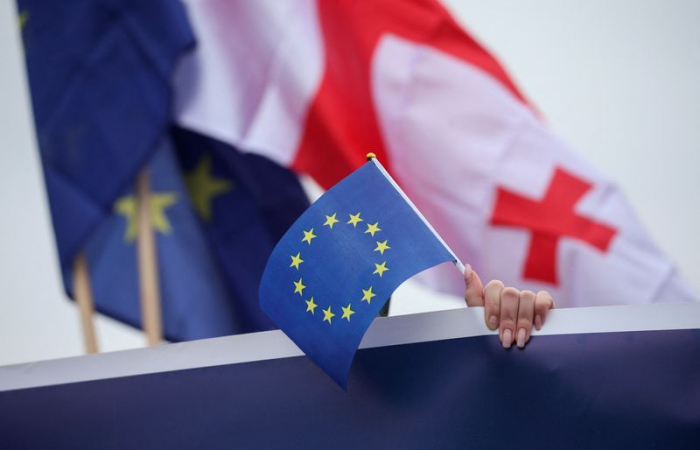
European Union foreign ministers have agreed to ask the European Commission to prepare a proposal for the suspension of visa-free travel for Georgian officials holding diplomatic passports as a consequence of the  crackdown in Georgia on pro-EU protests. This measure will be a considerable setback for the government in Tbilisi.
Editor's choice
Analysis
Analysis: Armenia–Azerbaijan Relations in 2024: Fragile Progress and an Uncertain Future

Analysis: Armenia–Azerbaijan Relations in 2024: Fragile Progress and an Uncertain Future

The negotiation process between Armenia and Azerbaijan since 2022 has followed a recurring pattern: initial optimism for a peace agreement to be signed by year’s end, followed by disappointment as talks falter. The year 2024 was no exception, beginning with hopeful developments and concluding with unresolved disputes. In December 2023, Armenia and Azerbaijan signed a joint declaration in which Armenia supported Azerbaijan’s bid to host the COP29 climate summit in November 2024, and Azerbaijan released 32 Armenian prisoners of war. This gesture set a positive tone, with COP29 serving as an informal deadline for a peace agreement.
Editor's choice
Opinion
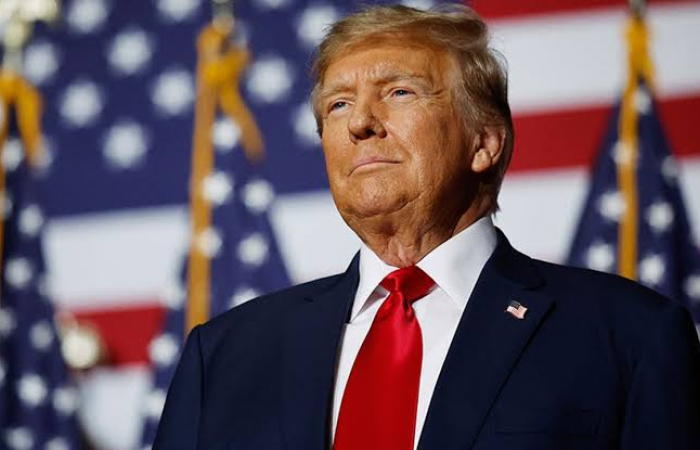
Opinion: Is Trump’s Re-Election Good News for Azerbaijan-U.S. relations?

Opinion: Is Trump’s Re-Election Good News for Azerbaijan-U.S. relations?

On 5 December, the Azerbaijani Press Agency (APA) in reference to “diplomatic sources” reported that Azerbaijan’s Foreign Minister rejected a United States-initiated meeting with his Armenian counterpart on the sidelines of the 31st meeting of the OSCE Council of Foreign Ministers in Malta. According to the agency, the reason behind Azerbaijan’s refusal was related to the “insistence” of the United States’ Secretary Antony Blinken to mediate between the two South Caucasian ministers. Citing the overall “unjust and biased policy” of the Biden administration towards Azerbaijan, the diplomatic source of the agency stated that “for this reason, Azerbaijan does not want the U.S. to participate in the peace agenda at all and does not consider it appropriate”.
Editor's choice
Opinion
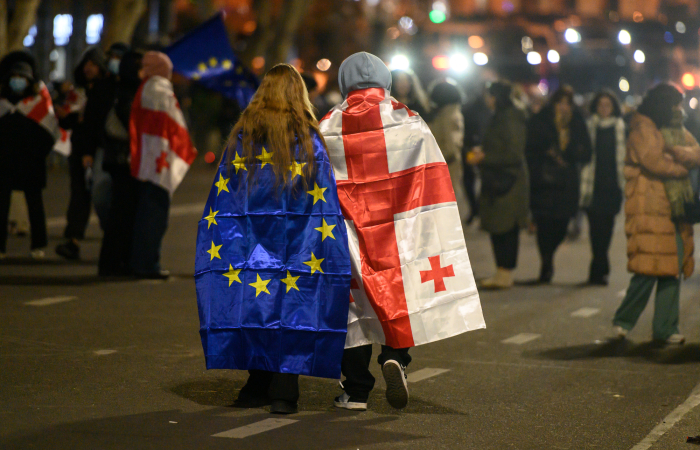
Opinion: Georgia’s Political Crisis Risks Unraveling Its International Relationships

Opinion: Georgia’s Political Crisis Risks Unraveling Its International Relationships

Georgia is once again embroiled in turmoil, its central Rustaveli Avenue literally alight with protests sparked by a wave of political and geopolitical tensions. Following controversial parliamentary elections held 26 October, tensions have escalated, with many citizens accusing the government of pivoting away from the European Union in favour of closer ties with Russia. They demand a new vote.
Editor's choice
News
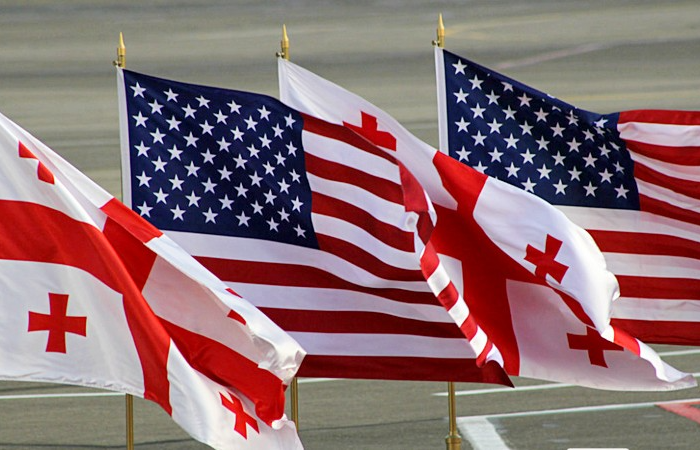
US expresses support for Georgian people and condemns violence on protesters

US expresses support for Georgian people and condemns violence on protesters

The United States has expressed support for the Georgian people saying that it has been a partner to Georgia and the Georgian people for more than 32 years.  In a statement on Wednesday, Secretary of State Anthony J.Blinken said that the partnership has been rooted in a shared love of freedom and democracy and a desire to see Georgia in the Euro-Atlantic family. 
Editor's choice
Editorial
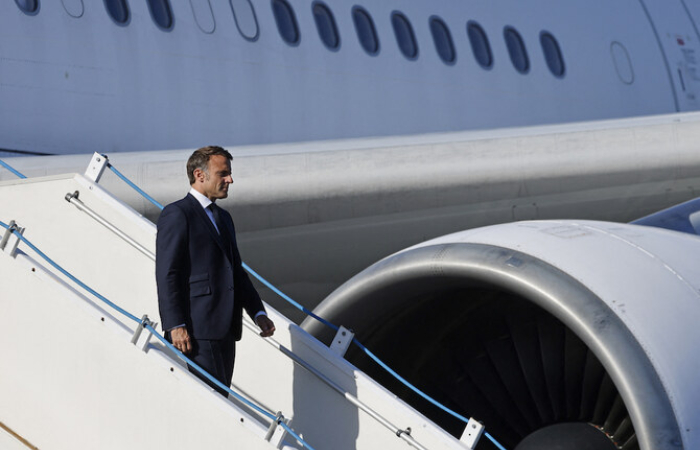
Editorial: Macron’s state visit to Saudi Arabia highlights shared vision for strategic cooperation

Editorial: Macron’s state visit to Saudi Arabia highlights shared vision for strategic cooperation

French President Emmanuel Macron’s arrival in Riyadh on Monday for a three-day state visit demonstrates the deepening ties between France and Saudi Arabia. The visit follows an invitation from Crown Prince Mohammed bin Salman and it reflects the shared ambition to enhance cooperation across various sectors in conjunction with both Saudi Vision 2030 and France 2030.