Theme

Diplomacy

Editor's choice
News
Germany accuses Russia of cyberattacks and disinformation campaign

Germany accuses Russia of cyberattacks and disinformation campaign

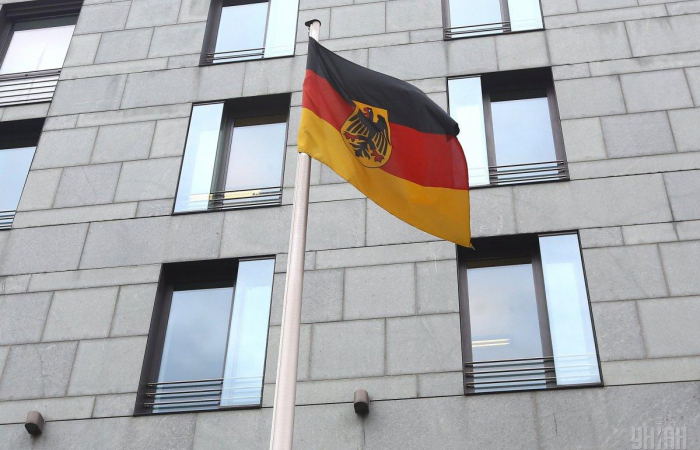
The German government holds Russia responsible for a cyberattack on German air traffic control, and for targeted disinformation campaigns before the last federal election. According to the German Foreign Office in Berlin, the incidents could be clearly attributed to the Russian military intelligence service, the GRU. In response, the Russian ambassador to Berlin was summoned to the Foreign Ministry. "We have been observing a massive increase in threatening hybrid activities by Russia for some time now," a spokesperson for the Foreign Ministry stated. These range from disinformation campaigns and espionage to cyberattacks and sabotage attempts. The aim is to divide society, sow distrust, and undermine confidence in democratic institutions. The spokesperson added that with these actions, Russia is "very concretely threatening our security, not only through its war of aggression against Ukraine, but also here in Germany."  The Foreign Ministry spokesperson explained that the cyberattack on air traffic control in August 2024 was clearly attributed to the hacker collective "APT28," known as "Fancy Bear," and to the responsibility of the Russian military intelligence service, the GRU. Furthermore, it could now be "conclusively stated" that Russia had attempted "to influence and destabilize both the last Federal election and the ongoing internal affairs of the Federal Republic of Germany." There was "absolutely irrefutable evidence" for this". The so-called "Storm 1516" campaign, which has been running since 2024, is allegedly backed by "reliable information" that the Moscow-based think tank "Center for Geopolitical Expertise" is behind it. The Center is also said to be supported by Russian military intelligence. Its primary aim is to influence democratic elections in the West. (Click the image to read more).
Editor's choice
Opinion
Opinion: A sustainable peace requires consistent long-term European involvement

Opinion: A sustainable peace requires consistent long-term European involvement

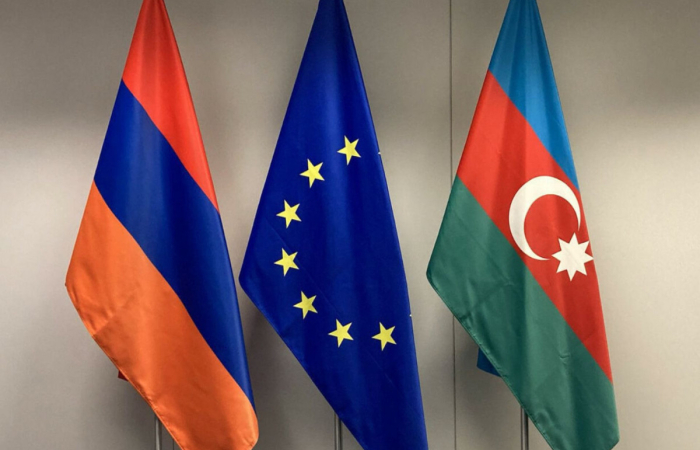
There is no denying that the EU, especially key member states acting in support, helped bring Baku and Yerevan closer to the Washington Declaration of August 8, 2025. But a declaration is not a treaty. Turning principles into a peace deal and eventually to a sustainable peace requires consistent long-term European involvement, writes Yalchin Mammadov in this-op-ed for commonspace.eu Before facilitating trust between Armenia and Azerbaijan, the EU is first expected to address its own credibility gap with Baku. A more balanced approach—such as including Azerbaijan, alongside Armenia, in the European Peace Facility—could be a useful first step. Diplomats can negotiate peace; societies must build peace. In this context, the EU can do what it does the best: long-term societal engagement. By expanding youth and academic exchange programmes, investing in cross-border civil society initiatives, and fostering people-to-people cooperation, Brussels can help shape a new generation equipped to sustain peace beyond political cycles. Such tools are slow and unglamorous, but if ignored, even the strongest treaty risks collapse. And obviously, these aspects require two-way engagement and genuine willingness by both governments to facilitate contact. If Brussels wants to remain influential, it needs to replace outdated one-size-fits-all policies with ambitious, interest-driven and differentiated approaches. Without a clear regional strategy, which appears to be the current situation, the South Caucasus will continue to sit at the margins of Europe’s security architecture—leaving space for other powers to take the lead. (You can read the op-ed in full by clicking the image.)

Filter archive

Publication date
Editor's choice
News
G7 foreign ministers issue wide ranging statement after their meeting in Canada

G7 foreign ministers issue wide ranging statement after their meeting in Canada

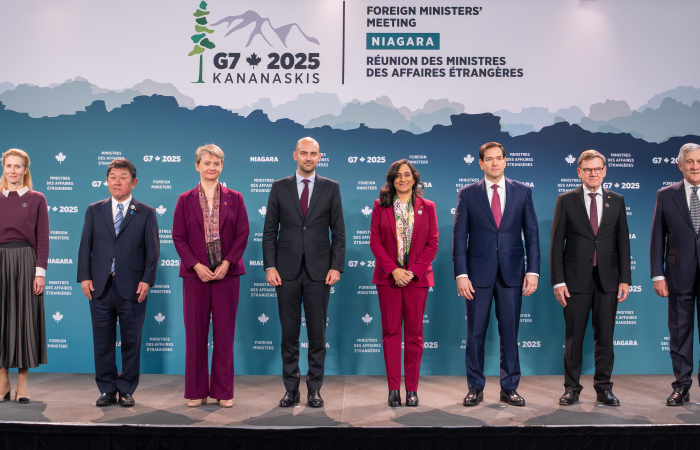
The Foreign Ministers of Canada, France, Germany, Italy, Japan, the United Kingdom, and the United States of America, and the High Representative of the European Union, met under Canada’s G7 Presidency, in Niagara, on November 11-12, 2025. The Foreign Ministers of Brazil, India, the Kingdom of Saudi Arabia, Mexico, the Republic of Korea, South Africa, and Ukraine, also joined the meeting for discussions on maritime security and prosperity, critical minerals, economic resilience and energy security. At the end of their meeting the G7 foreign ministers said: We reaffirmed our unwavering support for Ukraine in defending its territorial integrity and right to exist, and its freedom, sovereignty, and independence. We reiterated that an immediate ceasefire is urgently needed. We agreed that the current line of contact should be the starting point of negotiations. We remain committed to the principle that international borders must not be changed by force. We are increasing the economic costs to Russia, and exploring measures against countries and entities that are helping finance Russia’s war efforts. We condemned the provision to Russia of military assistance by DPRK and Iran, and the provision of weapons and dual-use components by China, a decisive enabler of Russia’s war. We acknowledged the ongoing discussions on a wide range of financing options, including further leveraging immobilised Russian Sovereign Assets in our jurisdictions in a coordinated way to support Ukraine. We strongly condemned Russia’s recent direct attacks on energy infrastructure and reaffirmed our support for Ukraine’s energy security. We reiterated our strong support for President Trump’s Comprehensive Plan to End the Gaza Conflict. We welcomed the ceasefire and the release of hostages. We stressed the urgency of returning the remains of deceased hostages. We also welcomed the increased flows of aid, but expressed concern about restrictions that remain in place. We called on all parties to allow for humanitarian assistance without interference at scale, through the United Nations and its agencies, and the Red Crescent, in addition to other international institutions and INGOs, as stipulated in President Trump’s plan. It is vital that all parties continue to engage constructively on the next steps outlined in the Comprehensive Plan, in pursuit of a political horizon for peaceful and prosperous co-existence for the Israeli and Palestinian peoples that advances comprehensive Middle East peace and stability. We will also continue to maintain attention on the situation in the West Bank. (click headline to read more)
Editor's choice
News
Syrian president al Sharaa at the White House

Syrian president al Sharaa at the White House

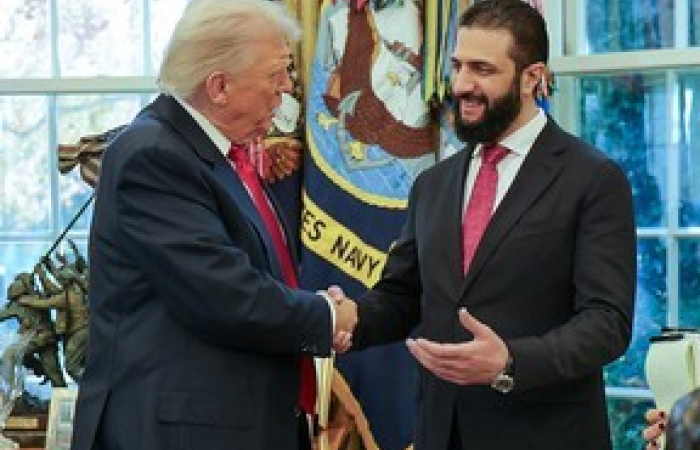
Syrian president, Mohammed al Sharaa met with US President Donald Trump at the White House on Monday (10 November). Trump met with Sharaa in the first-ever visit by a Syrian president to the White House, six months after the two first met in Saudi Arabia, and just days after Washington said that the Syrian leader, who once led an Al-Qaeda affiliate group, was no longer a "Specially Designated Global Terrorist." Washington suspended the imposition of Caesar Act sanctions on Syria in part for 180 days, the Treasury Department said as the meeting took place. The move replaces a previous waiver enacted on 23 May, it said On Friday, the US lifted sanctions on Sharaa and Interior Minister Anas Khattab, a day after the UN Security Council took the same step. Sharaa, 42, took power last year after his fighters launched a lightning offensive from their Idlib and overthrew longtime Syrian President Bashar al-Assad just days later on December 8. Syria's regional realignment has since moved  away from key allies of the former regime, Iran and Russia, and toward Turkey, the Gulf - and Washington. Syria's presidency said that Sharaa and Trump discussed the bilateral relationship, "the ways to strengthen and develop it, as well as a number of regional and international issues of common interest." After al Sharaa and Trump met in Riyadh in May, Trump announced he would lift all sanctions on Syria.
Editor's choice
News
Rubio plans to visit all five Central Asian countries as Trump hosts their leaders in Washington

Rubio plans to visit all five Central Asian countries as Trump hosts their leaders in Washington

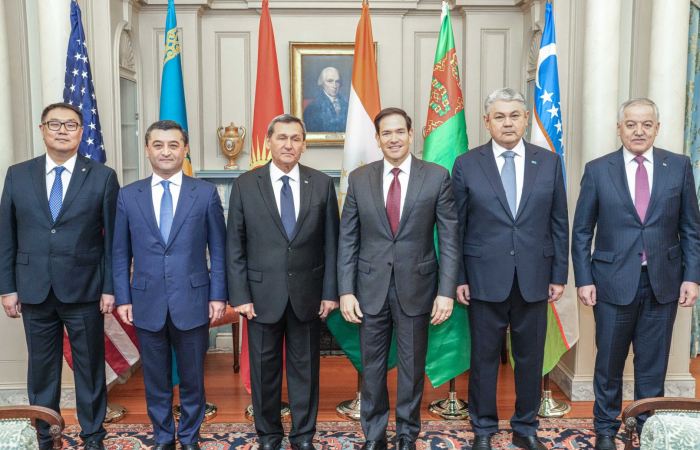
US Secretary of State Marco Rubio said on Wednesday 5th November that he planned to visit the five Central Asian countries in the coming year, as he met their foreign ministers as part of a Trump administration charm offensive aimed at the resource-rich region. The presidents of Kazakhstan, Kyrgyzstan, Tajikistan, Turkmenistan and Uzbekistan are set to meet US President Donald Trump in Washington on 6th November for talks that are likely to include discussions of rare earths minerals and other resources in the Central Asian nations.
Editor's choice
News
President of Iran vows to rebuild nuclear facilities 'with greater strength'

President of Iran vows to rebuild nuclear facilities 'with greater strength'

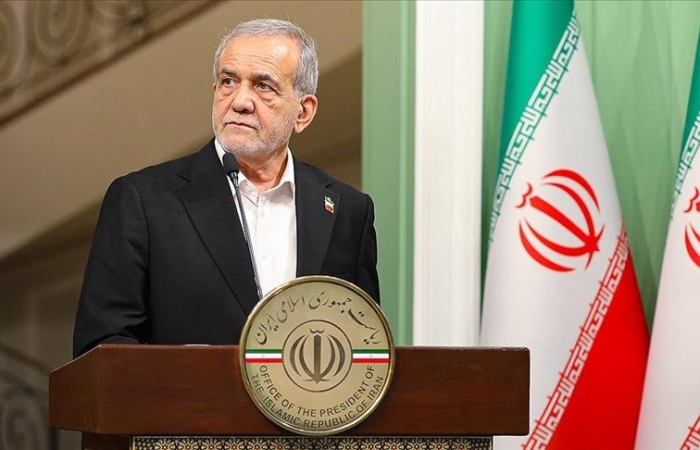
Tehran will rebuild its nuclear facilities "with greater strength", Iran's President Masoud Pezeshkian told Iranian state media adding that the country does not seek nuclear weapons. U.S. President Donald Trump has warned that he would order fresh attacks on Iran's nuclear sites should Tehran try to restart facilities that the United States bombed in June. Pezeshkian made his comments during a visit to the country's Atomic Energy Organization on 2nd November during which he met with senior managers from Iran’s nuclear industry.
Editor's choice
News
2nd South Caucasus Dialogue Forum held successfully in Tbilisi. Next forum will be held in Yerevan and after that in Baku

2nd South Caucasus Dialogue Forum held successfully in Tbilisi. Next forum will be held in Yerevan and after that in Baku

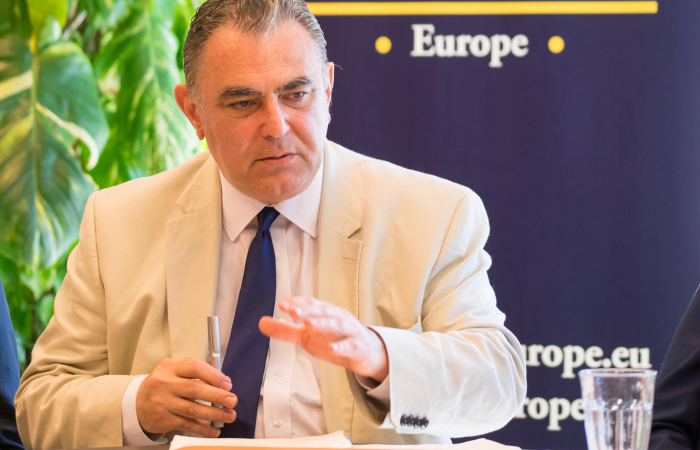
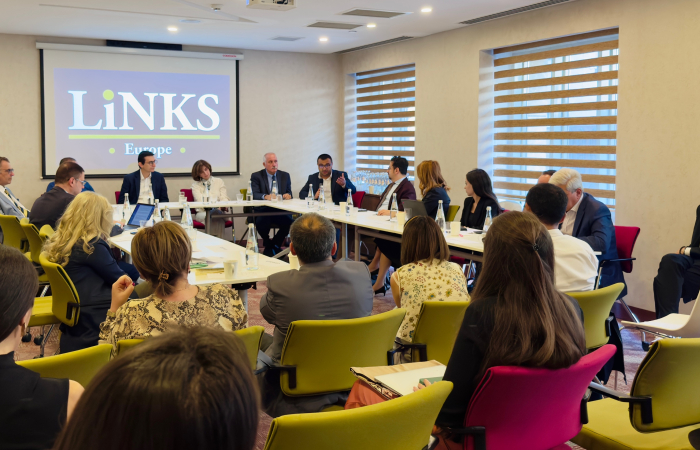
The 2nd South Caucasus Dialogue Forum was successfully held in the Georgian Capital, Tbilisi, on Tuesday, 28 October 2025, with the participation of over seventy experts, activists, diplomats and journalists from Armenia, Azerbaijan and Georgia and from a dozen European countries and organisations. The forum is an initiative of LINKS Europe, working with partners across the South Caucasus. This year's forum was special because of the participation of around forty Armenian and Azerbaijanis members of the Thematic Groups for a new Armenian-Azerbaijani Dialogue.  The 2nd South Caucasus Dialogue Forum provided for a very thorough and interesting discussion of current developments in the region. In the Forum the Armenian and Azerbaijani members were also joined by Georgian participants, as well as representatives of the EUSR Office, EUMA and Ambassadors and diplomats from around ten European countries. Also actively participating were the members of the Armenia-Azerbaijan Expert Strategic Platform. During the Forum it was announced that the 3rd Forum will be held in Yerevan in 2026, whilst the 4th Forum will be held in Baku is 2027, accompanying the process and meetings of the European Political Community, which are also expected to be held in the two countries in 2026/7. It was also announced that the members of the Strategic Expert Platform, working under the auspices of LINKS Europe (Dr Dennis Sammut, Chair, Dr Anar Veliyev, Mr Ramazan Samadov and Mr Mehman Aliyev (members Azerbaijan); Mr Stepan Grigoryan, Mr Benyamin Poghosyan and Mr Johnny Melikyan, members Armenia;) shall form the Political Preparatory Committee for the two events.
Editor's choice
News
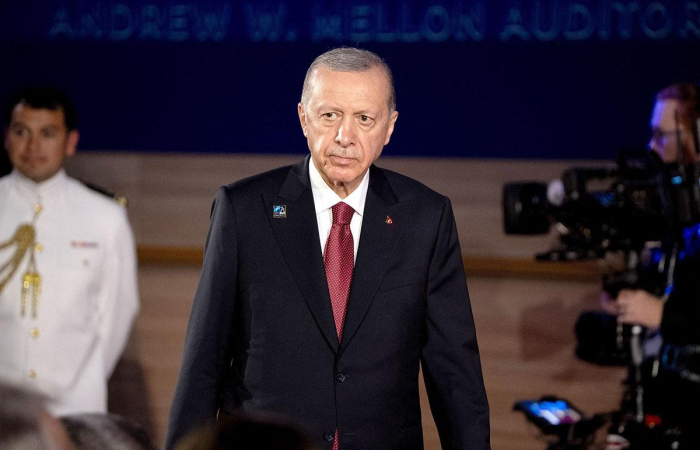
Erdogan tours the Gulf and says Turkey will buy Eurofighter jets from Qatar and Oman

Erdogan tours the Gulf and says Turkey will buy Eurofighter jets from Qatar and Oman

Turkey is negotiating with Qatar and Oman to acquire used Eurofighter Typhoon fighter jets as part of its effort to bolster its air force capabilities. Following a three-day tour of Kuwait, Qatar, and Oman last week in which he oversaw the signing of several agreements, including in the defense sector, President  Recep Tayyip Erdogan said that Turkey aims to purchase dozens of Eurofighters and other advanced jets as a stopgap measure to strengthen its fleet until its domestically developed fifth-generation KAAN fighter jet becomes operational.