Theme

Defence

Stories related to defence, strategy and cooperation. 

Editor's choice
News
NATO Chief says war is on Europe's doorstep, and warns against complacency

NATO Chief says war is on Europe's doorstep, and warns against complacency

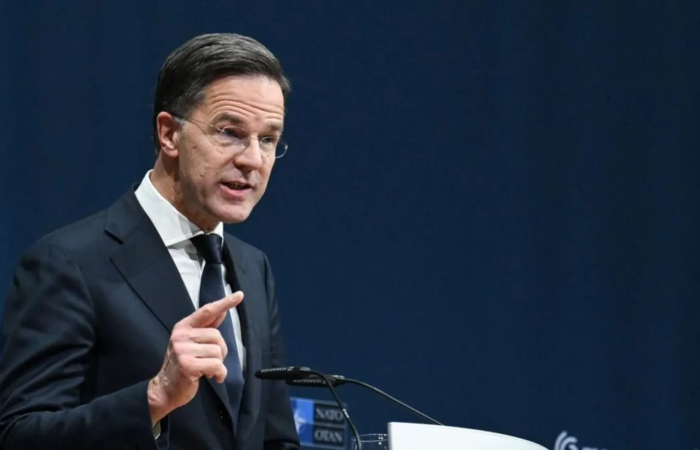
Russia could attack a NATO country within the next five years, the Secretary General of NATO, Mark Rutte, said in a stark new warning. "NATO's own defences can hold for now," Rutte warned in Berlin, but conflict was "next door" to Europe, and he feared "too many are quietly complacent, and too many don't feel the urgency, too many believe that time is on our side. "Russia is already escalating its covert campaign against our societies," Rutte said in a speech in Germany. "We must be prepared for the scale of war our grandparents or great-grandparents endured." Earlier this month, Russia's President Vladimir Putin said his country was not planning to go to war with Europe, but it was ready "right now" if Europe wanted to - or started a war. But similar reassurances were given by Moscow in 2022, just before 200,000 Russian troops crossed the border and invaded Ukraine. Putin has accused European countries of hindering US efforts to bring peace in Ukraine - a reference to the role Ukraine's European allies have recently played in trying to change a US peace plan to end the war, whose initial draft was seen as favouring Russia. But Putin was not sincere, Nato's secretary-general said in the German capital, Berlin. Supporting Ukraine, he added, was a guarantee for European security. "Just imagine if Putin got his way; Ukraine under the boot of Russian occupation, his forces pressing against a longer border with Nato, and the significantly increased risk of an armed attack against us." Russia's economy has been on a war footing for more than three years now - its factories churn out ever more supplies of drones, missiles and artillery shells. According to a recent report by the Kiel Institute for the World Economy, Russia has been producing each month around 150 tanks, 550 infantry fighting vehicles, 120 Lancet drones and more than 50 artillery pieces. The UK, and most of its Western allies, are simply not anywhere near this point. Analysts say it would take years for Western Europe's factories to come close to matching Russia's mass-production of weapons. "Allied defence spending and production must rise rapidly, our armed forces must have what they need to keep us safe," the Nato chief said.
Editor's choice
Analysis
Mehman Aliyev on what "peace" can look like for Ukraine

Mehman Aliyev on what "peace" can look like for Ukraine

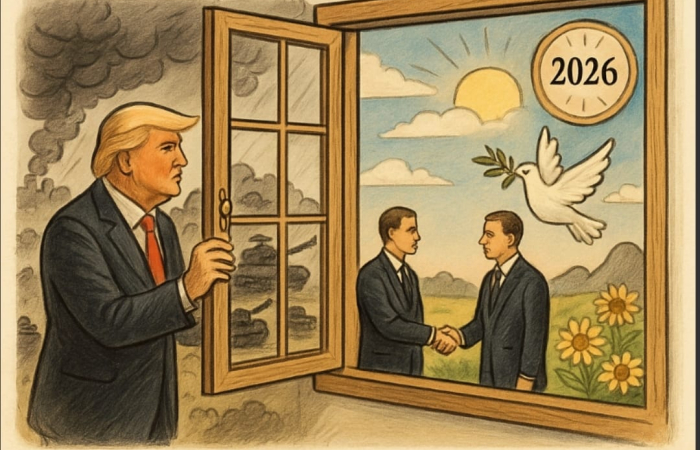
In this analysis,  veteran Azerbaijani journalist and political commentator, Mehman Aliyev, draws lessons from the 1994 Armenia-Azerbaijan ceasefire, to assess what can be possible impact of ceasefire in Ukraine. According to diplomats, a negotiating format or a partial ceasefire based on a modified version of the twenty-eight points is entirely plausible in 2026. A frozen line of contact, monitored by international mechanisms while talks drag on, is more likely than a fully implemented peace treaty by early that same year. “This document opens a window,” said political commentator Farid Gakhramanov. “Whether it means the end of the war or the beginning of a new frozen conflict will depend on the decisions of Moscow, Kyiv, Washington, and Brussels — not on the document itself.” (You can read the full analysis by clicking the image)

Filter archive

Publication date
Editor's choice
Monday Commentary
Monday Commentary: NATO Summit in The Hague II: everyone survived, now all eyes on Türkiye

Monday Commentary: NATO Summit in The Hague II: everyone survived, now all eyes on Türkiye

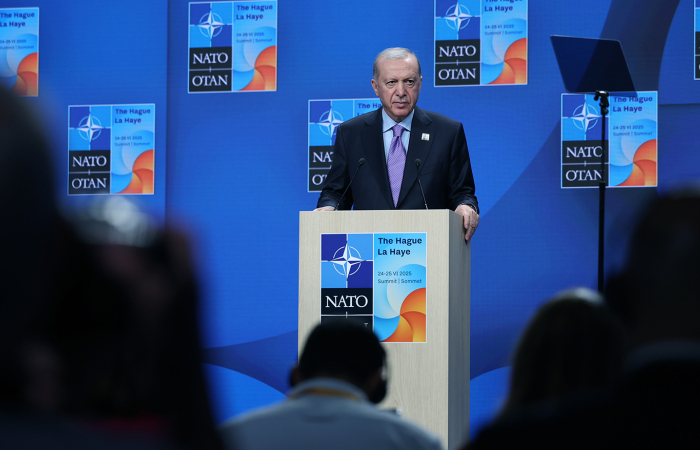
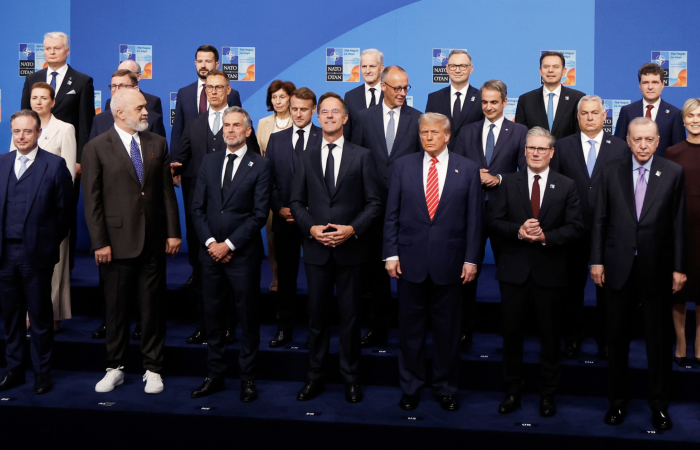
The Nato Summit held in The Hague on 24-25 June was a failure, wrapped in success. It was a success because it avoided public display of divisions, mainly by avoiding issues: it was the shortest summit anyone can remember; it also had a very short final statement that basically had two points, the first a re-commitment to article 5 of the North Atlantic Charter and the principle that an attack on one will be considered an attack on all. The fact that Nato leaders in the Hague had felt the need to re-emphasise this should be a cause of worry not celebration, but in the end, it is good that it was said. The second outcome, the one that received most attention, was the commitment of European countries to spend more on their defence: 5 per cent of GDP, of which 3.5 per cent on hard defence, and 1.5 per cent on related ancillary areas such as infrastructure. You may, if you want, believe that this was a response to US President Donald Trump's insistence. Or, if you are more prudent, understand that countries that matter – Germany, France, Poland and the Scandinavian countries had decided on this course of action quite separately, and as a response to Russia’s invasion of Ukraine, which was a wake-up call. Finland and Sweden’s decision to abandon their neutrality, and join NATO was taken long before Trump returned to the White House. The EU’s decision to spend massively on defence was always to ensure that other European countries are part of this process, willy-nilly.
Editor's choice
News
Several countries bordering Russia will leave the Ottawa Convention which bans land mines

Several countries bordering Russia will leave the Ottawa Convention which bans land mines

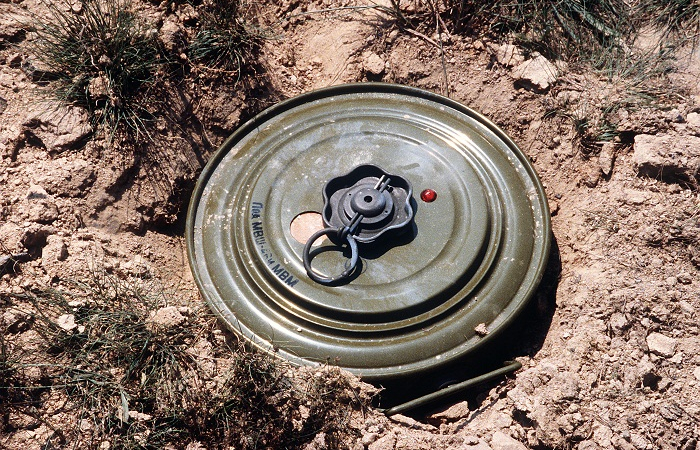
Several countries that border Russia intend to leave the Ottawa Convention which bans anti personnel land mines. They include EU member states Finland, Poland, Latvia, Lithuania and Estonia, as well as Ukraine. Russia has not signed the Ottawa treaty and continues to stockpile and use landmines. Ukraine is withdrawing from the Ottawa Convention, which prohibits the use, stockpiling and production of anti-personnel mines, according to Roman Kostenko, People's Deputy of the Golos party and Secretary of the Committee on National Security, Defense and Intelligence of the Verkhovna Rada of Ukraine . He said this is a step that the realities of war have long required. "Russia is not a party to this convention and is massively using mines against our military and civilians. We cannot remain constrained in conditions where the enemy has no restrictions," the MP noted.
Editor's choice
News
Fragile Israel – Iran truce brokered by Trump comes into effect but Israel claims Iran violated ceasefire

Fragile Israel – Iran truce brokered by Trump comes into effect but Israel claims Iran violated ceasefire

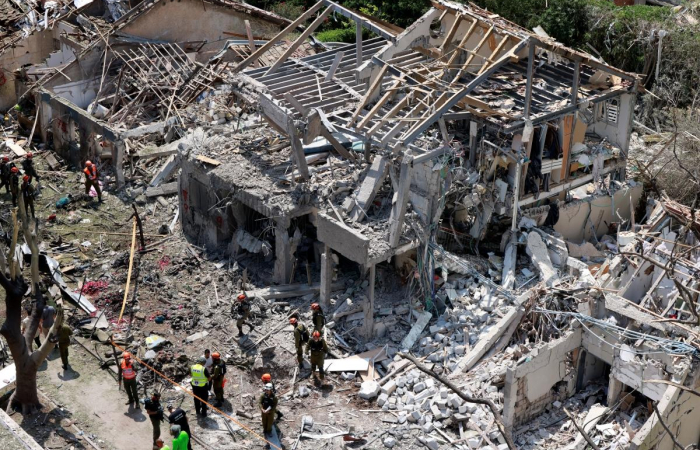
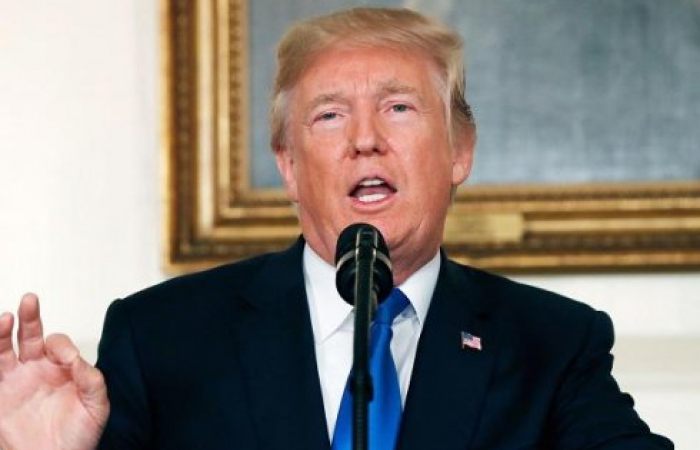
Hours after US President Donald Trump said his ceasefire had taken effect, Israel said it intercepted two Iranian missiles, with Defence Minister Israel Katz vowing that the military would "respond forcefully". Israel had stated on Tuesday it agreed to Trump's declaration of a ceasefire with Iran, adding that it had achieved all its objectives in the 12-day war with its arch-enemy. According to AFP, Iran denied launching missiles at Israel after the ceasefire announcement, and said it had "compelled" Israel to "unilaterally halt its aggression", while stopping short of officially accepting the ceasefire plan.
Editor's choice
Monday Commentary
Monday Commentary: NATO in The Hague: a summit like no other

Monday Commentary: NATO in The Hague: a summit like no other

NATO summits are usually orderly affairs, prepared well in advance, and an opportunity for the partners in the military alliance to show unity and resolve. The forthcoming Nato Summit in The Hague, on Tuesday and Wednesday, 24 and 25 June is different. As the BBC put it, there will be 32 leaders from Europe and North America present, but “only one man matters  - NATO's summit is all about Trump”. With three wars on its borders, NATO needed a good summit in The Hague. Whilst managing Mr Trump, the 31 other leaders in The Hague need to think of the future.
Editor's choice
News
Putin offers to broker a deal between Iran and Israel as Trump warns of US military action

Putin offers to broker a deal between Iran and Israel as Trump warns of US military action

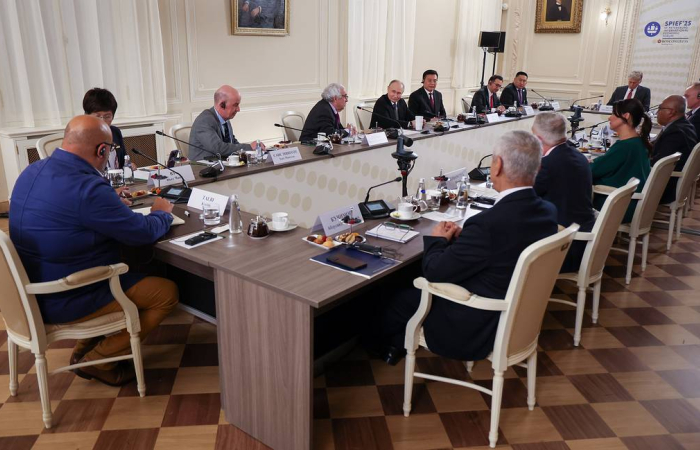
Russian President Vladimir Putin offered Wednesday to help mediate an end to the conflict between Israel and Iran, suggesting Moscow could help negotiate a settlement that could allow Tehran to pursue a peaceful atomic program while assuaging Israeli security concerns, AP reported. Speaking to senior news leaders of international news agencies on the sidelines of the St. Petersburg International Economic Forum, Putin noted that “it’s a delicate issue,” but added that “in my view, a solution could be found.” Meanwhile, Iran launched a fresh salvo of missiles at Israel on Thursday, with a hospital reported hit, as US President Donald Trump warned he was weighing US military action in the conflict.
Editor's choice
News
Volodymyr Zelensky is only partially welcome at the NATO summit in The Hague.

Volodymyr Zelensky is only partially welcome at the NATO summit in The Hague.

The Ukrainian president Volodymyr Zelensky will only be welcome at the dinner for heads of state and government leaders at the Huis ten Bosch Palace during the summit. This is evident from the summit programme, announced on Monday (16 June). In previous years, the Ukrainian head of state was given a much more prominent place in the programme. The United States, under the leadership of president Donald Trump, objected to Zelensky's invitation to this year's summit.