

Russian serviceman detained after Armenian family murdered in Gyumri.

by Joseph Alexander Smith, reporting from Tbilisi for commonspace.eu.

Border guards in Armenia have detained a Russian soldier serving in the northern city of Gyumri who is suspected of shooting dead six members of the same family on January 12.

According to news agency News.am, Valery Permyakov was undertaking compulsory military service at the 102nd Military Base in Gyumri, the largest Russian base in Armenia. He was confirmed missing from the base on Monday evening and was apprehended by border guards in the village of Bayandur in the vicinity of the Armenian-Turkish border in the early hours of Tuesday morning.

A manhunt for Permyakov was launched after the bodies of six members of the Avetisyan family were discovered on Monday with gunshot wounds, including five adults and one child. A six-month old baby with serious injuries was also discovered at the address on Myasnikyan Street and taken to the local hospital where he remains in a critical condition.

News reports of Permyakov's testimony emerged later on the morning of January 13. According to First Deputy Chief of Police in Gyumri, Hunan Poghosyan speaking to News.am, Permyakov alleges that he left his military post, went for a stroll and entered the house on Myasnikyan Street looking for drinking water. After no one answered his knocking, Permyakov apparently forced his way into the house and woke the family up after which shots were fired.

It has also emerged that he will be charged with deserting his military post, fleeing his military base with a weapon and attempting to cross the Armenian border after being declared "missing" from the base on Monday night.

The Russian embassy in Armenia was swift to condemn the attack, saying that they were "appalled" by the attack in a statement of condolence released on Monday evening. "The relevant authorities of the Republic of Armenia and the Russian Federation are carrying out the necessary investigation procedures aimed at an objective and comprehensive investigation into the incident," read the statement. "Investigation teams coordinate their efforts in full compliance with the agreement on the terms of the 102nd military base on the territory of Armenia."

The Embassy statement was followed by a phone conversation between Armenian Foreign Minister Eduard Nalbandian and his Russian counterpart Sergei Lavrov, in which the Russian Foreign Minister pledged to assist Armenian law enforcement agencies with the investigation.

It is not yet known whether Permyakov will stand trial in Armenia or Russia, although there is evidence that the Russian side would prefer the latter. According to Russian news agency RIA Novosti, the Russian Ministry of Defence has formed an ad hoc investigative commission headed by First Deputy Defence Minister Arkady Bakhin. In the immediate wake of the killings, the Armenian President had also set up a commission to investigate.

However, in his statement on Tuesday morning, Poghosyan told News.am that the Armenian police would be conducting the investigation. "They tend to want us [the Armenian police] to investigate," he said, "since the incident occurred here. It's a serious crime and I believe we will investigate the case."

The latest tragedy isn't the first time personnel from 102nd Military Base have been involved in local fatalities. In April 2013, two local youths were killed after stepping on a land mine while pasturing animals in a field outside Vahramaberd village. The field had recently been passed to the military base for use as a shooting range and the incident raised questions about the level of security around the site, although after investigation, the base bore no legal responsibility for the fatalities. In 1999, two servicemen from the base were convicted after entering the city and drunkenly shooting at local houses and people with machine guns, resulting in two deaths and ten severe injuries.

Armenia and Russia agreed to extend the Russian lease on the base until 2044 in an agreement reached in 2010. Russian President Vladimir Putin's visit to the base in 2013 confirmed Russia and Armenia's strategic interest in the base, with Armenians citing the Russian presence as crucial to their national defence should hostilities resume with neighbouring Azerbaijan. 

source: commonspace.eu

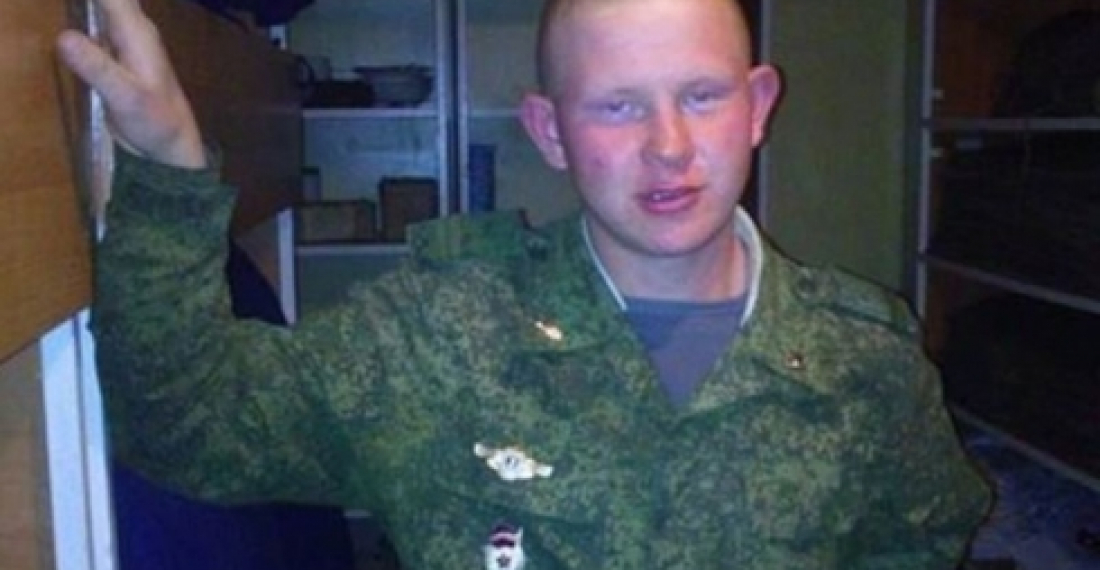
photo: Russian army conscript Valery Pemyakov, accused of killing six members of an Armenian family in Gyumri.


Related articles

Editor's choice
News
Landmines present to the European Union both a contradiction and a dilemma

Landmines present to the European Union both a contradiction and a dilemma

Finland’s decision to buy one million landmines creates a serious contradiction in the policy of the European Union, and is symbolic of a bigger dilemma facing European countries as they get used to the need to acquire “hard” power to face an increasing threat from Russia. Finland is seeking to acquire one million anti-personnel mines at a cost of 100 million euros. Finland, together with Poland, Latvia, Lithuania and Estonia last year abandoned the Ottawa agreement, the international framework that bans the use of anti-personnel mines, which the EU had been instrumental in establishing and supporting. All five countries cite the threat from Moscow as the reason. Colonel Riku Mikkonen of the Army Command told Finland’s national news agency STT that officials are now gathering information from suppliers regarding the deal, the AFP news agency reports. Helsinki would like domestic manufacturers to supply the mines, with contracts signed by the end of 2027 and production up and running by 2028. “It would be useful in many ways if Finnish companies produced the anti-personnel mines in Finland,” Mikkonen said. About half a dozen Finnish firms qualify, he told STT. “However, at this stage, buying the mines from abroad is not totally ruled out,” he added. LANDMINES PROVIDE THE EU WITH BOTH A CONTRADICTION, AND A DILEMMA Eliminating landmine contamination worldwide is one of the EU’s main soft power postures, and it basks in its record as the biggest funder of anti-landmine action in the world. But the fact that 5 of its 27 member states  have now left the Ottawa Treaty dents the EU moral high ground. It is a contradiction that is too big and important to be ignored. It also presents the European Union with a deeper dilemma. The threat from Russia is changing what the EU has stood for decades, namely a force for good able to mobilise its considerable soft power for the greater good of humanity. How the Union will implement this change will define its future. In the meantime landmines have not become any less lethal, benign, or unimportant. They remain in many parts of the world a major threat to life, an impediment to prosperity, and a potential trigger to further conflict. The 22 EU members states that still adhere to the Ottawa treaty must regroup, and be more assertive in their quest against anti-personnel land mines. All the reasons why they supported the Ottawa treaty in the first place still exist. The message must be clear: NO TO LANDMINES!
Editor's choice
News
Pashinyan says that he wants peace treaty with Azerbaijan by 2031

Pashinyan says that he wants peace treaty with Azerbaijan by 2031

Armenia should sign and ratify a peace treaty with Azerbaijan before 2031, Armenian Prime Minister Nikol Pashinyan said. He described the objective as the top priority for his administration. Earlier, the Armenian prime minister also spoke about a possible land-swap with Azerbaijan Armenia and Azerbaijan should agree to establish a clear, conventional border without enclaves or exclaves, Prime Minister Nikol Pashinyan said. Armenia controls three Azeri enclaves inside its borders while Baku controls one Armenian enclave – those could be subject to a land swap, Pashinyan announced.

Popular

Editor's choice
Interview
Thursday Interview: Murad Muradov

Thursday Interview: Murad Muradov

Today, commonspace.eu starts a new regular weekly series. THURSDAY INTERVIEW, conducted by Lauri Nikulainen, will host  persons who are thinkers, opinion shapers, and implementors in their countries and spheres. We start the series with an interview with Murad Muradov, a leading person in Azerbaijan's think tank community. He is also the first co-chair of the Action Committee for a new Armenian-Azerbaijani Dialogue. Last September he made history by being the first Azerbaijani civil society activist to visit Armenia after the 44 day war, and the start of the peace process. Speaking about this visit Murad Muradov said: "My experience was largely positive. My negative expectations luckily didn’t play out. The discussions were respectful, the panel format bringing together experts from Armenia, Azerbaijan, and Turkey was particularly valuable during the NATO Rose-Roth Seminar in Yerevan, and media coverage, while varied in tone, remained largely constructive. Some media outlets though attempted to represent me as more of a government mouthpiece than an independent expert, which was totally misleading.  Overall, I see these initiatives as important steps in rebuilding trust and normalising professional engagement. The fact that soon a larger Azerbaijani civil society visits to Armenia followed, reinforces the sense that this process is moving in the right direction." (click the image to read the interview in full)