Region

Russia

Stories under this heading cover Russia, as well as countries in the eastern part of the European continent, such as Belarus, Ukraine, and Moldova.

Editor's choice
News
Germany accuses Russia of cyberattacks and disinformation campaign

Germany accuses Russia of cyberattacks and disinformation campaign

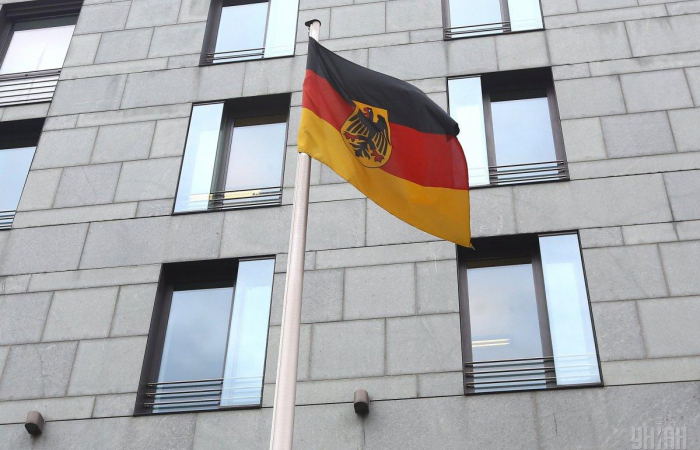
The German government holds Russia responsible for a cyberattack on German air traffic control, and for targeted disinformation campaigns before the last federal election. According to the German Foreign Office in Berlin, the incidents could be clearly attributed to the Russian military intelligence service, the GRU. In response, the Russian ambassador to Berlin was summoned to the Foreign Ministry. "We have been observing a massive increase in threatening hybrid activities by Russia for some time now," a spokesperson for the Foreign Ministry stated. These range from disinformation campaigns and espionage to cyberattacks and sabotage attempts. The aim is to divide society, sow distrust, and undermine confidence in democratic institutions. The spokesperson added that with these actions, Russia is "very concretely threatening our security, not only through its war of aggression against Ukraine, but also here in Germany."  The Foreign Ministry spokesperson explained that the cyberattack on air traffic control in August 2024 was clearly attributed to the hacker collective "APT28," known as "Fancy Bear," and to the responsibility of the Russian military intelligence service, the GRU. Furthermore, it could now be "conclusively stated" that Russia had attempted "to influence and destabilize both the last Federal election and the ongoing internal affairs of the Federal Republic of Germany." There was "absolutely irrefutable evidence" for this". The so-called "Storm 1516" campaign, which has been running since 2024, is allegedly backed by "reliable information" that the Moscow-based think tank "Center for Geopolitical Expertise" is behind it. The Center is also said to be supported by Russian military intelligence. Its primary aim is to influence democratic elections in the West. (Click the image to read more).
Editor's choice
News
NATO Chief says war is on Europe's doorstep, and warns against complacency

NATO Chief says war is on Europe's doorstep, and warns against complacency

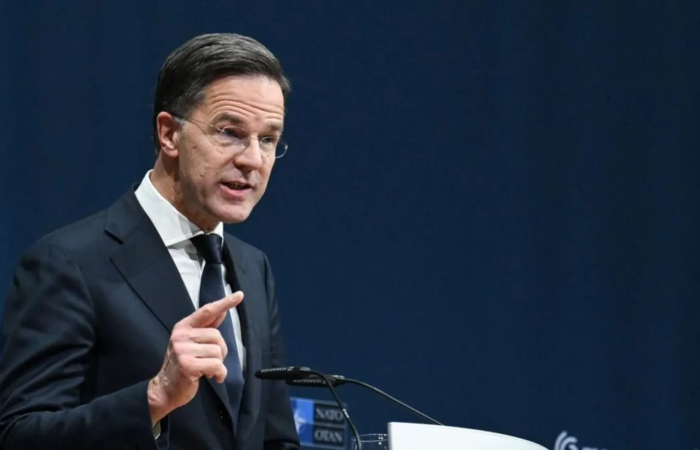
Russia could attack a NATO country within the next five years, the Secretary General of NATO, Mark Rutte, said in a stark new warning. "NATO's own defences can hold for now," Rutte warned in Berlin, but conflict was "next door" to Europe, and he feared "too many are quietly complacent, and too many don't feel the urgency, too many believe that time is on our side. "Russia is already escalating its covert campaign against our societies," Rutte said in a speech in Germany. "We must be prepared for the scale of war our grandparents or great-grandparents endured." Earlier this month, Russia's President Vladimir Putin said his country was not planning to go to war with Europe, but it was ready "right now" if Europe wanted to - or started a war. But similar reassurances were given by Moscow in 2022, just before 200,000 Russian troops crossed the border and invaded Ukraine. Putin has accused European countries of hindering US efforts to bring peace in Ukraine - a reference to the role Ukraine's European allies have recently played in trying to change a US peace plan to end the war, whose initial draft was seen as favouring Russia. But Putin was not sincere, Nato's secretary-general said in the German capital, Berlin. Supporting Ukraine, he added, was a guarantee for European security. "Just imagine if Putin got his way; Ukraine under the boot of Russian occupation, his forces pressing against a longer border with Nato, and the significantly increased risk of an armed attack against us." Russia's economy has been on a war footing for more than three years now - its factories churn out ever more supplies of drones, missiles and artillery shells. According to a recent report by the Kiel Institute for the World Economy, Russia has been producing each month around 150 tanks, 550 infantry fighting vehicles, 120 Lancet drones and more than 50 artillery pieces. The UK, and most of its Western allies, are simply not anywhere near this point. Analysts say it would take years for Western Europe's factories to come close to matching Russia's mass-production of weapons. "Allied defence spending and production must rise rapidly, our armed forces must have what they need to keep us safe," the Nato chief said.

Filter archive

Publication date
Editor's choice
Opinion
Opinion: Re-evaluating the idea of ‘Putinism’

Opinion: Re-evaluating the idea of ‘Putinism’

The pillars of Putinism can be routed back to a Soviet-era understanding of international relations and contested world order and see the 'westernisation' of the domestic or regional environment in the vicinity of Russia's 'sphere of key interests' as a source of concern., writes Edward Abrahamyan
Editor's choice
News
A feeling of deja vue in the Caucasus as US beats war drums on Iran

A feeling of deja vue in the Caucasus as US beats war drums on Iran

The governments in the South Caucasus are looking at developments with a sense of trepidation. All three have important trade and commercial relations with Iran, and the prospect of an all-out confrontation between the Islamic Republic and the US puts all three in a difficult position.
Editor's choice
News
Russia marks Victory Day

Russia marks Victory Day

Over 13,000 troops and more than 130 items of advanced weapon systems were involved in the Victory Day Parade in Moscow, but an aviation fly past was cancelled due to bad weather
Editor's choice
News
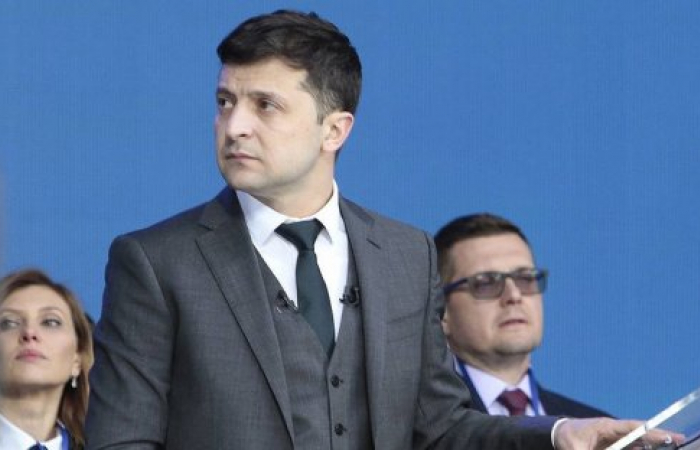
Zelensky: The only thing Russia and Ukraine have left in common is their state border

Zelensky: The only thing Russia and Ukraine have left in common is their state border

The Ukrainian president-elect stressed that the ban on the exports of petroleum products, the opening of passport offices for fast-track naturalisation of residents of the occupied territories, and the holding of Ukrainians in captivity do not bring the settlement of relations between the two countries any closer.
Editor's choice
News
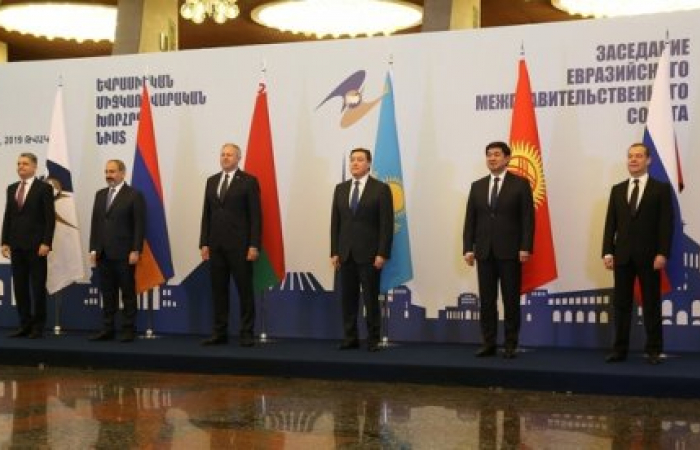
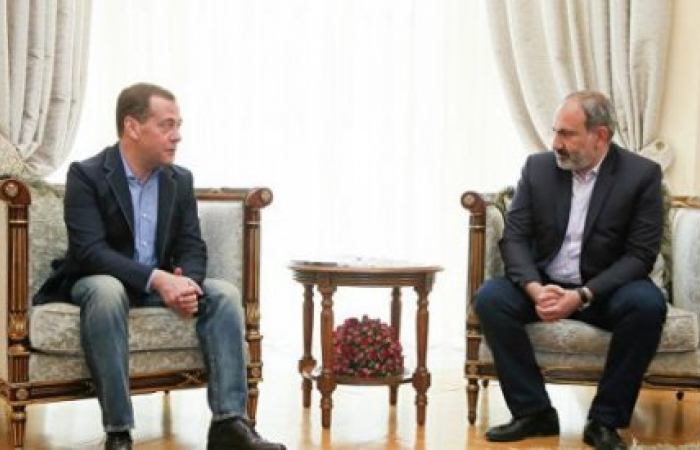
Dimitri Medvedev has arrived in Armenia (Updated)

Dimitri Medvedev has arrived in Armenia (Updated)

Russian prime minister Dimitri Medvedev held a meeting with his Armenian counterpart Nikol Pashinyan on Monday evening, shortly after arriving in the Armenian capital, Yerevan. The meeting was held at Pashinyan's official home. Both prime ministers were photographed in open neck shirts during the talks.
Editor's choice
News
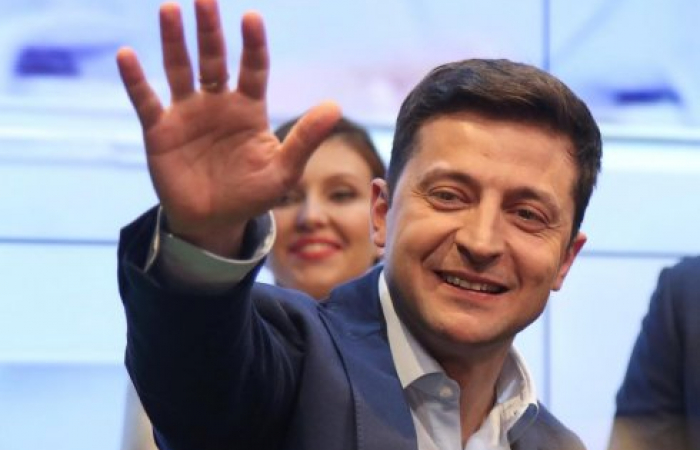
Europe quick to congratulate Zelensky, but Putin rather waits

Europe quick to congratulate Zelensky, but Putin rather waits

With nearly all the votes counted in Ukraine's presidential election, Volodymyr Zelensky received 73.23% of the vote (13,524,027 voters), while his opponent, incumbent President Petro Poroshenko, was supported by 24.45% of the voters (4,516,354).