Region

Russia

Stories under this heading cover Russia, as well as countries in the eastern part of the European continent, such as Belarus, Ukraine, and Moldova.

Editor's choice
News
Germany accuses Russia of cyberattacks and disinformation campaign

Germany accuses Russia of cyberattacks and disinformation campaign

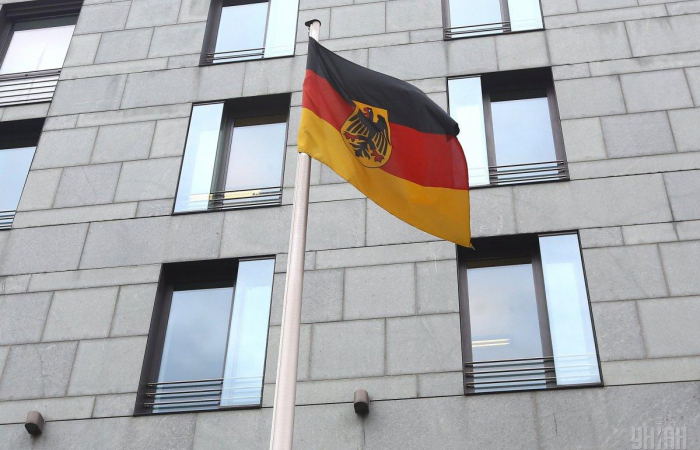
The German government holds Russia responsible for a cyberattack on German air traffic control, and for targeted disinformation campaigns before the last federal election. According to the German Foreign Office in Berlin, the incidents could be clearly attributed to the Russian military intelligence service, the GRU. In response, the Russian ambassador to Berlin was summoned to the Foreign Ministry. "We have been observing a massive increase in threatening hybrid activities by Russia for some time now," a spokesperson for the Foreign Ministry stated. These range from disinformation campaigns and espionage to cyberattacks and sabotage attempts. The aim is to divide society, sow distrust, and undermine confidence in democratic institutions. The spokesperson added that with these actions, Russia is "very concretely threatening our security, not only through its war of aggression against Ukraine, but also here in Germany."  The Foreign Ministry spokesperson explained that the cyberattack on air traffic control in August 2024 was clearly attributed to the hacker collective "APT28," known as "Fancy Bear," and to the responsibility of the Russian military intelligence service, the GRU. Furthermore, it could now be "conclusively stated" that Russia had attempted "to influence and destabilize both the last Federal election and the ongoing internal affairs of the Federal Republic of Germany." There was "absolutely irrefutable evidence" for this". The so-called "Storm 1516" campaign, which has been running since 2024, is allegedly backed by "reliable information" that the Moscow-based think tank "Center for Geopolitical Expertise" is behind it. The Center is also said to be supported by Russian military intelligence. Its primary aim is to influence democratic elections in the West. (Click the image to read more).
Editor's choice
News
NATO Chief says war is on Europe's doorstep, and warns against complacency

NATO Chief says war is on Europe's doorstep, and warns against complacency

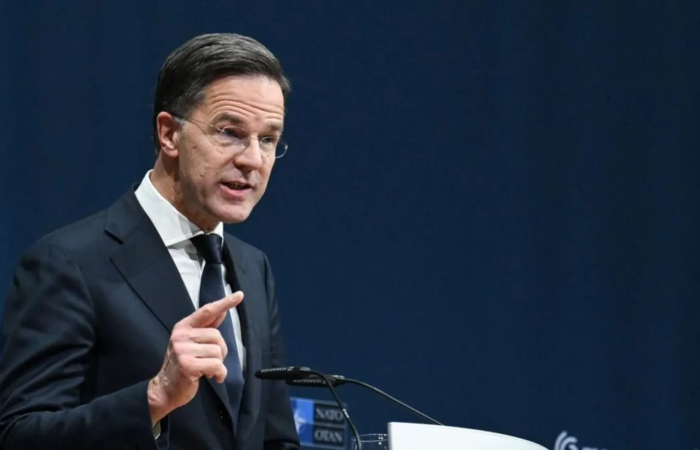
Russia could attack a NATO country within the next five years, the Secretary General of NATO, Mark Rutte, said in a stark new warning. "NATO's own defences can hold for now," Rutte warned in Berlin, but conflict was "next door" to Europe, and he feared "too many are quietly complacent, and too many don't feel the urgency, too many believe that time is on our side. "Russia is already escalating its covert campaign against our societies," Rutte said in a speech in Germany. "We must be prepared for the scale of war our grandparents or great-grandparents endured." Earlier this month, Russia's President Vladimir Putin said his country was not planning to go to war with Europe, but it was ready "right now" if Europe wanted to - or started a war. But similar reassurances were given by Moscow in 2022, just before 200,000 Russian troops crossed the border and invaded Ukraine. Putin has accused European countries of hindering US efforts to bring peace in Ukraine - a reference to the role Ukraine's European allies have recently played in trying to change a US peace plan to end the war, whose initial draft was seen as favouring Russia. But Putin was not sincere, Nato's secretary-general said in the German capital, Berlin. Supporting Ukraine, he added, was a guarantee for European security. "Just imagine if Putin got his way; Ukraine under the boot of Russian occupation, his forces pressing against a longer border with Nato, and the significantly increased risk of an armed attack against us." Russia's economy has been on a war footing for more than three years now - its factories churn out ever more supplies of drones, missiles and artillery shells. According to a recent report by the Kiel Institute for the World Economy, Russia has been producing each month around 150 tanks, 550 infantry fighting vehicles, 120 Lancet drones and more than 50 artillery pieces. The UK, and most of its Western allies, are simply not anywhere near this point. Analysts say it would take years for Western Europe's factories to come close to matching Russia's mass-production of weapons. "Allied defence spending and production must rise rapidly, our armed forces must have what they need to keep us safe," the Nato chief said.

Filter archive

Publication date
Editor's choice
News
US - Russia Summit to be held next week to discuss war in Ukraine

US - Russia Summit to be held next week to discuss war in Ukraine

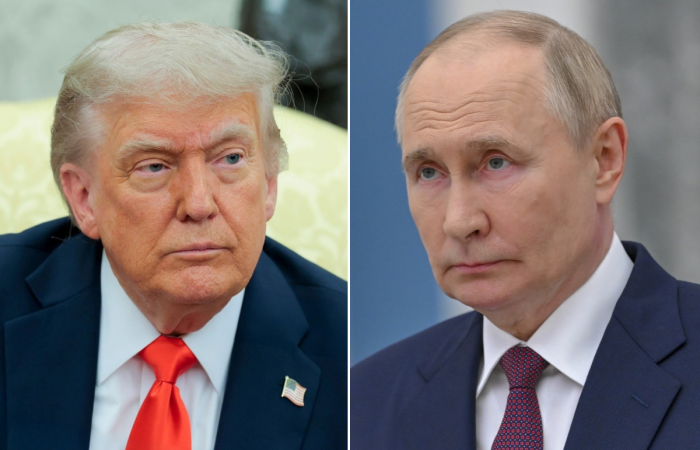
A meeting between Russian President Vladimir Putin and U.S. President Donald Trump has been agreed, a Kremlin official said on Thursday 7 August, the eve of a White House deadline for Moscow to show progress toward ending the 3-year-old war in Ukraine. Putin’s foreign affairs adviser Yuri Ushakov, quoted by AP, said a summit could possibly take place next week at a venue that has been decided “in principle.” Next week is the target date for a summit, Ushakov said, while noting that such events take time to organise and no date is confirmed. The possible venue will be announced “a little later,” he said.
Editor's choice
News
Russia remains defiant over Trump threats

Russia remains defiant over Trump threats

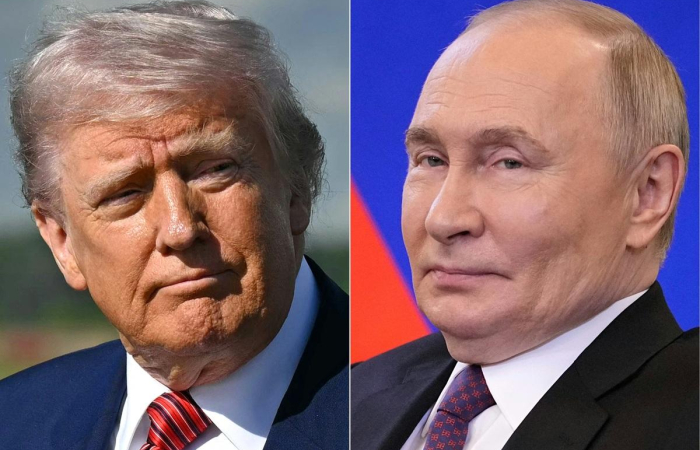
Russian glide bombs and ballistic missiles struck a Ukrainian prison and a medical facility overnight as Russia’s relentless strikes killed at least 22 people across the country, officials said on Tuesday 29 July, despite U.S. President Donald Trump’s threat to punish Russia with sanctions and tariffs unless it stops. Trump said on Monday he is giving Russian President Vladimir Putin 10 to 12 days to stop the killing in Ukraine after three years of war, moving up a 50-day deadline he had given the Russian leader two weeks ago. “I’m disappointed in President Putin,” Trump said during a visit to Scotland.
Editor's choice
News
Ukraine protests continue as Zelenskyy offers new anti-corruption bill after European pressure

Ukraine protests continue as Zelenskyy offers new anti-corruption bill after European pressure

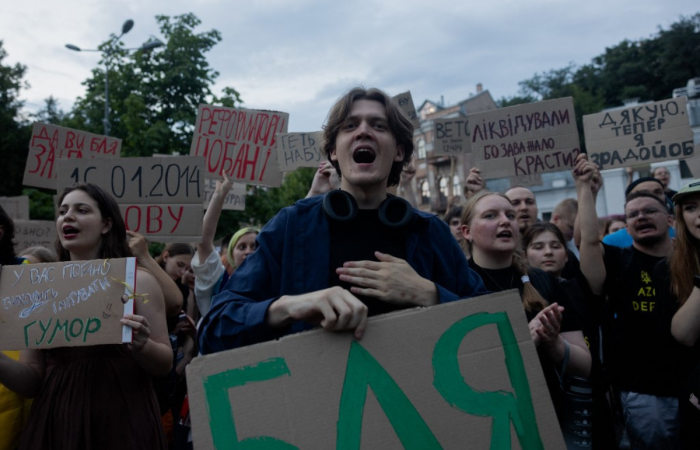
Ukrainians are taking to the streets to protest a new law they worry will undermine the work of two key anti-corruption agencies and erode the independence of bodies meant to provide a check on power. Protests are growing and spreading around the country even as President Volodymyr Zelenskyy offered a vague new bill to alleviate demonstrators’ concerns. After a day of pressure from Ukrainian citizens, the European Commission and many European governments, Zelenskyy said he “heard the public opinion” and promised to fix the situation with a new bill that he pledged would preserve the independence of corruption agencies.
Editor's choice
News
Armenian Prime Minister confirms ambitous reform programme and EU membership bid

Armenian Prime Minister confirms ambitous reform programme and EU membership bid

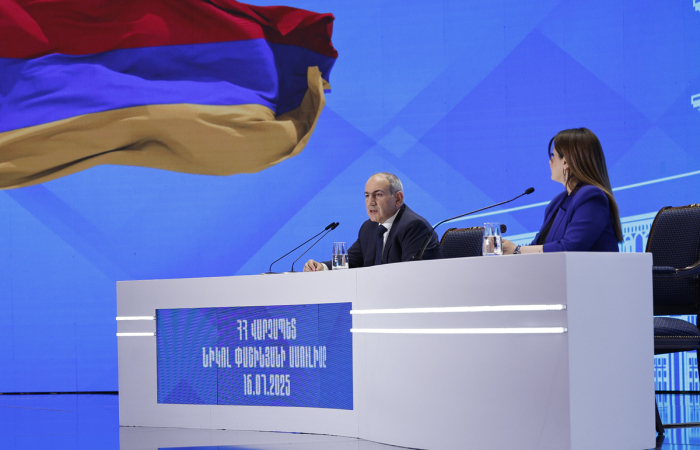
Prime Minister Nikol Pashinyan said Armenia wanted to become a member of the European Union within twenty years and will commit to an ambitous reform programme to meet the criteria of EU accession. In a press conference on 16 July, Pashinyan referred to his recent visit in Brussels and said the law adopted by the Armenian parliament meant the country seeks to join the EU. He acknowledged that this was not a simple process and all EU member states needed to agree to Armenia’s membership. He emphasised that regardless of whether Armenia ultimately joins the EU, the country will continue its ambitious reform programme.
Editor's choice
News
Trump threatens Russia with tariffs if peace deal is not reached within 50 days

Trump threatens Russia with tariffs if peace deal is not reached within 50 days

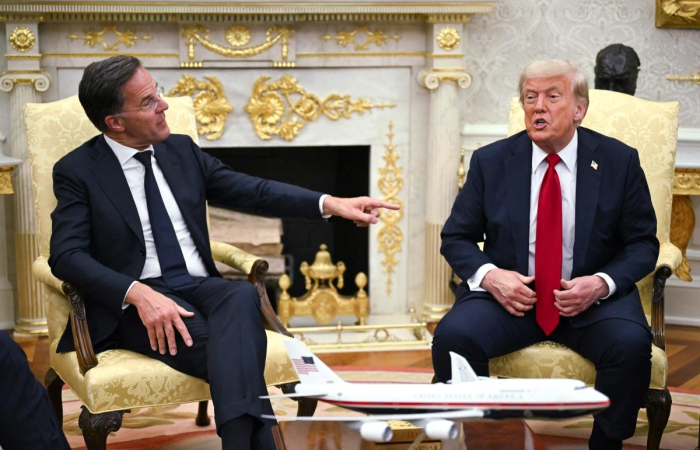
US President Donald Trump on Monday threatened Russia with steep tariffs unless a peace deal is reached within 50 days and announced a rejuvenated pipeline for American weapons to reach Ukraine, hardening his stance toward Moscow after months of frustration about unsuccessful negotiations for ending the war. The latest steps reflect an evolving approach from the Republican president, who promised to swiftly resolve the war started by Russian President Vladimir Putin when he invaded Ukraine three years ago. In the past, Trump focused his criticism on Ukrainian President Volodymyr Zelensky, whom he described as unwilling to compromise, but more recently has expressed growing irritation towards Putin. In addition, Trump said European allies would buy “billions and billions” of dollars of U.S. military equipment to be transferred to Ukraine, replenishing the besieged country’s supplies of weapons. He made the announcement in the Oval Office alongside NATO Secretary-General Mark Rutte.
Editor's choice
Opinion
Abu Dhabi: What Next for Armenia and Azerbaijan?

Abu Dhabi: What Next for Armenia and Azerbaijan?

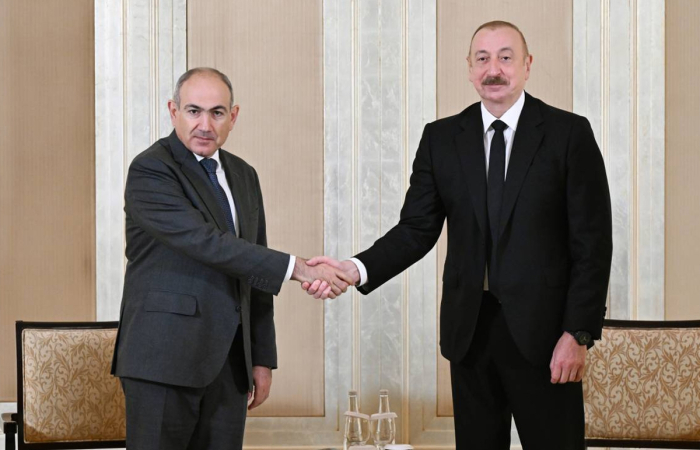
Depending on whom you ask, last week’s meeting between Armenian Prime Minister Nikol Pashinyan and Azerbaijani President Ilham Aliyev in Abu Dhabi was either a historic development or simply another routine step in the still-fragile peace process. In an interview with Slovak media prior to the talks last week, Azerbaijani presidential advisor Hikmet Hajiyev even claimed the conflict between the sides is now over. Both sides believed that they were now the closest to formalising a peace treaty than at any time before.
Editor's choice
Monday Commentary
Monday Commentary: The War in Ukraine is Europe’s War

Monday Commentary: The War in Ukraine is Europe’s War

The war in Ukraine, following Russia’s unprovoked invasion in February 2022, has now raged on for three and a half years. Thousands of Ukrainians, military and civilian, have died, and millions of Ukrainians have been displaced. Vladimir Putin brought this calamity on the Ukrainian people, and on his nation too, for political capriciousness and naked ambition. Leaders of European countries understood the seriousness and significance of the moment, not only those near Russia, such as Poland, the Baltic States, Finland and Sweden, but in wider Europe too, including Germany, France, the UK, the Netherlands and beyond. Yet whilst the leaders rose to the occasion, the European public has remained largely indifferent. The majority of Europeans have so far acquiesced to the decision of their leaders to pour billions of euros into the Ukrainian war effort, but the conflict remains distant, and most Europeans carry on with their lives as usual. Putin is perceived more as an oddity than a threat. There is a great risk in this. The European Union High Representative for Foreign and Security Policy, and former Estonian politician, Kaja Kallas, is quoted as saying “Ukraine fights today so that we may not have to fight tomorrow. Their fight is our fight.” True! But that is not the full story.