Region

Russia

Stories under this heading cover Russia, as well as countries in the eastern part of the European continent, such as Belarus, Ukraine, and Moldova.

Editor's choice
News
Germany accuses Russia of cyberattacks and disinformation campaign

Germany accuses Russia of cyberattacks and disinformation campaign

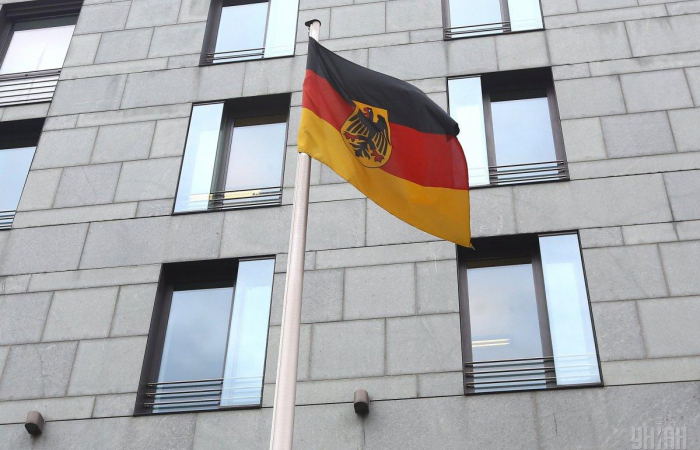
The German government holds Russia responsible for a cyberattack on German air traffic control, and for targeted disinformation campaigns before the last federal election. According to the German Foreign Office in Berlin, the incidents could be clearly attributed to the Russian military intelligence service, the GRU. In response, the Russian ambassador to Berlin was summoned to the Foreign Ministry. "We have been observing a massive increase in threatening hybrid activities by Russia for some time now," a spokesperson for the Foreign Ministry stated. These range from disinformation campaigns and espionage to cyberattacks and sabotage attempts. The aim is to divide society, sow distrust, and undermine confidence in democratic institutions. The spokesperson added that with these actions, Russia is "very concretely threatening our security, not only through its war of aggression against Ukraine, but also here in Germany."  The Foreign Ministry spokesperson explained that the cyberattack on air traffic control in August 2024 was clearly attributed to the hacker collective "APT28," known as "Fancy Bear," and to the responsibility of the Russian military intelligence service, the GRU. Furthermore, it could now be "conclusively stated" that Russia had attempted "to influence and destabilize both the last Federal election and the ongoing internal affairs of the Federal Republic of Germany." There was "absolutely irrefutable evidence" for this". The so-called "Storm 1516" campaign, which has been running since 2024, is allegedly backed by "reliable information" that the Moscow-based think tank "Center for Geopolitical Expertise" is behind it. The Center is also said to be supported by Russian military intelligence. Its primary aim is to influence democratic elections in the West. (Click the image to read more).
Editor's choice
News
NATO Chief says war is on Europe's doorstep, and warns against complacency

NATO Chief says war is on Europe's doorstep, and warns against complacency

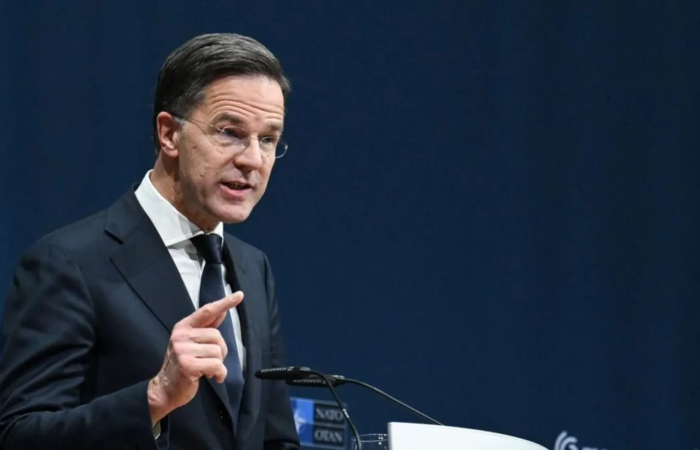
Russia could attack a NATO country within the next five years, the Secretary General of NATO, Mark Rutte, said in a stark new warning. "NATO's own defences can hold for now," Rutte warned in Berlin, but conflict was "next door" to Europe, and he feared "too many are quietly complacent, and too many don't feel the urgency, too many believe that time is on our side. "Russia is already escalating its covert campaign against our societies," Rutte said in a speech in Germany. "We must be prepared for the scale of war our grandparents or great-grandparents endured." Earlier this month, Russia's President Vladimir Putin said his country was not planning to go to war with Europe, but it was ready "right now" if Europe wanted to - or started a war. But similar reassurances were given by Moscow in 2022, just before 200,000 Russian troops crossed the border and invaded Ukraine. Putin has accused European countries of hindering US efforts to bring peace in Ukraine - a reference to the role Ukraine's European allies have recently played in trying to change a US peace plan to end the war, whose initial draft was seen as favouring Russia. But Putin was not sincere, Nato's secretary-general said in the German capital, Berlin. Supporting Ukraine, he added, was a guarantee for European security. "Just imagine if Putin got his way; Ukraine under the boot of Russian occupation, his forces pressing against a longer border with Nato, and the significantly increased risk of an armed attack against us." Russia's economy has been on a war footing for more than three years now - its factories churn out ever more supplies of drones, missiles and artillery shells. According to a recent report by the Kiel Institute for the World Economy, Russia has been producing each month around 150 tanks, 550 infantry fighting vehicles, 120 Lancet drones and more than 50 artillery pieces. The UK, and most of its Western allies, are simply not anywhere near this point. Analysts say it would take years for Western Europe's factories to come close to matching Russia's mass-production of weapons. "Allied defence spending and production must rise rapidly, our armed forces must have what they need to keep us safe," the Nato chief said.

Filter archive

Publication date
Editor's choice
Opinion
Opinion: Russian withdrawal from Karabakh allows Azerbaijan to strengthen its ties with its Turkic "family"

Opinion: Russian withdrawal from Karabakh allows Azerbaijan to strengthen its ties with its Turkic "family"

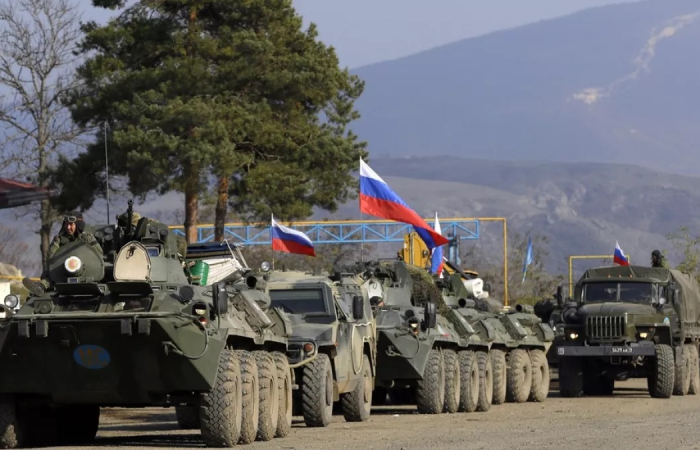
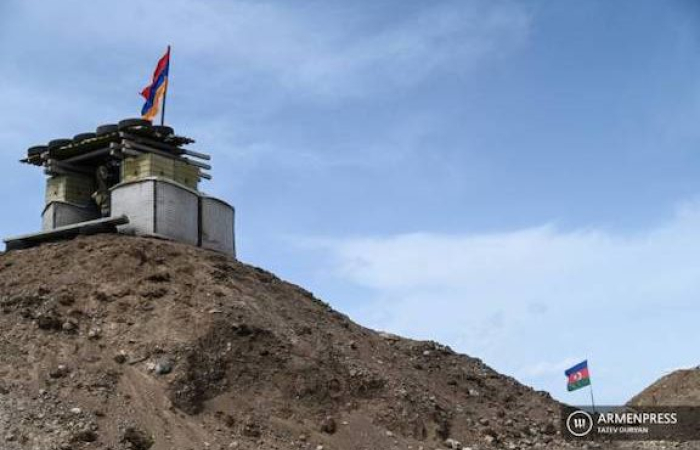
The geopolitics of the South Caucasus is as unpredictable as ever. Even as recently as the beginning of April, few, if any, would have imagined that Russia may withdraw its peacekeeping contingent from the Karabakh region of Azerbaijan anytime soon. Many observers were even skeptical about the possibility of their withdrawal in November 2025 – the date which was stipulated in the November 2020 trilateral statement as the potential but not fixed date for the ending of the peacekeeping mission of Russia. This skepticism was grounded in the understanding that for Russia, Karabakh holds paramount importance in the broader context of the South Caucasus. In the wake of Russia’s unexpected withdrawal of its peacekeeping mission from the Karabakh region, the South Caucasus enters a new geopolitical dynamic. This historic development not only signifies Azerbaijan's attainment of complete sovereignty over its territories but also heralds the definitive end of the Karabakh conflict. President Ilham Aliyev's adept diplomatic maneuvers have secured Azerbaijan's territorial integrity and positioned Baku as a confident actor on the regional stage. The withdrawal of Russian peacekeepers marks a pivotal moment, shaping the future landscape of Azerbaijan-Russia relations and regional geopolitics. As Azerbaijan charts its course forward, its commitment to regional integration remains, however, steadfast, with a focus on strengthening ties within the Turkic world.
Editor's choice
Commentary
Jittery Kremlin hits out at Central Asia NGOs

Jittery Kremlin hits out at Central Asia NGOs

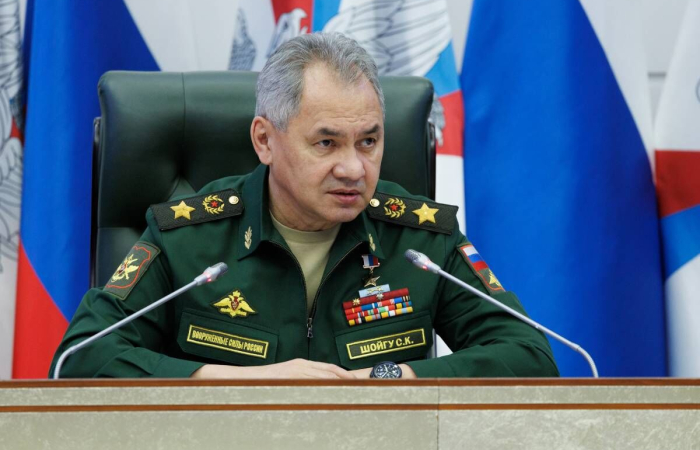
Russian Defence Minister Sergei Shoigu, speaking on the occasion of the Special Operations Forces Day at a meeting of the Board of the Ministry of Defence of the Russian Federation in Moscow on 27 February, unleashed an attack against Central Asian NGOs, accusing them of "continuously increasing hostile activities against Russia", especially in the "creation of new initiatives and structures aimed at discrediting and countering the Russian presence in countries traditionally our friends". Shoigu said the situation in this region is "very delicate", recalling the contemporary threat of the Afghan Taliban and ISIS terrorists, to which he equates the works of non-governmental organizations. In his speech, Shoigu said "over 100 large pro-Western NGOs operate in these countries, which have more than 16 thousand representations and branches, which aim to weaken the technical-military, economic and cultural collaboration with the Russian Federation, against the background of the special military operation [Ukraine War], and we have to do something."   Central Asia is hardly the first place that comes to mind when it comes to civil society activism, but the process of opening up to the world, and the reforms being put in place across the region, has widened the space for NGO activity – even if only to a small extent. Enough it seems to worry the head of the Russian Defence Ministry who one would have thought would have other things to worry about at the moment. But Kremlin observers say that Shoigu’s outburst is a jittery reaction of a paranoic Kremlin that is obsessed by criticism at home or abroad, and sees everything as one big conspiracy. Reaction in Central Asia has been mixed but in Kazakhstan, where President Tokayev has set out a course for systematic reforms in the country, and where the government is looking at civil society as partners in this process, the reaction to Shoigu’s speech was negative, and the Deputy Minister of Foreign Affairs, Roman Vasilenko, spoke out in defence of the NGOs in Kazakhstan. “As you know, support for the civil sector and support for NGOs are a top priority for the president, for the government and for the Ministry of Culture and Information, which is responsible for this area”, Vassilenko said on 29 February.
Editor's choice
News
Russia confirms damage to one of its Black Sea fleet ships

Russia confirms damage to one of its Black Sea fleet ships

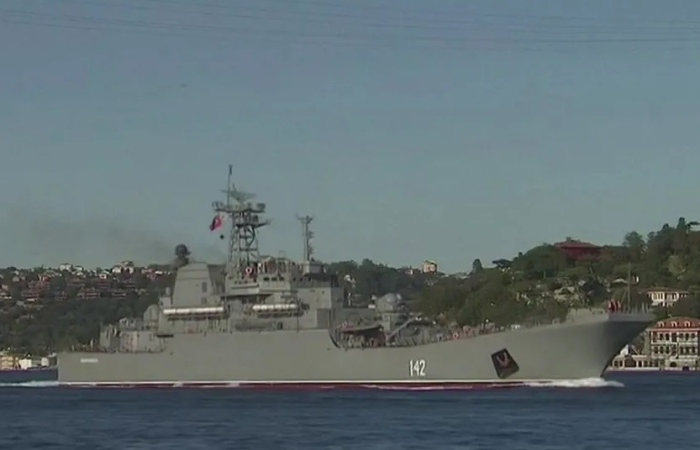
Russia has confirmed one of its warships has been damaged in a Ukrainian attack on a Black Sea port. The airstrike took place at Feodosiya in Russian-occupied Crimea early on Tuesday morning. Russia's Ministry of Defence said the large landing ship Novocherkassk was struck by Ukrainian aircraft carrying guided missiles. The head of the Ukrainian Air Force said earlier its warplanes had destroyed the ship. One person was killed in the attack, according to the Russian-installed head of Crimea, Sergei Aksyonov. Several others were reportedly hurt. Six buildings were damaged and a small number of people had to be taken to temporary accommodation centres, Mr Aksyonov added. The port's transport operations are said to be functioning as normal after the area was cordoned off, while a fire caused by the attack was contained. Footage purportedly showing a huge explosion in the port was shared by Ukrainian air force commander Lt Gen Mykola Oleshchuk. The images have not been independently verified. However, satellite imagery from 24 December shows a ship at port in Feodosiya that appears to be the same length as the Novocherkassk - a landing ship designed to transport troops, weapons and cargo to shore. Any significant damage to the ship will be a welcome bit of good news for Ukraine, with waning Western support now affecting its front-line operations. Given that the Novocherkassk was in dock, it is highly likely it was being loaded with soldiers, equipment or both. There was speculation that the ship was carrying Iranian-made Shahed drones, which Russia has been using in its attacks on Ukrainian targets.