Region

Russia

Stories under this heading cover Russia, as well as countries in the eastern part of the European continent, such as Belarus, Ukraine, and Moldova.

Editor's choice
News
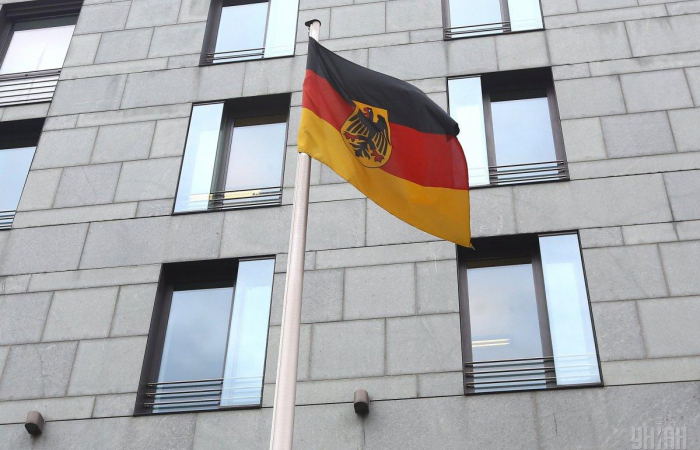
Germany accuses Russia of cyberattacks and disinformation campaign

Germany accuses Russia of cyberattacks and disinformation campaign

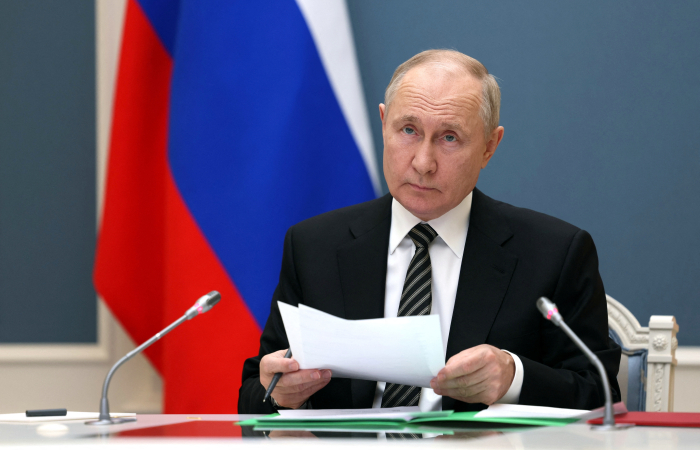
The German government holds Russia responsible for a cyberattack on German air traffic control, and for targeted disinformation campaigns before the last federal election. According to the German Foreign Office in Berlin, the incidents could be clearly attributed to the Russian military intelligence service, the GRU. In response, the Russian ambassador to Berlin was summoned to the Foreign Ministry. "We have been observing a massive increase in threatening hybrid activities by Russia for some time now," a spokesperson for the Foreign Ministry stated. These range from disinformation campaigns and espionage to cyberattacks and sabotage attempts. The aim is to divide society, sow distrust, and undermine confidence in democratic institutions. The spokesperson added that with these actions, Russia is "very concretely threatening our security, not only through its war of aggression against Ukraine, but also here in Germany."  The Foreign Ministry spokesperson explained that the cyberattack on air traffic control in August 2024 was clearly attributed to the hacker collective "APT28," known as "Fancy Bear," and to the responsibility of the Russian military intelligence service, the GRU. Furthermore, it could now be "conclusively stated" that Russia had attempted "to influence and destabilize both the last Federal election and the ongoing internal affairs of the Federal Republic of Germany." There was "absolutely irrefutable evidence" for this". The so-called "Storm 1516" campaign, which has been running since 2024, is allegedly backed by "reliable information" that the Moscow-based think tank "Center for Geopolitical Expertise" is behind it. The Center is also said to be supported by Russian military intelligence. Its primary aim is to influence democratic elections in the West. (Click the image to read more).
Editor's choice
News
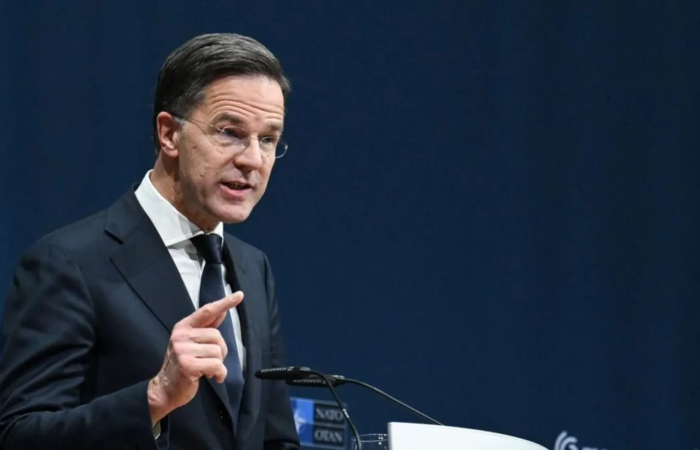
NATO Chief says war is on Europe's doorstep, and warns against complacency

NATO Chief says war is on Europe's doorstep, and warns against complacency

Russia could attack a NATO country within the next five years, the Secretary General of NATO, Mark Rutte, said in a stark new warning. "NATO's own defences can hold for now," Rutte warned in Berlin, but conflict was "next door" to Europe, and he feared "too many are quietly complacent, and too many don't feel the urgency, too many believe that time is on our side. "Russia is already escalating its covert campaign against our societies," Rutte said in a speech in Germany. "We must be prepared for the scale of war our grandparents or great-grandparents endured." Earlier this month, Russia's President Vladimir Putin said his country was not planning to go to war with Europe, but it was ready "right now" if Europe wanted to - or started a war. But similar reassurances were given by Moscow in 2022, just before 200,000 Russian troops crossed the border and invaded Ukraine. Putin has accused European countries of hindering US efforts to bring peace in Ukraine - a reference to the role Ukraine's European allies have recently played in trying to change a US peace plan to end the war, whose initial draft was seen as favouring Russia. But Putin was not sincere, Nato's secretary-general said in the German capital, Berlin. Supporting Ukraine, he added, was a guarantee for European security. "Just imagine if Putin got his way; Ukraine under the boot of Russian occupation, his forces pressing against a longer border with Nato, and the significantly increased risk of an armed attack against us." Russia's economy has been on a war footing for more than three years now - its factories churn out ever more supplies of drones, missiles and artillery shells. According to a recent report by the Kiel Institute for the World Economy, Russia has been producing each month around 150 tanks, 550 infantry fighting vehicles, 120 Lancet drones and more than 50 artillery pieces. The UK, and most of its Western allies, are simply not anywhere near this point. Analysts say it would take years for Western Europe's factories to come close to matching Russia's mass-production of weapons. "Allied defence spending and production must rise rapidly, our armed forces must have what they need to keep us safe," the Nato chief said.

Filter archive

Publication date
Editor's choice
News
International Criminal Court issues arrest warrant for former Russian defence minister

International Criminal Court issues arrest warrant for former Russian defence minister

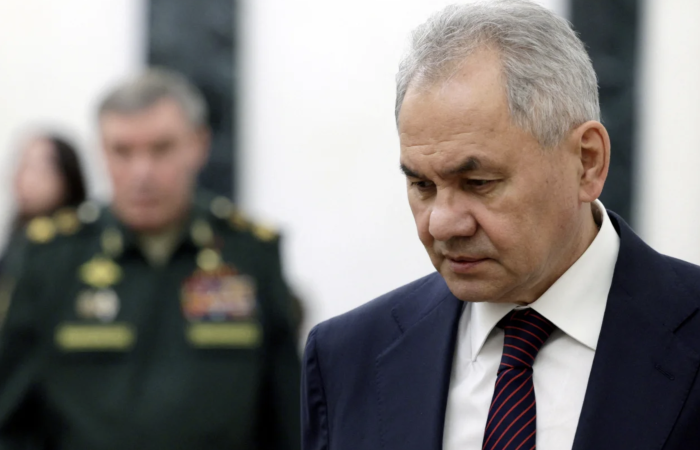
The International Criminal Court (ICC) issued an arrest warrant on Tuesday (25 June) for former Russian Defence Minister Sergei Shoigu. He is suspected of being responsible for attacks on civilian targets in Ukraine between October 2022 and March 2023. An arrest warrant has also been issued for Valery Gerasimov, commander-in-chief of the Russian army.
Editor's choice
News
EU adopts 14th package of sanctions against Russia

EU adopts 14th package of sanctions against Russia

The Council of the European Union on Monday (24 June) adopted a 14th package of economic and individual restrictive measures against Russia, "dealing a further blow to the Putin regime and those who perpetuate its illegal, unprovoked and unjustified war of aggression against Ukraine". These measures are designed to target high-value sectors of the Russian economy, such as energy, finance and trade, and make it increasingly difficult to evade EU sanctions.
Editor's choice
News
New report reveals climate impact of Russia's war in Ukraine: $32 billion damage over two years

New report reveals climate impact of Russia's war in Ukraine: $32 billion damage over two years

Russia's ongoing full-scale war in Ukraine, initiated on 24 February 2022, has caused significant environmental and climate damage, severely impacting global efforts to combat climate change. This is highlighted in the latest report from the Initiative on Greenhouse Gas Accounting of War (IGGAW), which analyses the environmental costs over the past two years. The report was published Thursday (13 June) by the Ministry for Environmental Protection and Natural Resources of Ukraine in collaboration with climate advocacy groups. The IGGAW report estimates climate-related damages at $32 billion, attributed to activities such as the extensive use of military fuels and the destruction of landscapes and infrastructure. Over 24 months, the conflict resulted in the emission of 175 million tonnes of carbon dioxide - more than the annual emissions of a developed country like the Netherlands.
Editor's choice
News
France, Germany and Poland face the brunt of Russian disinformation attacks

France, Germany and Poland face the brunt of Russian disinformation attacks

France, Germany, and Poland have become "permanent" targets of Russian disinformation attacks in the lead-up to the European Parliament (EU) elections this week, a senior EU official reported on Tuesday (4 June). The EU has consistently warned that Russia would intensify its disinformation campaigns as the June 6-9 vote approaches. "There are three big countries under permanent attack [from Russia]: France, Germany, and Poland," said EU Commissioner Vera Jourova, citing research by the European Digital Media Observatory, of which AFP is a part. She highlighted an increase in "more massive disinformation attacks on specific topics."
Editor's choice
News
G7 explores ways to use frozen Russian assets to help Ukraine 

G7 explores ways to use frozen Russian assets to help Ukraine 

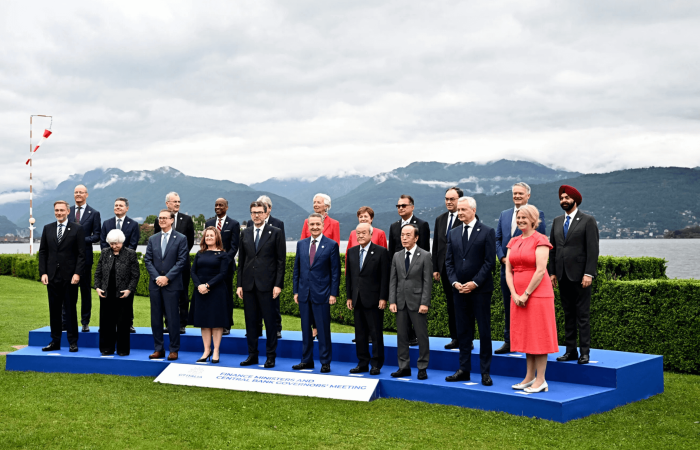
The G7 will explore ways to use future revenues from frozen Russian assets to help Ukraine. Following Russia's invasion of Ukraine in February 2022, the G7 and its allies froze around $300 billion in Russian assets. "We are making progress in our discussions on potential avenues to bring forward the extraordinary profits stemming from immobilized Russian sovereign assets to the benefit of Ukraine," the draft statement said. G7 negotiators have been discussing for weeks how best to use these assets, which include major currencies and government bonds held mainly in European vaults. The United States (US) has been urging its G7 partners - Japan, Germany, France, Britain, Italy and Canada - to support a loan that could provide Kyiv with up to $50 billion in the near term. The cautious language of the statement, lacking figures or specifics, underlines the many legal and technical issues that would need to be resolved before such a loan could be issued. A G7 source indicated that there would be no significant changes to the statement before the final version is released later on Saturday (25 May).
Editor's choice
News
More than 3,000 Ukrainian prisoners join army to fight against Russia

More than 3,000 Ukrainian prisoners join army to fight against Russia

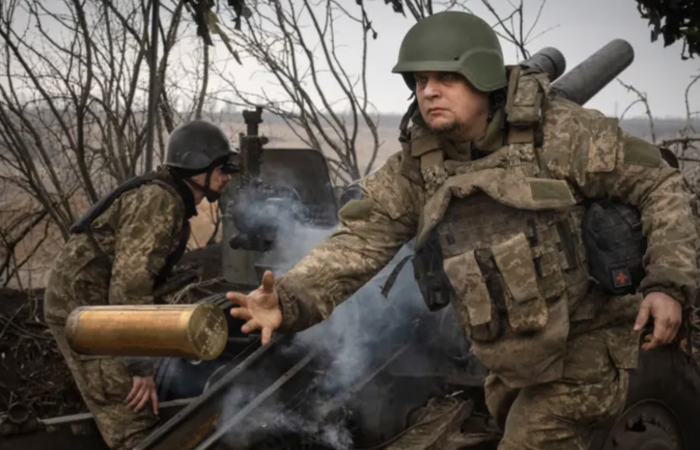
Thousands of Ukrainian prisoners have expressed interest in a new initiative that offers them the opportunity to exchange their prison sentence for military service. According to Ukrainian Deputy Justice Minister Olena Vysotska, more than 3,000 prisoners have already signed up to contribute to strengthening Ukraine's armed forces. "This response is in line with our expectations when introducing this legislation," Vysotska stated. Furthermore, she noted that up to 20,000 prisoners could potentially be eligible to participate in the programme, with approximately 4,500 having expressed interest thus far. It is important to stress that prisoners convicted of serious crimes such as murder, rape, other sexual violence, and crimes against national security are excluded from this scheme. This development coincides with Ukraine's urgent need for additional troops in its ongoing conflict with Russia. Russia has similarly implemented analogous arrangements for prisoners of war in the context of this conflict.
Editor's choice
News
More than 3,000 Ukrainian prisoners join army to fight against Russia

More than 3,000 Ukrainian prisoners join army to fight against Russia

Thousands of Ukrainian prisoners have expressed interest in a new initiative that offers them the opportunity to exchange their prison sentence for military service. According to Ukrainian Deputy Justice Minister Olena Vysotska, more than 3,000 prisoners have already signed up to contribute to strengthening Ukraine's armed forces. "This response is in line with our expectations when introducing this legislation," Vysotska stated. Furthermore, she noted that up to 20,000 prisoners could potentially be eligible to participate in the programme, with approximately 4,500 having expressed interest thus far. It is important to stress that prisoners convicted of serious crimes such as murder, rape, other sexual violence, and crimes against national security are excluded from this scheme. This development coincides with Ukraine's urgent need for additional troops in its ongoing conflict with Russia. Russia has similarly implemented analogous arrangements for prisoners of war in the context of this conflict.
Editor's choice
Commentary
The fate of Central Asia may be decided on the steppes and in the forests of Ukraine

The fate of Central Asia may be decided on the steppes and in the forests of Ukraine

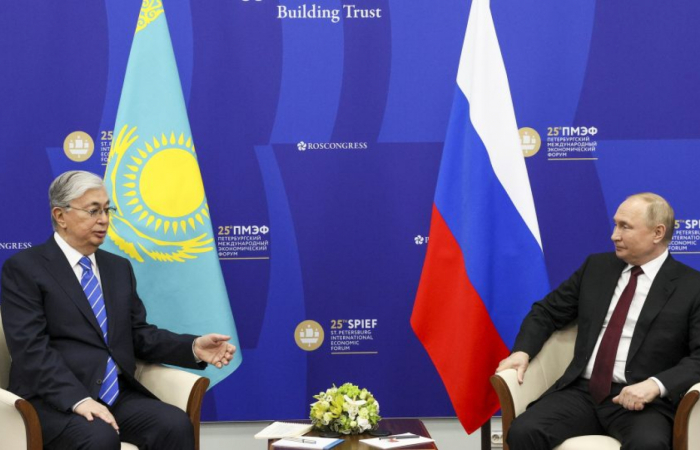
Vladimir Putin was sworn in for another six-year term as the President of Russia on Tuesday, 7 May. With Putin having been the undisputed leader of Russia for decades, continuity, one would have thought, was assured. Yet Putin himself, on Monday (13 May) speaking at a meeting of the Security Council spoke of “a new political cycle” in Russia. Some of the first decisions of the re-elected president give us a sense of what is to come. First, there was the surprise dismissal of Sergei Shoigu as Minister of Defence, and his transfer to be the Secretary of the Security Council. There had been speculation for some time that Shoigu’s time at the Ministry of Defence was up. But what was surprising was the appointment of Andrei Belousov, former Deputy Prime Minister – an efficient technocrat with an economic background to replace him. That the Russian Ministry of Defence has needed a shake-up for some time has been abundantly clear, but Andrei Belousov’s mission seems to be more ambitious than that: He is tasked with transforming the Russian Defence Ministry into a modern institution that can embrace new ideas and techniques, and that has enough flexibility to conduct the sort of hybrid warfare that is likely to be the order of the day going forward. So despite all of Putin’s bravados about the Russian nuclear arsenal, it seems he is putting his faith in a more innovative, agile, and versatile force. Then on Monday, 13 May, Putin held his first meeting of the Security Council since his inauguration. The Kremlin website only referred to one item out of apparently several that were discussed, namely relations with the post-Soviet Republics, a subject much close to the heart of the president. Putin reiterated that this was a priority in foreign policy. Putin said, “we should pay even more attention to this area in the new political cycle in Russia and discuss the way we will organise this work from all points of view, including organisational”. So it appears that there is new thinking in this sphere, details of which is not yet known.