Region

Central Asia

Stories under this heading cover Central Asia – a region of Asia, stretching from the Caspian Sea in the west to Mongolia in the east, from Afghanistan in the south to Russia in the north.

Editor's choice
Opinion
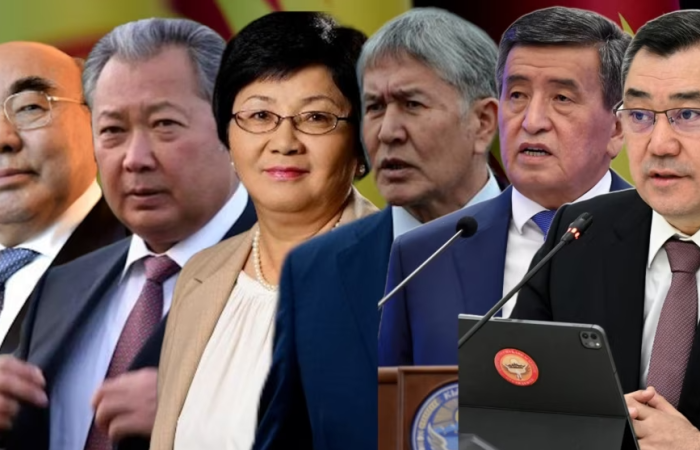
Opinion: The European Union must recognise that the C5 have now become the C6

Opinion: The European Union must recognise that the C5 have now become the C6

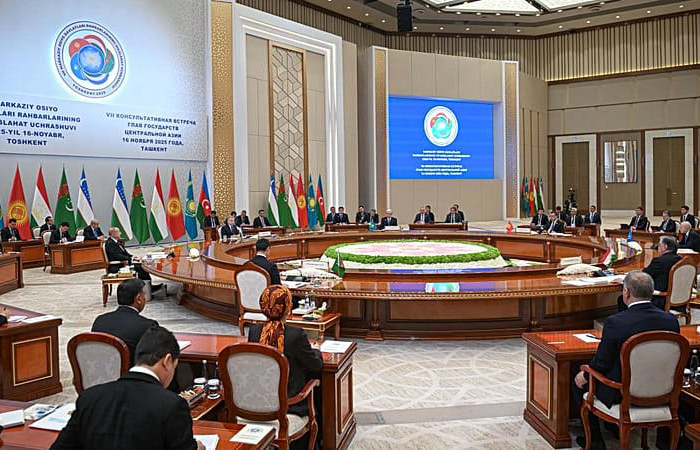
In recent years, Eurasia has undergone a structural transformation in how regions connect, trade, and cooperate. The combination of geopolitical shocks, disrupted supply chains, and the search for secure east–west routes has elevated the importance of the Trans-Caspian space. The states of Central Asia, once constrained by geography, have taken unprecedented steps to strengthen regional coordination, modernize infrastructure, and integrate more closely with Europe. Meanwhile, Azerbaijan has rapidly emerged as an indispensable connector linking Central Asia with the South Caucasus, Türkiye, and European markets. This new reality was formally acknowledged in November 2025 when Azerbaijan was unanimously welcomed as a full participant in the Consultative Meeting of Central Asian Heads of State in Tashkent. What had long been a C5 grouping transformed into a C6, marking a historic moment: the Caspian was no longer a frontier separating two regions but the center of a unified geopolitical and geo-economic space. President Ilham Aliyev described this alignment as the emergence of “a single geopolitical and geo-economic region,” while President Shavkat Mirziyoyev called Azerbaijan’s inclusion “historic” and proposed transforming the consultative platform into a structured regional institution capable of shaping security, economic, environmental, and digital policy. The Caspian is no longer a boundary; it is the heart of an integrated region. The transformation of the EU and U.S. C5+1 formats into C6+1 is the logical next step to ensure that both sides of the Caspian advance together – coherently, strategically, and with shared purpose. (click the image to read the full op-ed).
Editor's choice
News
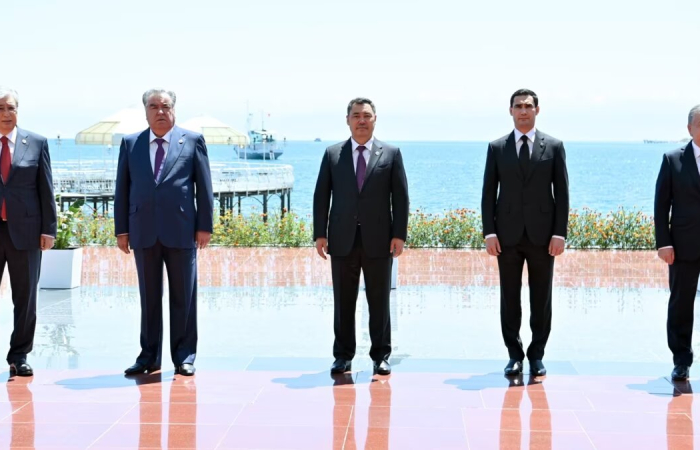
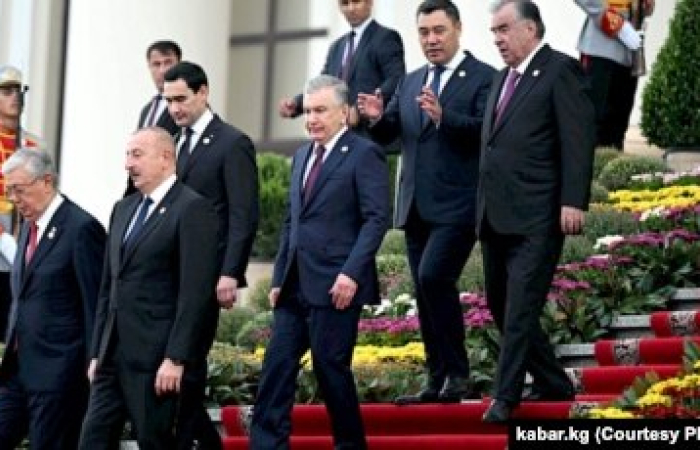
Central Asian leaders meet in Tashkent this weekend for their 7th Consultative  Meeting. Azerbaijan participates for the third year as guest

Central Asian leaders meet in Tashkent this weekend for their 7th Consultative Meeting. Azerbaijan participates for the third year as guest

Central Asian leaders will gather in Tashkent this weekend for the Seventh Consultative Meeting of Heads of State, with plans to adopt a package of multilateral agreements to deepen regional cooperation. The summit brings together the leaders of Uzbekistan, Kazakhstan, Kyrgyzstan, Tajikistan and Turkmenistan, with Azerbaijan participating as a guest of honour for the third consecutive year. The leaders will discuss ways to advance joint projects in priority sectors and exchange views on key regional and international issues, as outlined in the agenda. The consultative meeting format originated from Mirziyoyev's initiative announced at the UN General Assembly in 2017, proposing regular high-level consultations among Central Asian states. The inaugural meeting took place in Astana in 2018. Azerbaijan's President Ilham Aliyev told the Uzbekistan press agency the meeting will be "a significant stage in fostering the centuries-old friendship between our brotherly peoples and expanding multi-level cooperation in the political, economic, transport, investment, energy, cultural and humanitarian spheres, and in the field of digital transformation." He noted that over the past three years, Central Asian heads of state have made nearly 30 visits to Azerbaijan, while he has visited the countries 13 times. Azerbaijan's engagement strengthens regional connectivity, particularly through the Middle Corridor linking Central Asia with Europe.

Filter archive

Publication date
Editor's choice
News
Turkistan Declaration adopted at the first ever Central Asian Interparliamentary Forum

Turkistan Declaration adopted at the first ever Central Asian Interparliamentary Forum

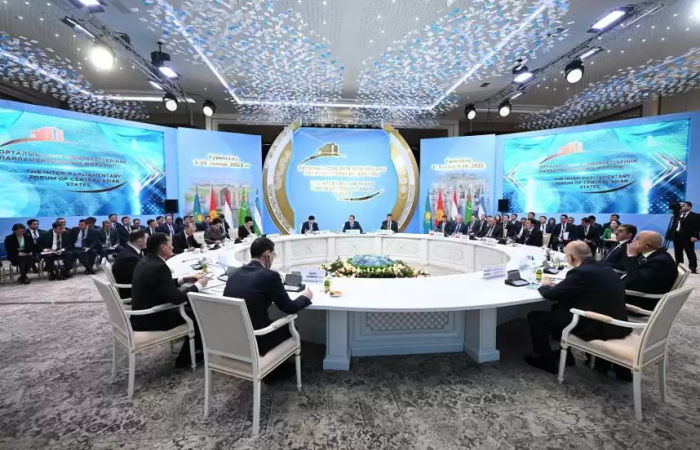
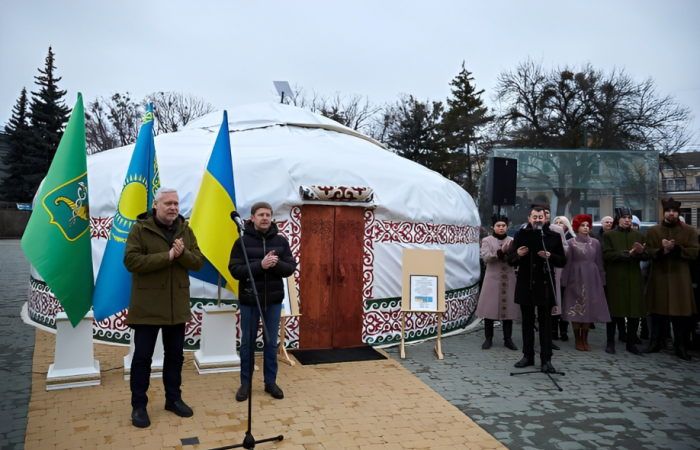
The first ever meeting of the Central Asian Interparliamentary Forum is taking place in the Kazakh city of Turkistan on Friday (10 February), which has resulted in the adoption of the landmark Turkistan Declaration. The forum, which brings together parliamentarians from Kazakhstan, Uzbekistan, Kyrgyzstan, Tajikistan and Turkmenistan, is discussing the strengthening of comprehensive strategic cooperation among Central Asian states and the role of parliaments in this process.  More specifically, the forum is discussing topics including regional security, the development of joint infrastructure and logistics projects, transit and transport potential of the region, and alternative supply routes from Central Asia. Alongside discussing strategic cooperation, parliamentarians are also discussing expanding cultural and humanitarian cooperation based on a common historical and cultural heritage.
Editor's choice
Commentary
A new sense of purpose in Central Asia as leaders seek better relations between their countries and with the rest of the world

A new sense of purpose in Central Asia as leaders seek better relations between their countries and with the rest of the world

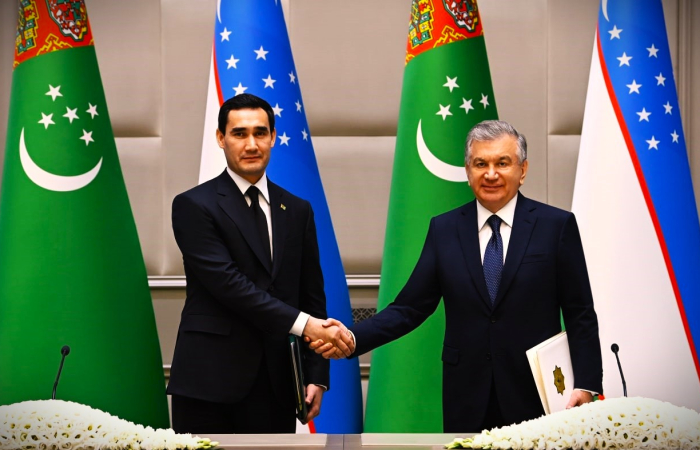
For more than three decades after the collapse of the USSR the five Central Asia Republics continued to live largely in the shadow of Moscow.  Neighbouring China made headway, particularly in the economic sphere, largely with Moscow’s acquiescence, and there were a few moments when the west appeared to be making a mark on the region too, especially after the 9/11 attacks, when the US was allowed facilities to help with its invasion of Afghanistan. But this moment did not last long. On everything else that mattered, and for most of the time, Moscow continued to call the shots. The last five years have seen a seismic change in the region. A new generation of leaders are seeking better relations with the rest of the world: connectivity has become a buzzword, and there is a genuine effort to engage with the EU and the US, in most if not all the capitals. Ukraine, and the implications of the Russian invasion on future relations with all the post Soviet states, has focused minds, particularly in Tashkent and Astana.
Editor's choice
News
EU and Uzbekistan officials meet to discuss ties, promise to expand cooperation

EU and Uzbekistan officials meet to discuss ties, promise to expand cooperation

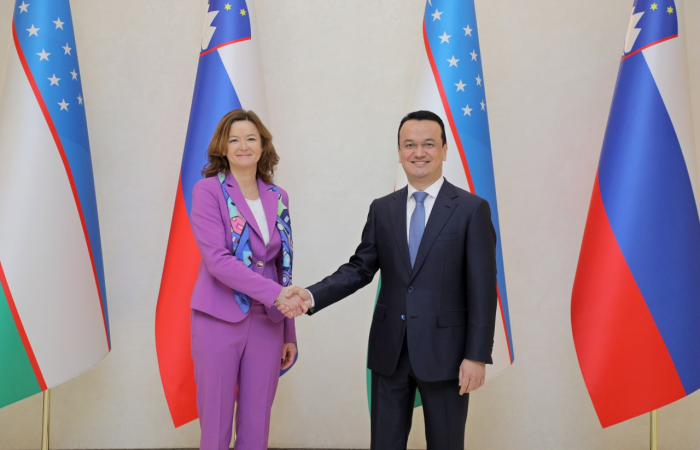
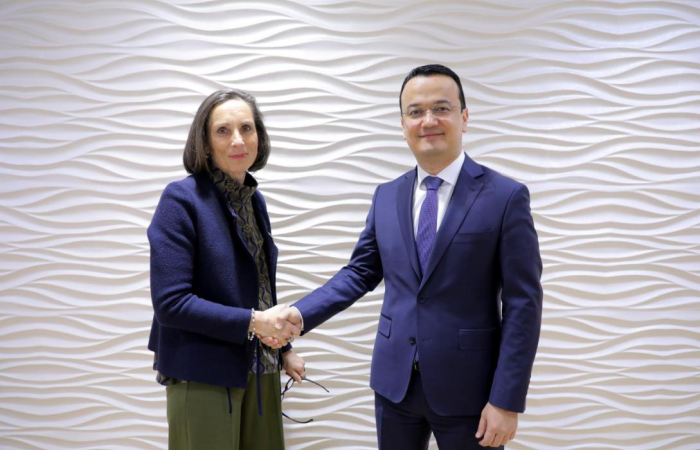
The Uzbek Minister of Investments, Industry and Trade Laziz Qudratov hosted the head of the delegation of the EU in Uzbekistan Charlotte Adriaen on Monday (30 January) to discuss ways to advance bilateral ties in trade, economic and investment spheres. The parties explored the opportunities for expanding the main areas of bilateral financial and technical cooperation, and discussed the EU's Multi-Annual Indicative Programme for Uzbekistan (MIP), the implementation of which has been allocated €76m for the period 2021-2024. Additional funds for the same time frame were also earmarked for Human Rights support (€3.6m), and Civil Society Organisation (€3.4m). The MIP 2021-2027 has three main priorities, namely effective governance and digital transformation; inclusive, digital and green growth, and the development of a smart eco-friendly agri-food sector.