


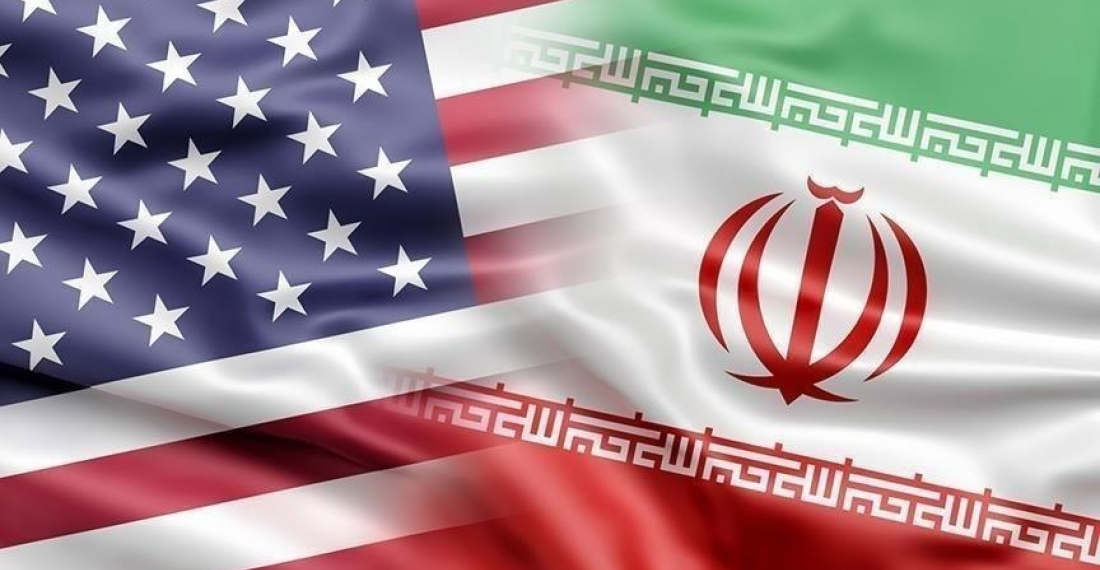
Iranian hardliners are mostly rational political actors who are not ready to sacrifice Iran's security, and their own power, for the sake of ideological animosity towards the US or Israel, argues Benyamin Poghosyan in this op-ed for commonspace.eu. Even if a hardliner wins next June’s presidential election in Iran compromise with the US on the nuclear file is not only possible, but probable. This will be in the interest of both the US and Iran, as well as the entire Middle east region.
Relations with Iran are among the top priorities for the Biden administration. Since President Trump withdrew the US from the Iran nuclear deal and imposed new sanctions in May 2018, Washington and Tehran have been on a collision course. Iran's decision to start to break some of the deal’s requirements in May 2019, and the assassination of General Qasem Soleimani in January 2020, added fuel to bilateral animosity. The Trump administration facilitated the Israel–Gulf States dialogue seeking to create a united front against Tehran. The US put forward clear demands to Iran – to amend the nuclear deal, get rid of so-called sunset clauses, and include restrictions on Iran's regional activities and ballistic missile programs. While Democrats criticised Trump's decision to withdraw from the nuclear deal, they agreed that Iran's "malign activities in the region" and its missile program needed to be addressed.
After the elections in November 2020, the incoming Biden administration indicated that it was ready to bring the US back to the nuclear deal. However, the Americans argued that Iran should return to full compliance with the deal as a first step, and then the US will repeal the sanctions imposed by President Trump. Iran's answer was tough and clear – the US breached the deal, and the US should make the first step in canceling sanctions. Meanwhile, the Americans hinted that after the restoration of the deal, the two sides could start discussions on Iran's regional policy and missile program, while according to Iran, the US has nothing to do with either of these topics.
The upcoming presidential election in Iran plays a role in shaping Iran's policy towards the US offers. The Iranian hardliners won the February 2020 Parliamentary elections, and they have good chances to win the Presidency. The nuclear deal is one of the key tools in the hands of hardliners in their criticism of the moderate camp. They argue that President Rouhani's entire policy of opening towards the US was a big mistake as a result of which Iran made unilateral concessions which brought no positive results. Rouhani himself cannot run again due to the constitutional term limits, but he definitely is interested in seeing a candidate of the moderate camp winning the election. In the current political atmosphere, any perceived concessions by Rouhani towards the US will be immediately exploited by hardliners and will damage the standing of moderates. Thus, neither moderates nor hardliners are interested in any opening with the US until after the June 2021 elections. The assassination in late November 2020 of Iranian nuclear physicist Mohsen Fakhrizadeh added more tensions. In the aftermath of the attack, blamed on Israel, the Iranian parliament passed a law calling for the annual production and storage of at least 120 kilograms of 20 percent enriched uranium, and to put an end to the IAEA inspections intended to check that the country is not developing an atomic bomb.
In mid-February 2021, Iran announced it would stop implementing the IAEA's additional protocol, effectively limiting which facilities nuclear inspectors could scrutinise and when they could access them. However, on 22 February 2021, Iran and IAEA reached an interim deal for three months, according to which the same number of international inspectors would remain in Iran, but their access to nuclear facilities would be more limited, and they would not be allowed to conduct last-minute snap inspections.
In their turn, Israel and the Gulf Arab states are raising alarm bells on Iran's nuclear deal breach. Israeli Prime Minister, Benyamin Netanyahu, made several tough statements arguing that Israel would never allow Iran to get a nuclear bomb, and was ready to use military force to prevent such a development. Israel is in the midst of an election campaign for the fourth snap Parliamentary elections within two years, scheduled for 23 March, and Iran's nuclear program is one of the key foreign policy topics discussed during the campaign.
The complicated situation in and around Iran is also a part of wider geopolitics. Last year Iran and China reached a preliminary agreement to sign a 25-year strategic partnership deal worth of 400 billion USD, which may transform Iran into a launchpad for China to project its power in the Middle East. Chinese-Iranian strategic cooperation will include petrochemical production, renewable energy and civilian nuclear energy, construction of high-speed railways, highways, subways, airports, and maritime connections. The agreement would give China a presence in the Gulf, notably through the port of Jask, just outside the Straits of Hormuz – a transit passage for a significant part of the world's oil.
Russia is also making efforts to develop its relations with Iran. Iran signed an interim agreement to form free trade area with the Eurasian Economic Union in May 2018. Recently discussions have been launched regarding Iran's possible membership into the Eurasian Economic Union. During his visit to Moscow on Feb. 10, 2021, Mohammad Baqer Ghalibaf, speaker of the Iranian parliament and potential hardliner candidate for the presidential elections, declared that Iran may permanently join the EAEU in two weeks if a relevant decision is made by the EAEU. Obviously, such statements are premature, but they indicate the Iranian leadership's intention to foster their relations with the US global rivals or, or at least use the prospect of such a possibility as a tool to balance US pressure.
Nonetheless, it should be noted that Iranian hardliners are mostly rational political actors who are not ready to sacrifice Iran's security, and their own power, for the sake of ideological animosity towards the US or Israel. They understand quite well that Iran needs Western technologies and investments. China may replace the West, but the best option for Iran is to keep both channels open. The same applies to their relations with Israel. Iranian politicians will continue to criticise Israel, and even call for its destruction to unite the population against an external enemy. However, they are fully aware that even a limited Israeli military attack against Iran may have unpredictable results. The Iranian authorities will have to answer, and the chain of attacks/counterattacks may easily spiral out of control bringing the US military in. Thus, most probably after the June 2021 presidential election, Iran will intensify backchannel diplomacy with the US currently underway through the mediation of Oman. Iran will never cross its red lines, such as giving up the right for uranium enrichment, its influence in Yemen, Syria, Iraq, and Lebanon, and the domestic defence industry's development. However, in all these areas, compromises are possible, and the US, Iran, and the entire Middle East will be better off if compromises are reached.
Source: This op-ed was prepared for commonspace.eu by Benyamin Poghosyan, Founder and Chairman of the Center for Political and Economic Strategic Studies in Yerevan.



