


Opinion: incidents along Armenia-Azerbaijan border, Nagorno Karabakh LoC show urgent need for an incident prevention mechanism

"As the sides are coming closer to the signature of a peace agreement, steps should be taken to solve the issues along the Armenia – Azerbaijan state border and the line of contact," writes Benyamin Poghosyan for commonspace.eu. "The population of the self–proclaimed Nagorno Karabakh Republic and Armenians and Azerbaijanis living along the state border have the inalienable right to live in a secure environment while external actors are moving forward with their geopolitical ambitions. In this context, a concrete measure to ease tensions can be the establishment of an incident prevention and response mechanism."

The restart of intensive Armenia – Azerbaijan negotiations in May 2023 gave hope that an Armenia – Azerbaijan peace agreement is within reach. Meetings in Washington, Brussels, Moscow, and Chisinau seem to have paved the way for a deal by the end of 2023. Officials from both countries started to sound more optimistic regarding the prospects of peace and stability in the South Caucasus. The Armenian and Azerbaijani foreign ministers will have another round of talks in Washington in the next days, and the President of the European Council Michel will host Prime Minister Pashinyan and President Aliyev in Brussels on 21 July.

However, despite all these positive developments, in the last ten days, Armenia and Azerbaijan made daily statements about ceasefire violations along the Armenia – Azerbaijan state border, while Azerbaijan and the authorities of the self-proclaimed Nagorno Karabakh Republic accused each other of ceasefire violations along the line of contact. Things almost went out of control when, as a result of   Azerbaijani fire, two Indian nationals were wounded in the village of Yeraskh near the border with Nakhijevan. They were involved in constructing a metallurgy plant, a joint Armenia – US investment project. 

It is a worrying pattern, as in the past two years, that Azerbaijan usually issued statements of ceasefire violations before launching large-scale military attacks against Armenia or the self–proclaimed Nagorno Karabakh Republic. It was the case during the August and September 2022 escalations.

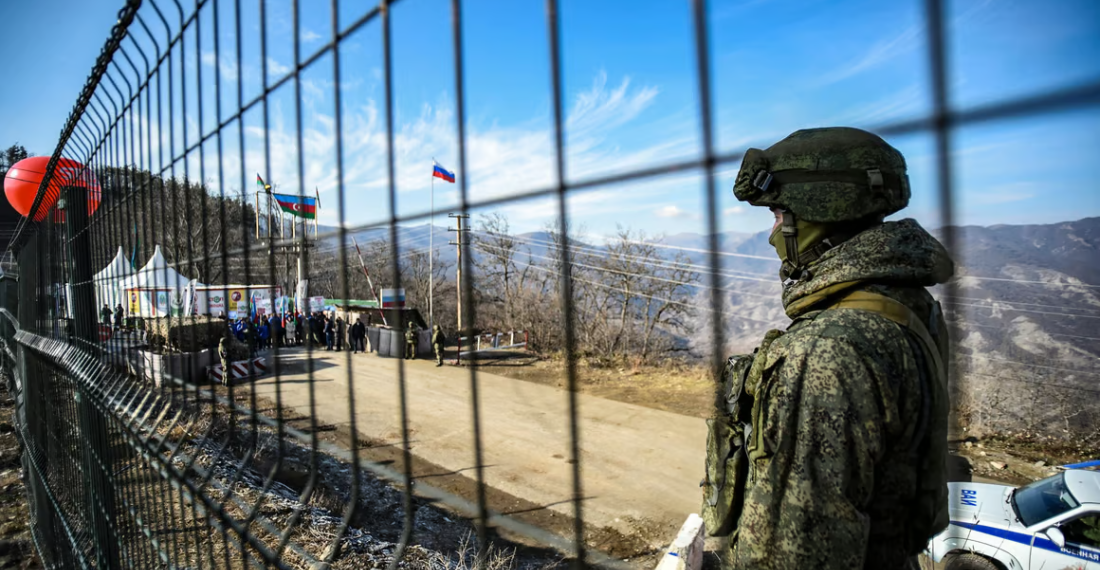
After an incident near the recently established Azerbaijani checkpoint at the entrance of the Lachin corridor, Azerbaijan closed the checkpoint, entirely cutting off Nagorno Karabakh from the outside world. Azerbaijan accused Armenia of firing towards the checkpoint, while Armenia argued that Azerbaijani troops sought to advance into Armenian territory and raise an Azerbaijani flag there.

The growing number of shootings and incidents do not contribute to a positive environment for negotiations

It is challenging to assess the primary reasons behind the recent escalations. Some experts believe that Azerbaijan was putting additional pressure on Armenia before crucial negotiations, a tactic used often by Azerbaijan since the end of the 2020 Nagorno Karabakh war. Others argue that talk of significant progress in the negotiation process has been exaggerated, and Azerbaijan is preparing to launch a large-scale military operation against the self-proclaimed Nagorno Karabakh Republic. President Aliyev's 28 May speech, where he practically issued an ultimatum to the self-proclaimed Nagorno Karabakh Republic, either to dissolve all state institutions and hope for amnesty, or brace themselves for harsh consequences, adding additional tensions to the situation.  

The growing number of shootings and incidents in the last ten days do not contribute to establishing a positive environment for the negotiations. The conflicting messages from Azerbaijan and Armenia also confuse the international community. The European Union deployed a two-year-long civilian mission in Armenia in February 2023. However, around 100 civilian observers cannot monitor the 1000 km long Armenia – Azerbaijan border. Besides this, the mission informs the Azerbaijani side about upcoming patrols along the Armenia – Azerbaijan border, which reduces the possibility of the mission registering ceasefire violations. 

It should be noted that the 10 November 2020 Russia-Armenia-Azerbaijan trilateral statement did not create any mechanism to discuss possible incidents along the new line of contact and prevent future ones. There is a lack of clarity regarding the peacekeeping forces' mandate and their rules of engagement. Azerbaijan has yet to approve the peacekeeping forces mandate. Regardless of the reasons behind Baku's decision, the ambiguity on peacekeeping forces' mandate and rules of engagement create the possibility of additional flashpoints along the line of contact.

A concrete measure to ease tensions can be the establishment of an incident prevention and response mechanism

As the sides are coming closer to the signature of a peace agreement, steps should be taken to solve the issues along the Armenia – Azerbaijan state border and the line of contact. The population of the self–proclaimed Nagorno Karabakh Republic and Armenians and Azerbaijanis living along the state border have the inalienable right to live in a secure environment while external actors are moving forward with their geopolitical ambitions. 

In this context, a concrete measure to ease tensions can be the establishment of an incident prevention and response mechanism. The IPRM can provide an opportunity to discuss such issues as identifying potential risks, following up on incidents, exchanging information, and problems affecting the communities daily.  A hotline between relevant sides at an operational level can operate within the framework of this mechanism. The main goal of the hotline can be the rapid response to concrete and specific incidents. Ideally, the representatives of the self–proclaimed Nagorno-Karabakh Republic, Azerbaijan, Armenia, Russian peacekeeping forces, and the EU monitoring mission may participate in the discussions within this mechanism.

Of course, since the start of the Ukraine war in February 2022, it has been challenging to envisage Russians and Europeans' joint participation in any endeavor, although the EU has tried to keep communication with Moscow on its peace efforts in the region open.  Also, despite the war in Ukraine, Russia and the West remain engaged in the framework of the Geneva International Discussions focused on the conflicts of Abkhazia and South Ossetia. 

The history of conflicts tells us that as sides come closer to the signature of an agreement, the chances for last-minute disruptions increase. Establishing an incident prevention and response mechanism can play a vital role in building confidence and trust and may shape a more conducive environment for negotiations.


source: Benyamin Poghosyan is the founder and Chairman of the Centre for Political and Economic Strategic Studies in Yerevan. 
photo: POLITICO/Getty Images

The views expressed in opinion pieces and commentaries do not necessarily reflect the position of commonspace.eu or its partners.

Related articles

Editor's choice
News
Key European countries back Denmark in the face of Trump's continuing insistence on taking over Greenland

Key European countries back Denmark in the face of Trump's continuing insistence on taking over Greenland

 Six major European countries have declared their support to Denmark following renewed insistence by the US that it must have control over Greenland. "Greenland belongs to its people, and only Denmark and Greenland can decide on matters concerning their relations," said the leaders of the UK, France, Germany, Italy, Poland, and Spain, in a joint statement, issued on Tuesday (6 January), together with Denmark. On Sunday, Donald Trump said the US "needed" Greenland - a semi-autonomous region of fellow Nato member Denmark - for security reasons. He has refused to rule out the use of force to take control of the territory, and Danish Prime Minister Mette Frederiksen warned on Monday that an attack by the US would spell the end of Nato. The issue of Greenland's future resurfaced in the wake of the US military intervention in Venezuela, during which elite troops went in to seize the country's President Nicolás Maduro and take him to face drugs and weapons charges in New York. Following the raid, Trump said the US would "run" Venezuela for an unspecified period of time. He also said the US was returning to an 1823 policy of US supremacy in its sphere of influence in the Western hemisphere - and he warned a number of countries the US could turn its attention to them. The US military raid in Venezuela has reignited fears that the US may consider using force to secure control of Greenland. A day after the raid, Katie Miller - the wife of one of Trump's senior aides - posted on social media a map of Greenland in the colours of the American flag, alongside the word "SOON". On Monday, her husband Stephen Miller said it was "the formal position of the US government that Greenland should be part of the US". In an interview with CNN, he also said the US "is the power of Nato. For the US to secure the Arctic region, to protect and defend Nato and Nato interests, obviously Greenland should be part of the US." Asked repeatedly whether the US would rule out using force to annex it, Miller responded: "Nobody's going to fight the US over the future of Greenland." Stressing they were as keen as the US in Arctic security, the seven European signatories of Tuesday's joint statement said this must be achieved by Nato allies, including the US "collectively" - whilst "upholding the principles of the UN Charter, including sovereignty, territorial integrity and the inviolability of borders". Greenland's Prime Minister Jens-Frederik Nielsen welcomed the statement and called for "respectful dialogue". "The dialogue must take place with respect for the fact that Greenland's status is rooted in international law and the principle of territorial integrity," Nielsen said. Trump has claimed that making Greenland part of the US would serve American security interests due to its strategic location and its abundance of minerals critical to high-tech sectors. Greenland, which has a population of 57,000 people, has had extensive self-government since 1979, though defence and foreign policy remain in Danish hands. While most Greenlanders favour eventual independence from Denmark, opinion polls show overwhelming opposition to becoming part of the US.
Editor's choice
News
Donald Tusk: "One for all, and all for one! Otherwise we are finished."

Donald Tusk: "One for all, and all for one! Otherwise we are finished."

Europe is rattled by events in Venezuela, and there are serious concerns that US disregard for international law may have consequences close to home.  The BBC diplomatic correspondent, James Landale, said, the question is how Europe may respond in the longer term to America's military operation in Venezuela. Will it provide a catalyst for the continent to take greater responsibility for its own security in the face of so much instability from what many see as an unreliable ally? Polish prime minister, Donald Tusk, appears to have answered the question, saying on social media: "No-one will take seriously a weak and divided Europe: neither enemy nor ally. It is already clear now. "We must finally believe in our own strength, we must continue to arm ourselves, we must stay united like never before. One for all, and all for one. Otherwise, we are finished." The US seizing of Venezuela's leader has faced strong criticism from both America's friends and foes at an emergency meeting of the United Nations Security Council, held on Monday, 5 January. Many member states agreed with the US that Nicolás Maduro had been an illegitimate and repressive leader. But many also condemned the US military action as a breach of international law and the UN Charter, and they demanded a democratic transition that reflected the will of the Venezuelan people. (click the image to read the full article).

Popular

Editor's choice
News
Key European countries back Denmark in the face of Trump's continuing insistence on taking over Greenland

Key European countries back Denmark in the face of Trump's continuing insistence on taking over Greenland

 Six major European countries have declared their support to Denmark following renewed insistence by the US that it must have control over Greenland. "Greenland belongs to its people, and only Denmark and Greenland can decide on matters concerning their relations," said the leaders of the UK, France, Germany, Italy, Poland, and Spain, in a joint statement, issued on Tuesday (6 January), together with Denmark. On Sunday, Donald Trump said the US "needed" Greenland - a semi-autonomous region of fellow Nato member Denmark - for security reasons. He has refused to rule out the use of force to take control of the territory, and Danish Prime Minister Mette Frederiksen warned on Monday that an attack by the US would spell the end of Nato. The issue of Greenland's future resurfaced in the wake of the US military intervention in Venezuela, during which elite troops went in to seize the country's President Nicolás Maduro and take him to face drugs and weapons charges in New York. Following the raid, Trump said the US would "run" Venezuela for an unspecified period of time. He also said the US was returning to an 1823 policy of US supremacy in its sphere of influence in the Western hemisphere - and he warned a number of countries the US could turn its attention to them. The US military raid in Venezuela has reignited fears that the US may consider using force to secure control of Greenland. A day after the raid, Katie Miller - the wife of one of Trump's senior aides - posted on social media a map of Greenland in the colours of the American flag, alongside the word "SOON". On Monday, her husband Stephen Miller said it was "the formal position of the US government that Greenland should be part of the US". In an interview with CNN, he also said the US "is the power of Nato. For the US to secure the Arctic region, to protect and defend Nato and Nato interests, obviously Greenland should be part of the US." Asked repeatedly whether the US would rule out using force to annex it, Miller responded: "Nobody's going to fight the US over the future of Greenland." Stressing they were as keen as the US in Arctic security, the seven European signatories of Tuesday's joint statement said this must be achieved by Nato allies, including the US "collectively" - whilst "upholding the principles of the UN Charter, including sovereignty, territorial integrity and the inviolability of borders". Greenland's Prime Minister Jens-Frederik Nielsen welcomed the statement and called for "respectful dialogue". "The dialogue must take place with respect for the fact that Greenland's status is rooted in international law and the principle of territorial integrity," Nielsen said. Trump has claimed that making Greenland part of the US would serve American security interests due to its strategic location and its abundance of minerals critical to high-tech sectors. Greenland, which has a population of 57,000 people, has had extensive self-government since 1979, though defence and foreign policy remain in Danish hands. While most Greenlanders favour eventual independence from Denmark, opinion polls show overwhelming opposition to becoming part of the US.

