


Editor's choice
News
Armenia-Azerbaijan Strategic Expert Platform: Members emphasise the importance of the present moment for the South Caucasus and call for the momentum to be used for the long-term peace and prosperity of the region

Armenia-Azerbaijan Strategic Expert Platform: Members emphasise the importance of the present moment for the South Caucasus and call for the momentum to be used for the long-term peace and prosperity of the region

On 27 February 2026, the members of the Armenia-Azerbaijan Strategic Expert Platform met in Antwerp, Belgium, to assess developments in the South Caucasus following the initialling of a peace agreement between Armenia and Azerbaijan on 8 August 2025 at the White House. The members described the present moment as one of major importance for the region and its neighbours, urging leaders and societies alike to use the current momentum to secure long-term peace and prosperity. Established in 2024 with the support of LINKS Europe, the Platform provides a space for direct dialogue and joint analysis between Armenian and Azerbaijani experts. The members also reaffirmed the importance of continued international engagement and expressed strong support for LINKS Europe’s ongoing peacebuilding work in the region. (Click on the image above for the full statement.)
Editor's choice
Interview
Thursday Interview: Dr. Anar Valiyev

Thursday Interview: Dr. Anar Valiyev

Dr. Anar Valiyev is an Associate Professor of Urban and Public Affairs at ADA University in Baku, Azerbaijan, with more than 18 years of experience in higher education. His research focuses on public policy, urban development, governance, and post-Soviet regional affairs. He holds a PhD in Urban and Public Affairs from the University of Louisville and has published widely on urbanisation, policy reform, and regional connectivity in the South Caucasus and beyond. This week, commonspace.eu spoke with Dr. Valiyev in Brussels ahead of a roundtable jointly organised by LINKS Europe Foundation and the European Policy Centre. He is taking part in a panel discussion focusing on the Armenia–Azerbaijan peace process, its implications for both countries and the wider region, the involvement of the European Union and the United States, and the challenges that lie ahead. In this interview, he reflects on how his research has evolved over nearly two decades in academia, examines the transformative potential of regional connectivity and trade, discusses the strategic role of energy in Azerbaijan’s foreign policy, and highlights the importance of people-to-people ties through education as a form of long-term soft power. (Read the full interview by clicking on the image above)

Opinion: Georgia has progressive LGBT laws, but society still has to catch up

Recent legislation has given rights and protection to Georgia's LGBT community, but society is still catching up, as Joseph d'Urso outlines in this special report for commonspace.eu

In many ways, being LGBT in Georgia is a big improvement on how it used to be. Progressive laws are in place and support groups are more visible than ever. The overall situation is much better than in neighbouring countries.

But according to activists, society is not yet as progressive as the laws, and in the run up to elections in October,  some politicians are whipping up homophobia to win votes.

Some politicians regularly make homophobic statements, and even the supposedly liberal parties do little to push back, says Natia Gvianishvili, director of Women's Initiatives Supporting Group, a rights group.

"We are treated as a ball being tossed around on the field, and everybody's trying to score their own goals, but these don't really affect us positively, they only affect us negatively."

She acknowledges there have been big improvements for LGBT people in the legal sphere, such as an anti-discrimination bill passed in 2014 despite opposition from the Church.

Progressive reforms like this are part of a comprehensive package of reforms that Georgia has been implementing as part of its policy of closer integration with the European Union. The government has been under attack from conservative religious groups and pro-Moscow parties for its non-discriminatory policies. Even so some activists are not convinced.

"These [progressive legal] changes occur because of a checklist we have, not because the government has an understanding of the sensitivity towards minority grounds," says Gvianishvili.

 "Often, politicians try to mobilise voters based on homophobia," says Levan Berianidze of LGBT Georgia.  The gay community see marriage as an unnecessary distraction rather than a feasible goal given the level of opposition in the country, he says in reference to an artificial debate that was introduced when a petition with over 200,000 signatures, calling for a referendum to amend Georgia's constitution to define marriage as being between a man and a woman was submitted. The measure was eventually vetoed by President Margvelashvili on the ground that such an interpretation already existed in Georgia's civil code.

Beka Gabadadze is a social worker for Tanadgoma, a charity providing health services to LGBT people in Tbilisi. He works with sex workers and other vulnerable people in the capital.

LGBT datings apps which are popular in western countries have not made great inroads in Georgia, he says, because people are worried about being found by neighbours or relatives. Many use apps such as Grindr, but show other body parts such as their torso instead of their face, he says, although norms are shifting.

"Two years ago when I downloaded Grindr there were three faces, one was me, one was my colleague ... now there are 11, so something is changing!"

Gabadadze is keen not to be too negative about his country, and strongly encourages LGBT tourists to come to Georgia.

"It's not that somebody will kill you if they hear that you are gay, we don't have that kind of situation... if we compare with Armenia and Azerbaijan, attitudes are not as homophobic."

As well as its work on sexual health, his organisation also runs workshops helping parents come to terms with the fact their child is LGBT. His own mother attended one.

"Two weeks ago my father's friend died and I went to the cemetery, and people were chatting about me," he said. "My mother is living in [second city] Kutaisi, and people are bullying her. People think that if woman has a gay son, it's her mistake."

May 17, International Day Against Homophobia and Transphobia (IDAHO Day) is a special day for Georgia's LGBT community. It is always marked by small protests and larger counter-protests. In 2013, activists were beaten up. Since then, rallies have been lower key.

Hate crimes are a big problem, says Lika Jalagania a human rights lawyer. Two years ago, Sabi Beriani, a transgender woman, was stabbed to death and burned in her apartment. The culprit was charged with property damage, not a transphobic hate crime.

People who deviate from traditional styles, such as a man wearing earrings or a woman with short hair, can also fall victim to violence whether they are gay or not, says Jalagania.

Violence is often just as bad in the family as it is in the street, she says. "If you're trying to come out in Batumi, it's like suicide."

In rankings compiled by Rainbow Europe, an NGO, Georgia comes 31st out of 49 European countries for its LGBT laws and policies, above Italy and Romania.

The bottom four countries in the list are Georgia's four neighbours, Turkey, Armenia, Russia and Azerbaijan. "Compared to them we're not that bad," says Natia Gvianishvili, although she reiterates that laws and social values are two very different things.

She is optimistic about her country's future direction, as long as its leaders keep aiming west. "As long as our direction is towards the EU, we'll keep improving."

source: This special report was prepared by jospeh d'Urso for commonspace.eu

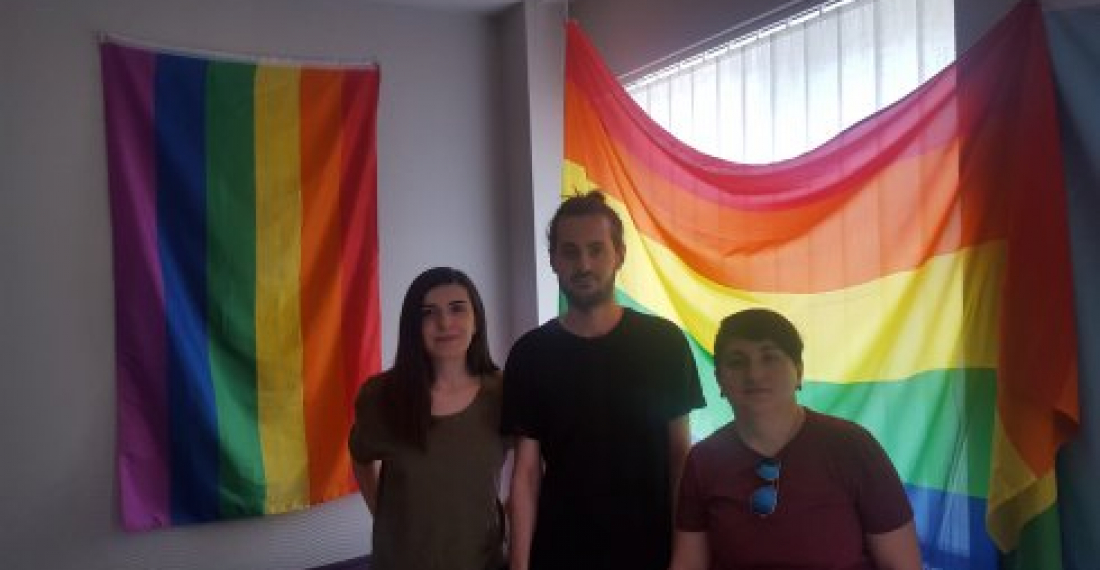
photo 1: Lika Jalagania, Levan Berianidze, and Natia Gvianishvili

photo 2 Beka Gabadadze, a social worker for Tanadogma, an LGBT charity



Related articles

Editor's choice
News
Armenia-Azerbaijan Strategic Expert Platform: Members emphasise the importance of the present moment for the South Caucasus and call for the momentum to be used for the long-term peace and prosperity of the region

Armenia-Azerbaijan Strategic Expert Platform: Members emphasise the importance of the present moment for the South Caucasus and call for the momentum to be used for the long-term peace and prosperity of the region

On 27 February 2026, the members of the Armenia-Azerbaijan Strategic Expert Platform met in Antwerp, Belgium, to assess developments in the South Caucasus following the initialling of a peace agreement between Armenia and Azerbaijan on 8 August 2025 at the White House. The members described the present moment as one of major importance for the region and its neighbours, urging leaders and societies alike to use the current momentum to secure long-term peace and prosperity. Established in 2024 with the support of LINKS Europe, the Platform provides a space for direct dialogue and joint analysis between Armenian and Azerbaijani experts. The members also reaffirmed the importance of continued international engagement and expressed strong support for LINKS Europe’s ongoing peacebuilding work in the region. (Click on the image above for the full statement.)

Popular

Editor's choice
Interview
Thursday Interview: Murad Muradov

Thursday Interview: Murad Muradov

Today, commonspace.eu starts a new regular weekly series. THURSDAY INTERVIEW, conducted by Lauri Nikulainen, will host  persons who are thinkers, opinion shapers, and implementors in their countries and spheres. We start the series with an interview with Murad Muradov, a leading person in Azerbaijan's think tank community. He is also the first co-chair of the Action Committee for a new Armenian-Azerbaijani Dialogue. Last September he made history by being the first Azerbaijani civil society activist to visit Armenia after the 44 day war, and the start of the peace process. Speaking about this visit Murad Muradov said: "My experience was largely positive. My negative expectations luckily didn’t play out. The discussions were respectful, the panel format bringing together experts from Armenia, Azerbaijan, and Turkey was particularly valuable during the NATO Rose-Roth Seminar in Yerevan, and media coverage, while varied in tone, remained largely constructive. Some media outlets though attempted to represent me as more of a government mouthpiece than an independent expert, which was totally misleading.  Overall, I see these initiatives as important steps in rebuilding trust and normalising professional engagement. The fact that soon a larger Azerbaijani civil society visits to Armenia followed, reinforces the sense that this process is moving in the right direction." (click the image to read the interview in full)


