In an article in the Washington publication "The Hill", Azerbaijani Ambassador to the United States, Elin Suleimanov speaks about lessons from the Middle East conflict for Armenian-Azerbaijani relations and the need for a positive vision. The article is reproduced in full:
This week, Elmar Mammadyarov became the first Azerbaijani Foreign Minister to visit Israel and Palestine. This trip, described as "historic" by the Israeli President Shimon Peres, underscored our many shared experiences and concern. My nation also suffered from war just as we were restoring our independence in 1991. Close to a million Azerbaijani civilians lost their homes and became refugees and internally displaced persons (IDPs) during the war with Armenia, centered on the Nagorno-Karabakh region in Azerbaijan.
We have spared no effort to integrate our refugees and IDPs more broadly into Azerbaijani society, but they long to return home. We have built new homes for them, and we provide extensive social services. These cannot, however, replace the traditional lifestyles and communities that were lost and that they yearn to return to.
Although our lands have been under Armenian occupation for 20 years, we still put our trust in negotiations and international institutions to help bring peace to the region and enable our displaced people to return to their homes. As a member of the United Nations Security Council, Azerbaijan actively contributes to addressing global challenges; in turn, we ask the international community to be more proactive in resolving the Armenia-Azerbaijan conflict.
During his visit, Minister Mammadyarov shared with the Israeli and Palestinian leaders our hope to see them living in peace and prosperity and enjoying the benefits of peace that they both deserve. This is our aspiration for the South Caucasus as well.
Azerbaijan is a good friend to both the Israelis and the Palestinians. Our society has a long tradition of respect for the Jewish people, and relations between Azerbaijan and Israel are growing stronger. When Azerbaijan declared our independence from the former Soviet Union in October, 1991, Israel recognized our country two months later - one of the first countries to do so. In April, 1992 - 21 years ago - our countries formally established diplomatic ties.
Of course, as a nation with proud a Muslim heritage and an active member of the Organization of Islamic Cooperation (OIC), we want to see the Palestinian people fully realize their potential and live prosperously.
As the Middle East has shown, the more time that passes with the conflicts unresolved, the more entrenched the sides become. But while Middle East peace is always a front-burner issue, the Armenian-Azerbaijani conflict needs more aggressive international engagement. We urge the United States, for instance, to appoint a high-level, authoritative envoy as a mediator.
We hope to see peace in both the Middle East and in our own region. Azerbaijan's rapid economic development and successful regional projects with Georgia and Turkey demonstrate the potential dividends of peace and the opportunities missed as a result of continuing hostility.
In order to successfully resolve the Armenia-Azerbaijan conflict, the international community needs to move with more urgency. We do not want the major threat this conflict poses to become a chronic challenge and tinderbox for our region.
My generation grew up together with Armenian neighbors and remembers the warm human relations. But today, younger generations in Azerbaijan and Armenia do not share these human ties and do not know their neighbors. With a positive vision for our region's future, we can change that.
source: The Hill and News.az
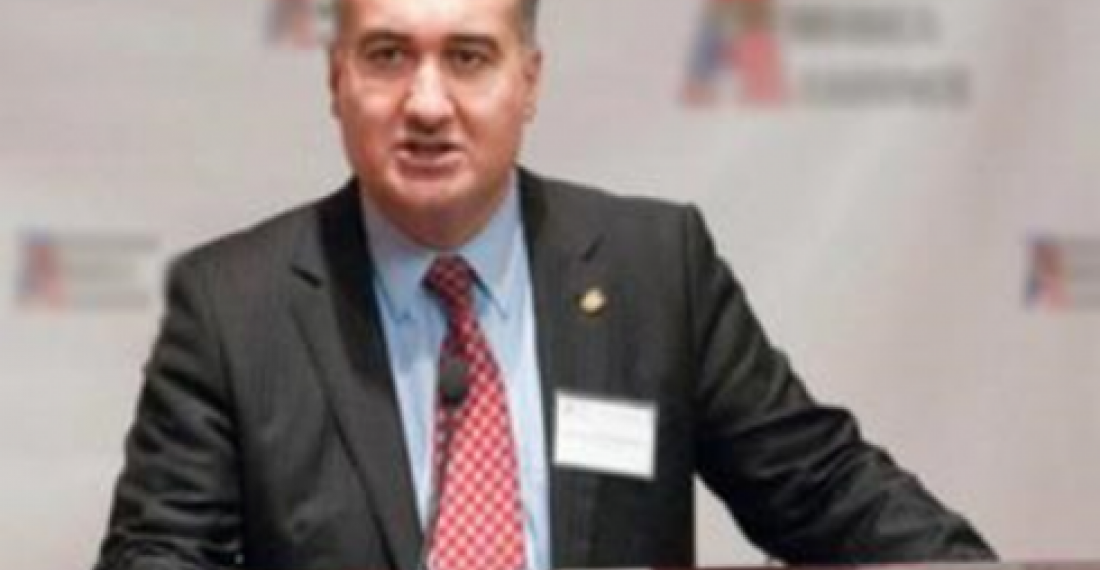
photo: Azerbaijani Ambassador to the US Elin Suleimanov (Archive picture)