Filter archive

Publication date
Editor's choice
News
Situation in South Yemen strains relations between Saudi Arabia and UAE

Situation in South Yemen strains relations between Saudi Arabia and UAE

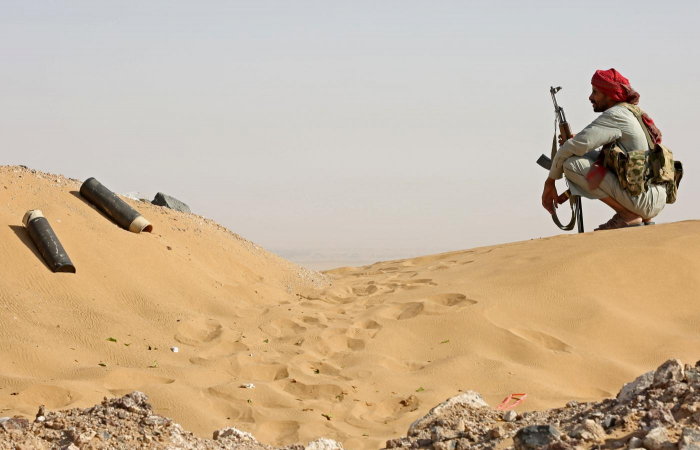
The relations between Saudi Arabia and the United Arab Emirates (UAE) are increasingly strained as a result of the different approach of the two countries towards Yemen. Whilst both countries were initially together in resisting the Houthi take over in Yemen, the UAE subsequently focused on the South of the country, backing the Southern Movement (STC), which seeks to restore the independence of South Yemen. South Yemen became an independent country in 1967, at the end of British rule, and only unified with the north in 1990. The Saudi-led “Coalition to Support Legitimacy in Yemen” on Tuesday, 30 December, said it conducted a “limited” airstrike targeting two ships “that smuggled weapons and other military hardware into Mukalla in southern Yemen”. The ships originated in the UAE port of Furjeirah. In a statement carried by the Saudi Press Agency (SPA), the Coalition Forces spokesman, Major General Turki Al-Maliki, said that two ships coming from the port of Fujairah in the United Arab Emirates entered the Port of Mukalla in Hadramaut without obtaining official permits from the Joint Forces Command of the Coalition. He stressed the Coalition's "continued commitment to de-escalation and enforcing calm in the governorates of Hadramawt and Al-Mahra, and to prevent any military support from any country to any Yemeni faction without coordination with the legitimate Yemeni government and the Coalition. The Southern Transitional Council (STC), launched a sweeping military campaign early in December, seizing the governorates of Hadramaut along the Saudi border and the eastern governorate of Al-Mahra in Yemen’s border with Oman. The UAE-backed STC forces captured the city of Seiyun, including its international airport and the presidential palace. They also took control of the strategic PetroMasila oilfields, which account for a massive portion of Yemen’s remaining oil wealth. (click the image to read the article in full).
Editor's choice
Opinion
John Simpson: "I've reported on 40 wars but I've never seen a year like 2025"

John Simpson: "I've reported on 40 wars but I've never seen a year like 2025"

John Simpson is the BBC's World Affairs editor, and one of its most experienced journalists. In this sombre and candid article for BBC InDepth Simpson says "I've reported on 40 wars but I've never seen a year like 2025". commonspace.eu is republishing the article in full because of its importance:
Editor's choice
News
Not quite there yet!

Not quite there yet!

The presidents of Ukraine and the United States were both upbeat after their talks on Sunday (28 December), but clearly there is yet no agreement on how to end the war in Ukraine. Donald Trump and Volodymyr Zelensky said progress had been made during Florida talks but the US president admitted the problem of territory remained "unresolved". While both the US and Ukrainian presidents described the talks as "great", Trump said "one or two very thorny issues" remained outstanding - most notably on the issue of land. Addressing reporters at Mar-a-Lago, Zelensky said they had come to an agreement on "90%" of the 20-point peace plan, while Trump said a security guarantee for Ukraine was "close to 95%" done. Zelensky later said US and Ukrainian teams would meet next week for further talks on issues aimed at ending Russia's nearly four-year war in Ukraine. "We had a substantive conversation on all issues and highly value the progress that the Ukrainian and American teams have made over the past weeks," Zelensky said in a statement on the Telegram messaging app. Russia launched a full-scale invasion of Ukraine in February 2022, and Moscow currently controls about 20% of Ukrainian territory. A proposal to turn the Donbas region in eastern Ukraine, which Russia largely controls, into a demilitarised zone remains "unresolved", Trump said. "Some of that land has been taken," he told reporters after the meeting. "Some of that land is maybe up for grabs, but it may be taken over the next period of a number of months." Moscow currently controls about 75% of the Donetsk region, and some 99% of the neighbouring Luhansk. The regions are collectively known as Donbas. Russia wants Ukraine to pull back from the small part of the territory it still controls in Donbas, while Kyiv has insisted the area could become a free economic zone policed by Ukrainian forces. The US president has repeatedly changed his own position on Ukraine's lost territories, and in September stunned observers by suggesting that Ukraine might be able to take it back. He later reversed course. "[That] is a very tough issue," he said. "One that will get resolved." Security guarantees for Ukraine are "95% done", Trump said, without formally committing to logistical support or troop deployment to help protect Ukraine from future attacks. Trump floated the possibility of trilateral talks between the US, Russia, and Ukraine, saying it could happen "at the right time". Immediately after their bilateral talks, Trump and Zelensky held a one hour meeting with European leaders. European Commission president, Ursula von der Leyen, wrote on X "We had a good hour-long conversation with President Trump and Zelensky. Several European leaders were present and discussed future peace talks. Good progress has been made. Europe stands ready to work with its partners to consolidate this."