Chief of German navy resigns after controversial remarks on Russian president Vladimir Putin

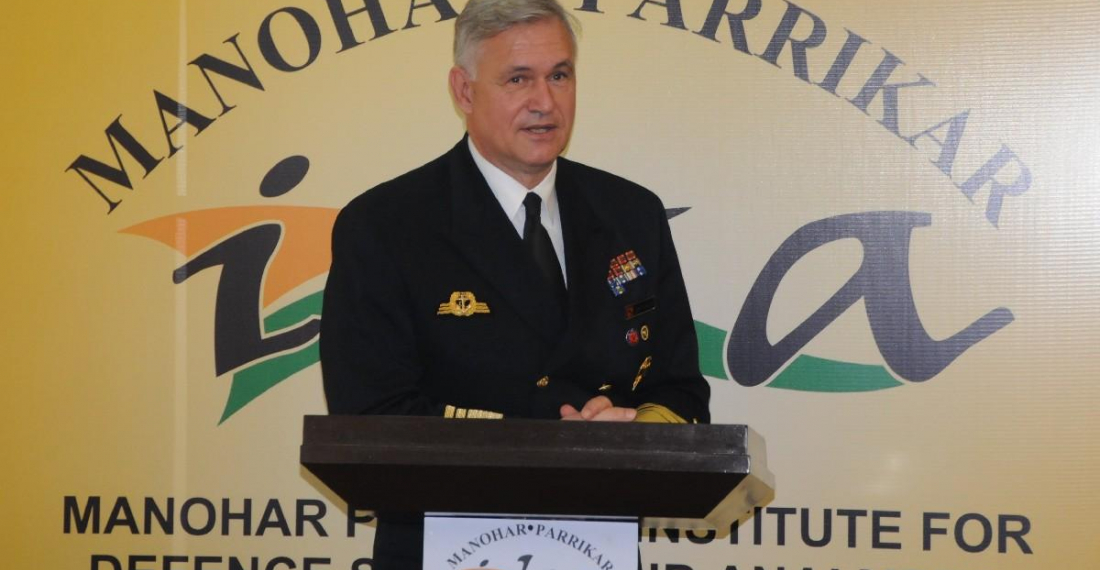
The  head of the German navy, Kay-Achim Schönbach, resigned on Saturday night (22 January) after making controversial comments related to Russian President Vladimir Putin and the current situation in Ukraine. Vice Admiral Schönbach said, among other things, that Putin "deserves respect" and called it "a fact" that Ukraine will never get back the Crimean peninsula annexed by Russia in .

The Vice-admiral, who has led Germany's navy and represented it externally since March 2020, had said during a consultation in India on Friday (21 January) that Putin demands respect and that it is easy for Western powers to give it to him. After video footage of this appeared on YouTube and television, the German government publicly distanced itself from Schönbach's statements. The German Ministry of Defence said that the statements did not represent Berlin's position and could potentially undermine the position of Germany and the West towards Russia.

As a result of the commotion, Schönbach apologised and submitted his resignation, a statement reads. 

"My careless comments in India on security and military policy are an increasing burden on my office," his statement said. "I consider this step necessary to avoid further damage to the German navy, the German military, but especially the Federal Republic of Germany."

The Ministry of Defence immediately accepted Schönbach's resignation. According to him, it was about personal opinions expressed during a discussion.

The Ukrainian Ministry of Foreign Affairs had summoned the German ambassador on Saturday because of "unacceptable statements by the commander of the German Navy". A spokesman for the ministry warned that the statements could weaken Western efforts to de-escalate the Russian/Ukrainian situation.
 

source: commonspace.eu with agencies
photo: Kay-Achim Schönbach during the speech in India. Manohar Parrikar IDSA

Related articles

Editor's choice
News
Donald Tusk: "One for all, and all for one! Otherwise we are finished."

Donald Tusk: "One for all, and all for one! Otherwise we are finished."

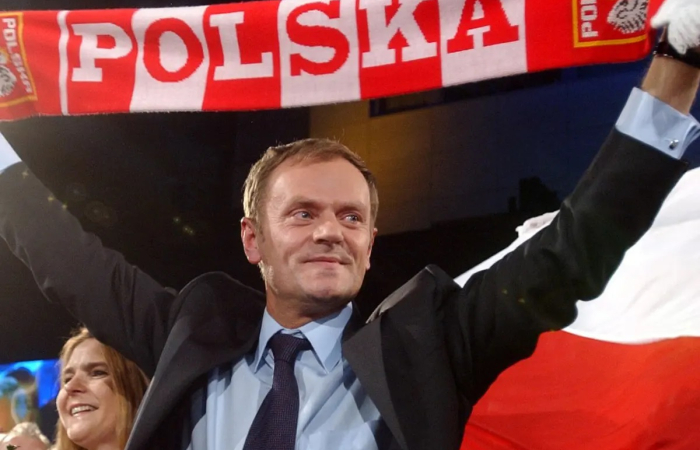
Europe is rattled by events in Venezuela, and there are serious concerns that US disregard for international law may have consequences close to home.  The BBC diplomatic correspondent, James Landale, said, the question is how Europe may respond in the longer term to America's military operation in Venezuela. Will it provide a catalyst for the continent to take greater responsibility for its own security in the face of so much instability from what many see as an unreliable ally? Polish prime minister, Donald Tusk, appears to have answered the question, saying on social media: "No-one will take seriously a weak and divided Europe: neither enemy nor ally. It is already clear now. "We must finally believe in our own strength, we must continue to arm ourselves, we must stay united like never before. One for all, and all for one. Otherwise, we are finished." The US seizing of Venezuela's leader has faced strong criticism from both America's friends and foes at an emergency meeting of the United Nations Security Council, held on Monday, 5 January. Many member states agreed with the US that Nicolás Maduro had been an illegitimate and repressive leader. But many also condemned the US military action as a breach of international law and the UN Charter, and they demanded a democratic transition that reflected the will of the Venezuelan people. (click the image to read the full article).

Popular

Editor's choice
News
Donald Tusk: "One for all, and all for one! Otherwise we are finished."

Donald Tusk: "One for all, and all for one! Otherwise we are finished."

Europe is rattled by events in Venezuela, and there are serious concerns that US disregard for international law may have consequences close to home.  The BBC diplomatic correspondent, James Landale, said, the question is how Europe may respond in the longer term to America's military operation in Venezuela. Will it provide a catalyst for the continent to take greater responsibility for its own security in the face of so much instability from what many see as an unreliable ally? Polish prime minister, Donald Tusk, appears to have answered the question, saying on social media: "No-one will take seriously a weak and divided Europe: neither enemy nor ally. It is already clear now. "We must finally believe in our own strength, we must continue to arm ourselves, we must stay united like never before. One for all, and all for one. Otherwise, we are finished." The US seizing of Venezuela's leader has faced strong criticism from both America's friends and foes at an emergency meeting of the United Nations Security Council, held on Monday, 5 January. Many member states agreed with the US that Nicolás Maduro had been an illegitimate and repressive leader. But many also condemned the US military action as a breach of international law and the UN Charter, and they demanded a democratic transition that reflected the will of the Venezuelan people. (click the image to read the full article).