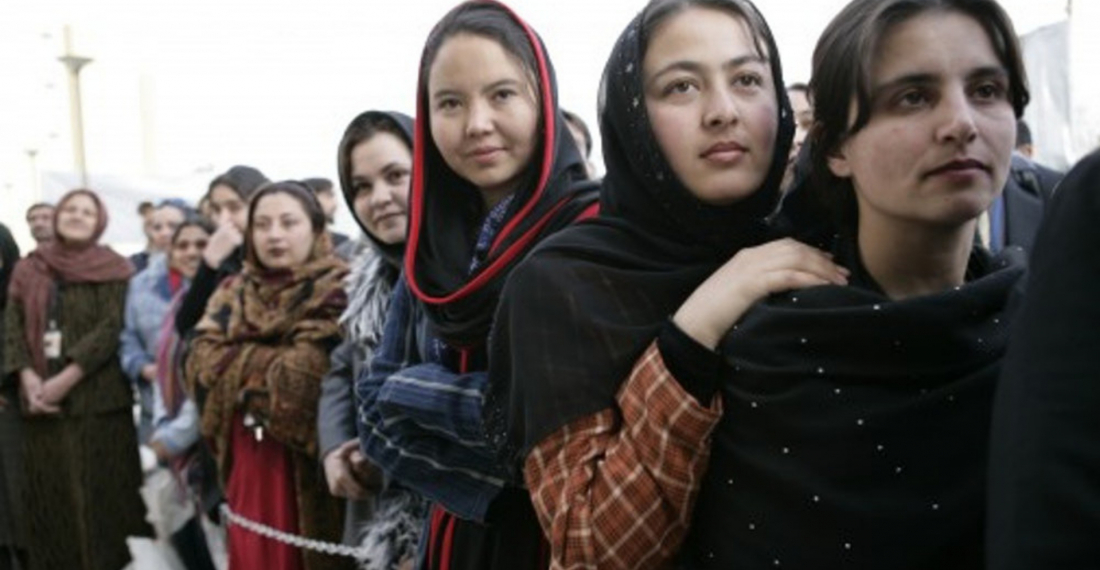
UN Security Council denounces Taliban restrictions on women in Afghanistan

The UN Security Council on Tuesday called for the full, equal and meaningful participation of women and girls in Afghanistan, denouncing a ban by the Taliban-led administration on women attending universities or working for humanitarian aid groups.

In the latest blow to women’s rights in Afghanistan since the Taliban reclaimed power last year, on Saturday the hard-line Islamist rulers banned women from working in non-governmental organizations, sparking international outcry.

The Taliban have already suspended university education for women and secondary schooling for girls.
The 15-member UN Security Council said in a statement agreed by consensus it was “deeply alarmed” by the increasing restrictions on women’s education, calling for “the full, equal, and meaningful participation of women and girls in Afghanistan.

It urged the Taliban “to reopen schools and swiftly reverse these policies and practices, which represents an increasing erosion for the respect of human rights and fundamental freedoms.

In its statement, the Council also condemned the ban on women working for NGOs, adding to warnings of the detrimental impact on aid operations in a country where millions rely on them.

“These restrictions contradict the commitments made by the Taliban to the Afghan people as well as the expectations of the international community,” it said.

UN Secretary-General Antonio Guterres said on Twitter on Tuesday that the restrictions were “unjustifiable human rights violations and must be revoked.” He added: “Actions to exclude and silence women and girls continue to cause immense suffering and major setbacks to the potential of the Afghan people.”

The university ban on women was announced as the Security Council in New York met on Afghanistan last week. Girls have been banned from high school since March.

The council said a ban on female humanitarian workers, announced on Saturday, “would have a significant and immediate impact for humanitarian operations in country,” including those of the UN.

“These restrictions contradict the commitments made by the Taliban to the Afghan people as well as the expectations of the international community,” said the Security Council, which also expressed its full support for the UN political mission in Afghanistan, known as UNAMA.

Four major global aid groups, whose humanitarian efforts have reached millions of Afghans, said on Sunday that they were suspending operations because they were unable to run their programs without female staff.
UN aid chief Martin Griffiths told the Security Council last week that 97 percent of Afghans live in poverty, two-thirds of the population need aid to survive, 20 million people face acute hunger and 1.1 million teenage girls were banned from school.

The Islamist Taliban seized power in August last year. They had largely banned education of girls when last in power two decades ago but had said their policies had changed. The Taliban-led administration has not been recognized internationally. 

source: commonspace.eu with agencies

Related articles

Editor's choice
News
Borrell tells the European Parliament that the situation in Afghanistan was critical, but the EU will remain engaged

Borrell tells the European Parliament that the situation in Afghanistan was critical, but the EU will remain engaged

Borrell underlined that the European Union will make every effort to support the peace process and to remain a committed partner to the Afghan people. "Of course, we will have to take into account the evolving situation, but disengagement is not an option.  We are clear on that: there is no alternative to a negotiated political settlement, through inclusive peace talks.
Editor's choice
News
Germany accuses Russia of cyberattacks and disinformation campaign

Germany accuses Russia of cyberattacks and disinformation campaign

The German government holds Russia responsible for a cyberattack on German air traffic control, and for targeted disinformation campaigns before the last federal election. According to the German Foreign Office in Berlin, the incidents could be clearly attributed to the Russian military intelligence service, the GRU. In response, the Russian ambassador to Berlin was summoned to the Foreign Ministry. "We have been observing a massive increase in threatening hybrid activities by Russia for some time now," a spokesperson for the Foreign Ministry stated. These range from disinformation campaigns and espionage to cyberattacks and sabotage attempts. The aim is to divide society, sow distrust, and undermine confidence in democratic institutions. The spokesperson added that with these actions, Russia is "very concretely threatening our security, not only through its war of aggression against Ukraine, but also here in Germany."  The Foreign Ministry spokesperson explained that the cyberattack on air traffic control in August 2024 was clearly attributed to the hacker collective "APT28," known as "Fancy Bear," and to the responsibility of the Russian military intelligence service, the GRU. Furthermore, it could now be "conclusively stated" that Russia had attempted "to influence and destabilize both the last Federal election and the ongoing internal affairs of the Federal Republic of Germany." There was "absolutely irrefutable evidence" for this". The so-called "Storm 1516" campaign, which has been running since 2024, is allegedly backed by "reliable information" that the Moscow-based think tank "Center for Geopolitical Expertise" is behind it. The Center is also said to be supported by Russian military intelligence. Its primary aim is to influence democratic elections in the West. (Click the image to read more).

Popular

Editor's choice
News
Germany accuses Russia of cyberattacks and disinformation campaign

Germany accuses Russia of cyberattacks and disinformation campaign

The German government holds Russia responsible for a cyberattack on German air traffic control, and for targeted disinformation campaigns before the last federal election. According to the German Foreign Office in Berlin, the incidents could be clearly attributed to the Russian military intelligence service, the GRU. In response, the Russian ambassador to Berlin was summoned to the Foreign Ministry. "We have been observing a massive increase in threatening hybrid activities by Russia for some time now," a spokesperson for the Foreign Ministry stated. These range from disinformation campaigns and espionage to cyberattacks and sabotage attempts. The aim is to divide society, sow distrust, and undermine confidence in democratic institutions. The spokesperson added that with these actions, Russia is "very concretely threatening our security, not only through its war of aggression against Ukraine, but also here in Germany."  The Foreign Ministry spokesperson explained that the cyberattack on air traffic control in August 2024 was clearly attributed to the hacker collective "APT28," known as "Fancy Bear," and to the responsibility of the Russian military intelligence service, the GRU. Furthermore, it could now be "conclusively stated" that Russia had attempted "to influence and destabilize both the last Federal election and the ongoing internal affairs of the Federal Republic of Germany." There was "absolutely irrefutable evidence" for this". The so-called "Storm 1516" campaign, which has been running since 2024, is allegedly backed by "reliable information" that the Moscow-based think tank "Center for Geopolitical Expertise" is behind it. The Center is also said to be supported by Russian military intelligence. Its primary aim is to influence democratic elections in the West. (Click the image to read more).