


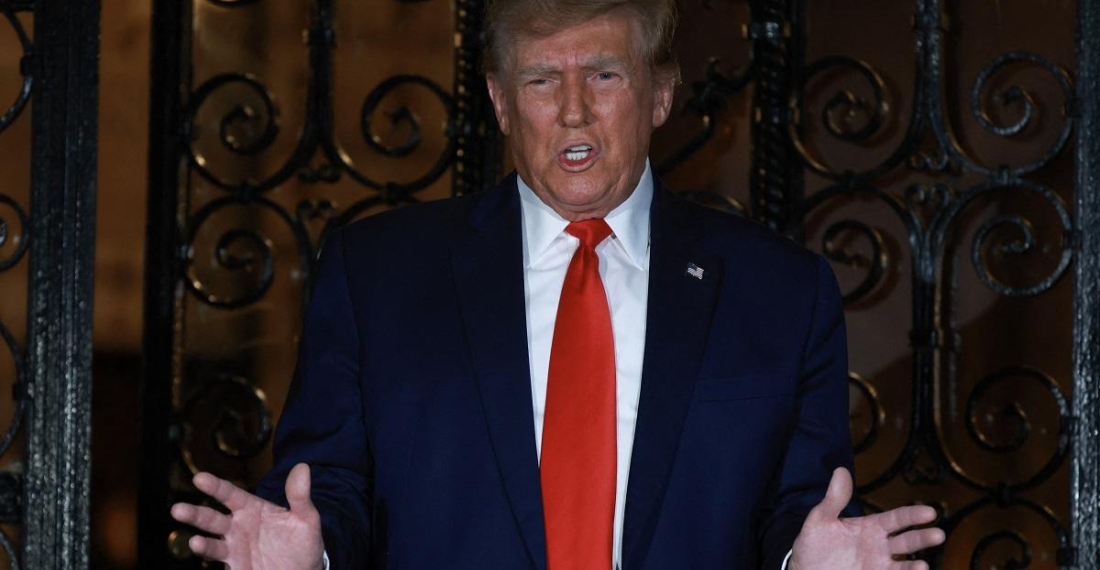
Trump aims to bring Azerbaijan, Central Asian nations into Abraham Accords

US President Donald Trump's administration is actively discussing with Azerbaijan the possibility of bringing that nation and some Central Asian allies into the Abraham Accords, hoping to deepen their existing ties with Israel, according to five sources with knowledge of the matter who spoke to Reuters. As part of the Abraham Accords, inked in 2020 and 2021 during Trump's first term in office, four Muslim-majority countries agreed to normalise diplomatic relations with Israel after U.S. mediation.

Azerbaijan and every country in Central Asia, by contrast, already have longstanding relations with Israel, meaning that an expansion of the accords to include them would largely be symbolic, focusing on strengthening ties in areas like trade and military cooperation, said the sources, who requested anonymity to discuss private conversations.

Such an expansion would reflect Trump's openness to pacts that are less ambitious than his administration's goal to convince regional heavyweight Saudi Arabia to restore ties with Israel while war rages in Gaza.

The kingdom has repeatedly said it would not recognise Israel without steps towards Israeli recognition of a Palestinian state. A soaring death toll in Gaza and starvation in the enclave due to blockage of aid and military operations by Israel have buoyed Arab fury, complicating efforts to add more Muslim-majority countries to the Abraham Accords.

The war in Gaza, where over 60,000 people including tens of thousands of women and children have died according to local health authorities, has provoked global anger. Canada, France and the UK have announced plans in recent days to recognise an independent Palestine.

Another key sticking point is Azerbaijan's conflict with its neighbour Armenia, since the Trump administration considers a peace deal between the two Caucasus nations as a precondition to join the Abraham Accords, three sources told Reuters.

While Trump officials have publicly floated several potential entrants into the accords, the talks centred on Azerbaijan are among the most structured and serious, the sources said. Two of the sources argued a deal could be reached within months or even weeks.

Trump's special envoy for peace missions, Steve Witkoff, travelled to Azerbaijan's capital, Baku, in March to meet with Azerbaijani President Ilham Aliyev. Aryeh Lightstone, a key Witkoff aide, met Aliyev later in the spring in part to discuss the Abraham Accords, three of the sources said.

As part of the discussions, Azerbaijani officials have contacted officials in Central Asian nations, including in nearby Kazakhstan, to gauge their interest in a broader Abraham Accords expansion, those sources said. It was not clear which other countries in Central Asia - which includes Kazakhstan, Uzbekistan, Turkmenistan, Tajikistan and Kyrgyzstan - were contacted.

The State Department, asked for comment by Reuters, did not discuss specific countries, but said expanding the accords has been one of the key objectives of Trump. "We are working to get more countries to join," said a U.S. official. The Azerbaijani government declined to comment.

The White House, the Israeli foreign ministry and the Kazakhstani embassy in Washington did not respond to requests by Reuters for comment. Any new accords would not modify the previous Abraham Accords deals signed by Israel.

The original Abraham Accords, inked between Israel and the United Arab Emirates, Bahrain, Morocco and Sudan, were centred on restoration of ties. The second round of expansion appears to be morphing into a broader mechanism designed to expand U.S. and Israeli soft power.

Wedged between Russia to the north and Iran to the south, Azerbaijan occupies a critical link in trade flows between Central Asia and the West. The Caucasus and Central Asia are also rich in natural resources, including oil and gas, prompting various major powers to compete for influence in the region.

Expanding the accords to nations that already have diplomatic relations with Israel may also be a means of delivering symbolic wins to a president who is known to talk up even relatively small victories, Reuters reported.

Two sources described the discussions involving Central Asia as embryonic but the discussions with Azerbaijan as relatively advanced. But challenges remain and there is no guarantee a deal will be reached, particularly with slow progress in talks between Armenia and Azerbaijan.

The two countries, which both won independence from the Soviet Union in 1991, have been at loggerheads since the late 1980s when Nagorno-Karabakh, an Azerbaijani region that had a mostly ethnic-Armenian population, broke away from Azerbaijan with support from Armenia.

In 2023, Azerbaijan retook Karabakh, prompting about 100,000 ethnic Armenians to flee to Armenia. Both sides have since said they want to sign a treaty on a formal end to the conflict.

Primarily Christian Armenia and the U.S. have close ties, and the Trump administration is wary of taking action that could upset authorities in Yerevan. Still, U.S. officials, including Secretary of State Marco Rubio and Trump himself, have argued that a peace deal between those two nations is near. "Armenia and Azerbaijan, we worked magic there," Trump told reporters earlier in July. "And it's pretty close."

Trump is expected to host the leaders of Azerbaijan and Armenia on 8 August in Washington to sign a memorandum of understanding committing to the pursuit of peace, according to regional sources who spoke to Middle East Eye (MEE). 
Source: commonspace.eu with Reuters and agencies. Photo: US President Donald Trump/AFP

Related articles

Editor's choice
News
Borrell tells the European Parliament that the situation in Afghanistan was critical, but the EU will remain engaged

Borrell tells the European Parliament that the situation in Afghanistan was critical, but the EU will remain engaged

Borrell underlined that the European Union will make every effort to support the peace process and to remain a committed partner to the Afghan people. "Of course, we will have to take into account the evolving situation, but disengagement is not an option.  We are clear on that: there is no alternative to a negotiated political settlement, through inclusive peace talks.
Editor's choice
News
NATO Chief says war is on Europe's doorstep, and warns against complacency

NATO Chief says war is on Europe's doorstep, and warns against complacency

Russia could attack a Nato country within the next five years, the Secretary General of NATO, Mark Rutte, said in a stark new warning. "Nato's own defences can hold for now," Rutte warned in Berlin, but conflict was "next door" to Europe and he feared "too many are quietly complacent, and too many don't feel the urgency, too many believe that time is on our side. "Russia is already escalating its covert campaign against our societies," Rutte said in a speech in Germany. "We must be prepared for the scale of war our grandparents or great-grandparents endured." Earlier this month, Russia's President Vladimir Putin said his country was not planning to go to war with Europe, but it was ready "right now" if Europe wanted to - or started a war. But similar reassurances were given by Moscow in 2022, just before 200,000 Russian troops crossed the border and invaded Ukraine. Putin has accused European countries of hindering US efforts to bring peace in Ukraine - a reference to the role Ukraine's European allies have recently played in trying to change a US peace plan to end the war, whose initial draft was seen as favouring Russia. But Putin was not sincere, Nato's secretary-general said in the German capital, Berlin. Supporting Ukraine, he added, was a guarantee for European security. "Just imagine if Putin got his way; Ukraine under the boot of Russian occupation, his forces pressing against a longer border with Nato, and the significantly increased risk of an armed attack against us." Russia's economy has been on a war footing for more than three years now - its factories churn out ever more supplies of drones, missiles and artillery shells. According to a recent report by the Kiel Institute for the World Economy, Russia has been producing each month around 150 tanks, 550 infantry fighting vehicles, 120 Lancet drones and more than 50 artillery pieces. The UK, and most of its Western allies, are simply not anywhere near this point. Analysts say it would take years for Western Europe's factories to come close to matching Russia's mass-production of weapons. "Allied defence spending and production must rise rapidly, our armed forces must have what they need to keep us safe," the Nato chief said.

Popular

Editor's choice
News
NATO Chief says war is on Europe's doorstep, and warns against complacency

NATO Chief says war is on Europe's doorstep, and warns against complacency

Russia could attack a Nato country within the next five years, the Secretary General of NATO, Mark Rutte, said in a stark new warning. "Nato's own defences can hold for now," Rutte warned in Berlin, but conflict was "next door" to Europe and he feared "too many are quietly complacent, and too many don't feel the urgency, too many believe that time is on our side. "Russia is already escalating its covert campaign against our societies," Rutte said in a speech in Germany. "We must be prepared for the scale of war our grandparents or great-grandparents endured." Earlier this month, Russia's President Vladimir Putin said his country was not planning to go to war with Europe, but it was ready "right now" if Europe wanted to - or started a war. But similar reassurances were given by Moscow in 2022, just before 200,000 Russian troops crossed the border and invaded Ukraine. Putin has accused European countries of hindering US efforts to bring peace in Ukraine - a reference to the role Ukraine's European allies have recently played in trying to change a US peace plan to end the war, whose initial draft was seen as favouring Russia. But Putin was not sincere, Nato's secretary-general said in the German capital, Berlin. Supporting Ukraine, he added, was a guarantee for European security. "Just imagine if Putin got his way; Ukraine under the boot of Russian occupation, his forces pressing against a longer border with Nato, and the significantly increased risk of an armed attack against us." Russia's economy has been on a war footing for more than three years now - its factories churn out ever more supplies of drones, missiles and artillery shells. According to a recent report by the Kiel Institute for the World Economy, Russia has been producing each month around 150 tanks, 550 infantry fighting vehicles, 120 Lancet drones and more than 50 artillery pieces. The UK, and most of its Western allies, are simply not anywhere near this point. Analysts say it would take years for Western Europe's factories to come close to matching Russia's mass-production of weapons. "Allied defence spending and production must rise rapidly, our armed forces must have what they need to keep us safe," the Nato chief said.


