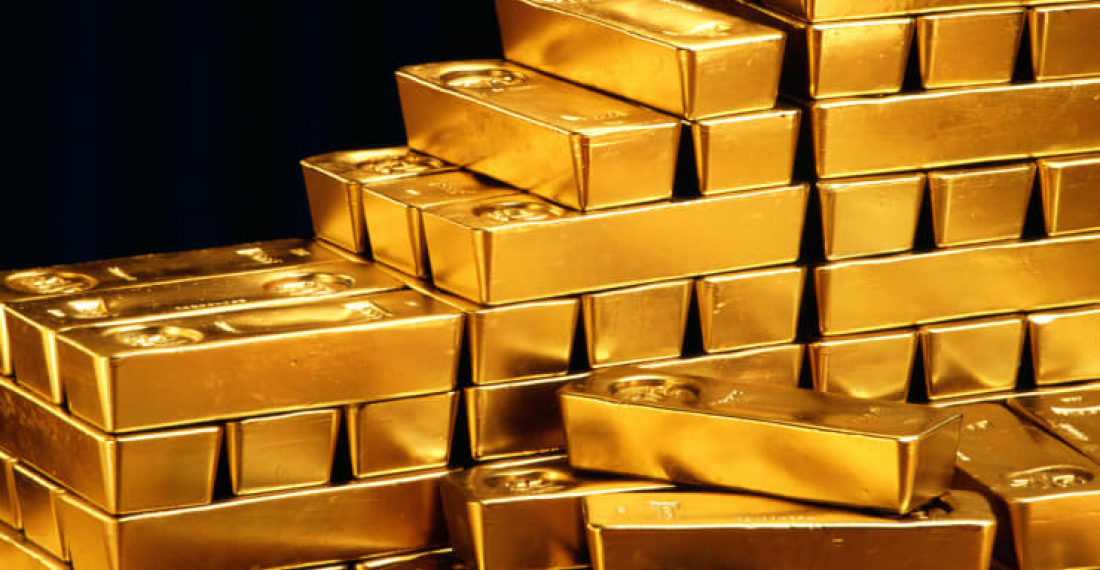
Russia tripled its gold exports in 2020 after the coronavirus pandemic had made oil and gas revenues plummet, the Russian newspaper Izvestia wrote on Monday (15 February).
It was the right time to boost sales as gold prices kept setting records in 2020. Prices went up by 21.7% over the course of the year with a particularly rapid growth recorded in the first six months of 2020. There were a number of reasons behind the surge in prices, namely economic uncertainty caused by the pandemic. In such a situation, investors opted to put money into the most stable assets, including the yellow metal.
"Gold is a rather volatile commodity but this year, for the first time in many years, its price both in dollars and rubles grew significantly. As a result, banks, which had been making gold stocks, had a chance to sell it at a good price, locking in profits," Freedom Finance analyst Valery Yemelyanov pointed out.
Experts believe that the 2020 increase in investor demand is unlikely to repeat itself because the factors that prompted the growth are not as strong anymore. Uncertainty stemming from the COVID-19 pandemic is subsiding as the vaccination campaigns pick up pace and monetary policies will hardly be softened further because interest rates are already close to the lowest levels, Mikhail Bespalov of KSP Capital noted.
On the other hand, the new US administration is mulling over further fiscal stimulus and a new aid package worth $3 trillion. It will inevitably weaken the US currency and may give a boost to gold prices, though not as strong as the one they got in 2020, Izvestya writes.
This analysis is not shared universally. Andrew Sheets, Chief Cross-Asset Strategist for Morgan Stanley, said in a recent report that although inflation is expected to rise in 2021, it won't be enough to support gold prices.
"Morgan Stanley's economists forecast U.S. inflation to rise a little over 2% over the next two years. So this is hardly the runaway type of scenario for inflation that gold would seem best suited for," he said.
Weak inflation, coupled with an improving economic outlook, will continue to weigh on gold prices, the bank said. Sheets noted that gold's current valuation isn't very attractive.
"The price momentum is poor, which is to say that commodities that are falling often tend to keep falling," he said. "And current economic data, which is improving, has often meant gold underperforms other assets."
The comments come as gold prices struggle to find momentum as optimistic economic growth expectations push bond yields higher. The 10-year bond yield is currently trading at 1.2%, its highest level in nearly a year.
Analysts have noted that rising nominal yields are causing real yields also to push higher. This environment also increases gold's opportunity costs as a non-yielding asset.
Morgan Stanley is optimistic about the U.S. economy as they expect pent-up consumer activity will be unleashed in the second half of this year.