



The quest for a landmines free South Caucasus by the end of this decade is within reach

Participants at a regional meeting of stakeholders held in Tbilisi on Friday (28 February) agreed to intensify efforts to raise awareness of the problem of landmines and to improve understanding of the provisions of the Ottawa Convention

The quest to eliminate the scourge of landmines in the South Caucasus can be achieved this decade if there is adequate political commitment by governments, proper public awareness, and enough resources allocated through state budgets and international donors. This was the conclusion of a regional information exchange meeting held in Tbilisi on Friday 28 February, with the participation of various government agencies, demining agencies, international organisations and diplomatic missions and think tanks and civil society groups. The meeting was organised by LINKS Europe in the framework of its ongoing campaign Landmine Free South Caucasus, with the support of the European Union.

The guest speaker at the event was Juan Carlos Ruan, Director of the Geneva-based  Implementation Support Unit of the Anti-Personnel Mine Ban Convention, also known as the Ottawa Convention. The Convention has been signed by more than 160 countries, but the three South Caucasus countries are among the 33 countries world-wide that have yet to do so.

During the discussions at the event the importance of making the Convention better known and better understood in the region was emphasised, as well as the need to remain fully engaged with the three governments on the matter.

related content: The Ottawa Convention Matters!

Participants heard reports about on-going efforts at mine clearance in the South Caucasus. Participants felt that while there were still large areas in the region that were mined, landmines in the South Caucasus could be eradicated by the end of the decade given the right conditions. Participants in the meeting agreed to intensify their efforts to achieve this, and highlighted the value of a regional approach in dealing with this humanitarian objective.

The meeting assessed positively the work of the campaign Landmine Free South Caucasus held in April 2019. It was decided to build on this work with a new awareness raising campaign in 2020. This year's campaign will start on 4 April, which is International Mine Awareness Day, and  will be spread over three months. Participants highlighted the importance of involving the victims of landmines in campaign activities, the need to recognise the efforts of those working in demining agencies across the region, and the importance to provide proper information on the Ottawa Convention and its implementation as part of the campaign's efforts.

At the end of the meeting "Landmine Free South Caucasus - the next steps" participants thanked LINKS Europe for its co-ordinating efforts.

Among those present at the meeting were representatives of the Ministry of Foreign Affairs of Georgia, DELTA -  The State Military-Scientific Technical Centre of Georgia, The Centre for Humanitarian Deming and Expertise of Armenia, The Caucasus Policy Analysis Centre of Azerbaijan, The HALO Trust, The International Committee of the Red Cross, The European Union Monitoring Mission in Georgia, The NATO Liaison Office in Tbilisi, The Europe-Georgia Institute, as well as representatives of the Embassies of Germany, the Netherlands, Greece, the United Kingdom, Sweden and Ukraine.

source: commonspace.eu

photo: Some of the participants at the Regional Information Exchange Meeting "Landmine Free South Caucasus - the next steps" held in Tbilisi on 28 February 2020.


Related articles

Editor's choice
News
Thousands join Pope on his last day in Cameroon, his second stop on his African tour

Thousands join Pope on his last day in Cameroon, his second stop on his African tour

More than 120,000 people joined Pope Leo XIV in Cameroon for an open-air Mass on Friday (17 April), the biggest crowd so far during his 11-day Africa tour. Arriving in the economic city of Douala on Friday, the Pope reiterated his message of peace after visiting the country's Anglophone region hit by a decade-long rebellion the day before. He later warned of the dangers of artificial intelligence (AI), which he said was leading to the spread of "polarisation, conflict, fear and violence". Jubliant crowds welcomed the Pope as he arrived at the Japoma Stadium. Standing in his vehicle - known as the Popemobile - the pontiff waved at the droves of people waiting for his entrance. Some worshippers camped outside the premises on Thursday night in a bid to get a prime spot for the pontiff's address, with some having been there for more than 24 hours By Friday, tens of thousands of people of all ages, including several from the priesthood, braved the heat to participate in the occasion. “Do not give in to distrust and discouragement,” he said. “Reject every form of abuse or violence, which deceives by promising easy gains but hardens the heart and makes it insensitive. Do not forget that your people are even richer than this land, for your treasure lies in your values: faith, family, hospitality, and work.” Pope Leo invited African youth to follow the vocation that God sets out for them, so that they may be protagonists of their own future. “Do not let yourselves be corrupted by temptations that waste your energies and do not serve the progress of society,” he said.
Editor's choice
News
Russian attacks on Kyiv and other Ukrainian cities highlights need of strengthening European resolve

Russian attacks on Kyiv and other Ukrainian cities highlights need of strengthening European resolve

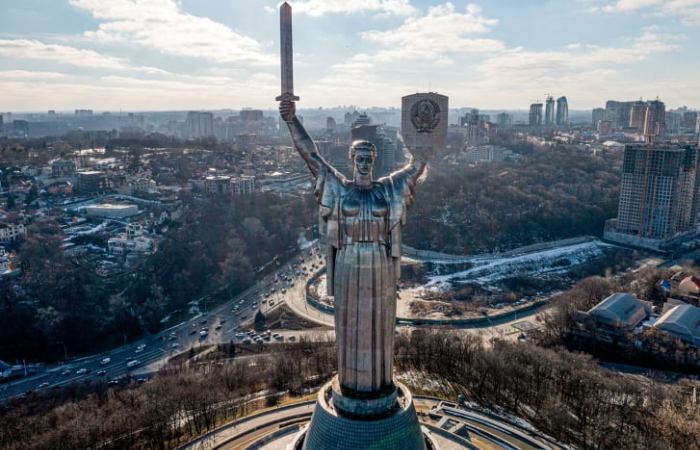
Ukrainian President Volodymyr Zelensky condemned the attack, writing on X that it proved that US and European sanctions against Russia should not be weakened. Russia launched more than 700 drones and missiles at Ukraine in multiple waves overnight from Wednesday to Thursday, killing at least 18 people in what local officials said was the deadliest attack in months. Ukraine's air force said on Thursday morning that Russia had launched 659 drones and 44 cruise and ballistic missiles in the prior 24 hours. It said that 636 drones and 31 missiles had been shot down - but there had been direct hits in 26 locations. (click picture to read more)

Popular

Editor's choice
Interview
Thursday Interview: Murad Muradov

Thursday Interview: Murad Muradov

Today, commonspace.eu starts a new regular weekly series. THURSDAY INTERVIEW, conducted by Lauri Nikulainen, will host  persons who are thinkers, opinion shapers, and implementors in their countries and spheres. We start the series with an interview with Murad Muradov, a leading person in Azerbaijan's think tank community. He is also the first co-chair of the Action Committee for a new Armenian-Azerbaijani Dialogue. Last September he made history by being the first Azerbaijani civil society activist to visit Armenia after the 44 day war, and the start of the peace process. Speaking about this visit Murad Muradov said: "My experience was largely positive. My negative expectations luckily didn’t play out. The discussions were respectful, the panel format bringing together experts from Armenia, Azerbaijan, and Turkey was particularly valuable during the NATO Rose-Roth Seminar in Yerevan, and media coverage, while varied in tone, remained largely constructive. Some media outlets though attempted to represent me as more of a government mouthpiece than an independent expert, which was totally misleading.  Overall, I see these initiatives as important steps in rebuilding trust and normalising professional engagement. The fact that soon a larger Azerbaijani civil society visits to Armenia followed, reinforces the sense that this process is moving in the right direction." (click the image to read the interview in full)

