The African nation of Niger has been mired in controversy since a military coup in July 2023 brought down the elected government of president Mohammed Bazoum and suspended the country's constitution. The military junta that took power cut its relations with the international community and western countries and opted instead for relations with China and Russia. Now however, relations with China appear to be strained.
This week, Chinese Foreign Minister Wang Yi urged Niger to resolve disputes with Chinese energy companies operating in the West African nation through dialogue.
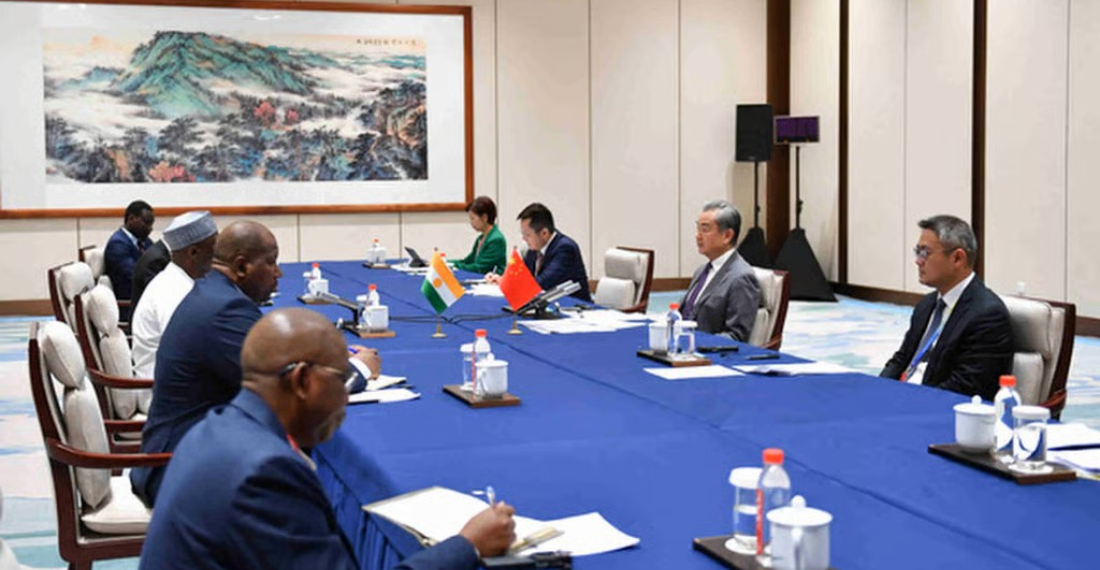
Wang made the remarks during talks with his Nigerien counterpart Bakari Yaou Sangaré in the central Chinese city of Changsha on Wednesday.
“The two sides should properly handle the differences and problems encountered in cooperation through dialogue,” Wang said, according to a Chinese foreign ministry readout of the meeting, which was held on the sidelines of a conference of African ministers.
Niger’s ruling junta in March expelled three Chinese oil executives working for China National Petroleum Corporation and CNPC subsidiaries over salary disparities between expatriate and lower-paid local workers. The junta also revoked the license of a Chinese-owned hotel in the capital Niamey, citing “discriminatory practices and administrative violations”.
The dispute escalated in May when Niger ordered CNPC – which has vast oil interests in the Sahelian nation – and its oil refinery unit Soraz to terminate the contracts of expatriate employees with more than four years of service.
During the talks, Wang called on the junta to ensure the safety and rights of Chinese companies and citizens in Niger, and to create favourable conditions for the stable, long-term development of bilateral cooperation projects. That includes the Agadem oilfield and 1,980km (1,230-mile) oil pipeline, which was developed and built by CNPC. The pipeline, which began operating last year, runs from the Agadem oilfield in the south of landlocked Niger to Seme, an Atlantic port in neighbouring Benin. The entire project is estimated to have cost some US$7 billion and was funded by CNPC. The Soraz refinery, or Zinder Refining Co, was completed in 2011 with a CNPC investment of US$980 million.
Tensions emerged around the pipeline last year because of rebel attacks that stopped the flow of oil. There were also issues with Benin, which at one point refused to allow CNPC to export Nigerien crude oil to China. The dispute resulted in significant financial losses for CNPC and Chinese policy banks.
China had provided the new military government with a substantial financial lifeline of about US$400 million – in the form of an oil-backed loan to be repaid via crude oil shipments over 12 months – which helped to address an immediate cash shortage.
According to the Chinese readout, Sangaré told Wang that China had become Niger’s main economic, trade and investment partner, noting that their relationship had been upgraded to a strategic partnership. He said Niger “attaches great importance to security issues, and is willing to enhance mutual trust and maintain dialogue in the spirit of mutual respect”.
But the security situation in Niger is still dire amid continued attacks by insurgent groups. China’s embassy in Niamey early this month warned citizens that the situation “remained tense and complicated” in many places in Niger, saying Chinese should be cautious when travelling to the country. “Chinese citizens and institutions already in Niger should pay close attention to the security situation, reduce unnecessary outings and avoid going to crowded places,” the embassy statement said.
source: commonspace.eu with South China Morning Post (Hong Kong) and agencies.
photo: The Chinese and Nigerien Foreign Ministers and their delegations at their meeting in China on 11 June 2025 (picture courtesy of the Chinese Ministry of Foreign Affairs, Beijing)