


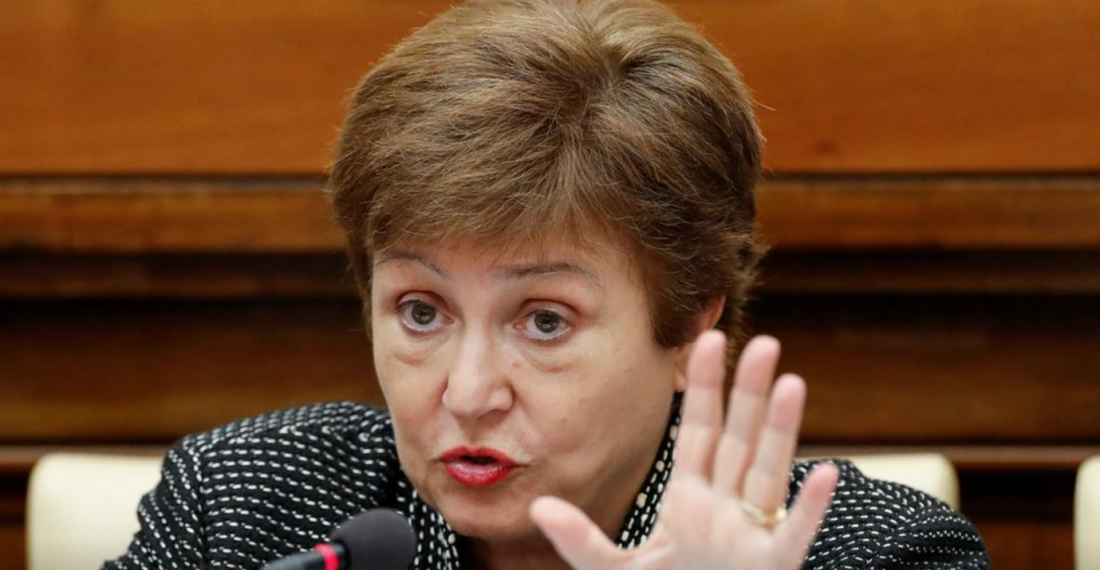
IMF Head warns of economic impact of Ukraine Crisis on Africa

African economies are particularly vulnerable to the impacts of war in Ukraine, says the Head of the International Monetary Fund (IMF),  Kristalina Georgieva. The remarks come two weeks after the Russian invasion of Ukraine sent financial markets into steady decline, leaving African economies with high food and fuel prices.

The war and the unprecedented sanctions imposed on Russia are having far-reaching consequences. They come at a delicate time for Africa.”, she stated at a closed virtual press briefing on Thursday.

Oil exporting countries, such as Nigeria are due to benefit from rising oil prices, expanding their foreign reserves and increasing revenues. This, however, is expected to be undermined by its remaining dependency on oil imports, as well as the potentially brief nature of price hikes.

To make matters worse, many African economies have seen their credit rating downgraded, making it more difficult (and expensive) for them to access capital markets.

African economies including those of the ‘Fragile Five’ (Kenya, Angola, Ethiopia, Ghana, and Zambia) are heavily burdened by growing debt. Sub-Saharan African countries suffered almost a 10% decline in revenues in 2020, making the payment of interest increasingly difficult. Further declines in tourism over the past year are likely to exacerbate declines in revenue.

One of these Fragile Five, Zambia, has to allocate 44.5% of its total revenue solely to interest payments, according to the World Bank. The southern African country has been in talks with the IMF to restructure its debt, announcing an agreement would be in the books by mid-2022.

In a push to decrease debt-pressures, the G20 initiated the Debt Service Suspension Initiative (DSSI) at the start of the pandemic. The DSSI was to be followed up by the Common Framework for Debt Treatments (CF) upon the DSSI’s retirement in December of 2021. Beyond public creditors such as the World Bank, however, only one private lender took part in either initiative.

Georgieva announced during her address that the IMF “stands ready to help African countries reduce the cost of any needed policy adjustments through policy advice, capacity development, and lending”.

Fears remain that an increasing debt-burden and a lack of timely debt-relief will further cut governments’ spending capacity and increase the risk of default. As the Observer Research Foundation—an India-based policy think tank—states, austerity measures may contribute to a short-term decline in welfare throughout African economies.

The price of oil has skyrocketed in the past month and remains volatile with Friday’s crude oil market price dropping 12% shortly after market opening. Wheat prices have also climbed to a 12 year high as a result of supply chain issues, accompanied by rising fertilizer prices. This is likely to make much-needed humanitarian aid to the Horn of Africa, which is currently struggling from an historic drought, particularly expensive.  

Sources: Reuters, Observer Research Foundation (New Delhi), Anadolu Agency (Ankara)
Photo: IMF Managing Director Kristalina Georgieva during a conference in the Vatican, February 2020; Source: Reuters


Related articles

Editor's choice
News
Council of Europe launches new International Claims Commission for Ukraine

Council of Europe launches new International Claims Commission for Ukraine

Thirty-four countries and the European Union have signed a new convention establishing an International Claims Commission for Ukraine at a diplomatic conference co-hosted by the 46-nation Council of Europe and the Netherlands in the Hague. The diplomatic conference was attended by leaders and high-level representatives from over 50 states, including the President of Ukraine, Volodymyr Zelenskyy, the President of the Republic of Moldova, Maia Sandu, and the Prime Minister of the Netherlands, Dick Schoof.  “Today marks a major step forward in ensuring accountability for Ukraine. The International Claims Commission represents justice and hope for tens of thousands of victims—our determination that those who have suffered will not be forgotten. I call for quick ratifications so we can get the commission rapidly up and running for the people of Ukraine,” said Council of Europe Secretary General Alain Berset. Ukrainian President Volodymyr Zelenskyy said: “We expect that every mechanism for compensation from the Register of Damage and Claims Commission to the actual payments – will start working and receive strong and sufficient international support, so that people can truly feel that any kind of damage caused by the war can be compensated. This war, and Russia’s responsibility for it, MUST become a clear example – so that others learn not to choose aggression.” “Accountability is about creating the conditions for peace that endures. And therefore, accountability is a condition of security – today and for the future. But accountability is not only about Ukraine. And it is not only about one aggressor and one victim. Accountability is about Europe. About every country in Europe. It is about whether Europe, as a whole, is willing to defend its peace,” said Maia Sandu, President of the Republic of Moldova, which currently holds the Presidency of the Council of Europe’s Committee of Ministers. The Prime Minister of the Netherlands, Dick Schoof, said: “Every day Russia is deliberately bombarding homes, destroying businesses and damaging infrastructure in Ukraine. Russia must compensate Ukraine for the damage caused. That is why we have launched the International Claims Commission for Ukraine and we are honoured to host it.” The International Claims Commission will be the second part of a comprehensive compensation mechanism related to Russia’s war of aggression, building on the existing Register of Damage for Ukraine. The claims commission will be established within the framework of the Council of Europe and will also be open to other countries. The Register of Damage for Ukraine, created in 2023, collects and records compensation claims submitted by individuals, organisations and public bodies in Ukraine. Forty-four states and the European Union have so far joined the Register, which has already received 86,000 claims. The International Claims Commission will review, assess and decide upon claims submitted to the Register of Damage for Ukraine and determine the amount of compensation, if any, which is due in each case. The convention establishing the commission will enter into force once it has been ratified by 25 signatories, as long as sufficient funds have been secured to support its initial work.

Popular

Editor's choice
News
Council of Europe launches new International Claims Commission for Ukraine

Council of Europe launches new International Claims Commission for Ukraine

Thirty-four countries and the European Union have signed a new convention establishing an International Claims Commission for Ukraine at a diplomatic conference co-hosted by the 46-nation Council of Europe and the Netherlands in the Hague. The diplomatic conference was attended by leaders and high-level representatives from over 50 states, including the President of Ukraine, Volodymyr Zelenskyy, the President of the Republic of Moldova, Maia Sandu, and the Prime Minister of the Netherlands, Dick Schoof.  “Today marks a major step forward in ensuring accountability for Ukraine. The International Claims Commission represents justice and hope for tens of thousands of victims—our determination that those who have suffered will not be forgotten. I call for quick ratifications so we can get the commission rapidly up and running for the people of Ukraine,” said Council of Europe Secretary General Alain Berset. Ukrainian President Volodymyr Zelenskyy said: “We expect that every mechanism for compensation from the Register of Damage and Claims Commission to the actual payments – will start working and receive strong and sufficient international support, so that people can truly feel that any kind of damage caused by the war can be compensated. This war, and Russia’s responsibility for it, MUST become a clear example – so that others learn not to choose aggression.” “Accountability is about creating the conditions for peace that endures. And therefore, accountability is a condition of security – today and for the future. But accountability is not only about Ukraine. And it is not only about one aggressor and one victim. Accountability is about Europe. About every country in Europe. It is about whether Europe, as a whole, is willing to defend its peace,” said Maia Sandu, President of the Republic of Moldova, which currently holds the Presidency of the Council of Europe’s Committee of Ministers. The Prime Minister of the Netherlands, Dick Schoof, said: “Every day Russia is deliberately bombarding homes, destroying businesses and damaging infrastructure in Ukraine. Russia must compensate Ukraine for the damage caused. That is why we have launched the International Claims Commission for Ukraine and we are honoured to host it.” The International Claims Commission will be the second part of a comprehensive compensation mechanism related to Russia’s war of aggression, building on the existing Register of Damage for Ukraine. The claims commission will be established within the framework of the Council of Europe and will also be open to other countries. The Register of Damage for Ukraine, created in 2023, collects and records compensation claims submitted by individuals, organisations and public bodies in Ukraine. Forty-four states and the European Union have so far joined the Register, which has already received 86,000 claims. The International Claims Commission will review, assess and decide upon claims submitted to the Register of Damage for Ukraine and determine the amount of compensation, if any, which is due in each case. The convention establishing the commission will enter into force once it has been ratified by 25 signatories, as long as sufficient funds have been secured to support its initial work.

