


European Parliament official visit to Baku: A new beginning in EU-Azerbaijan relations?

It is the duty of European institutions, especially the European parliament, to reach out to the Azerbaijani people and this can only be done if there is a sustained dialogue with the Azerbaijani government and Azerbaijani institutions.

This is a commentary prepared by the political editor of commonspace.eu

A delegation from the European parliament this week was in Azerbaijan to participate in a meeting of the EU-Azerbaijan Parliamentary Co-operation Committee, a framework for dialogue between the European Parliament and the Parliament of Azerbaijan.  Usually such meetings go unnoticed, but given the fact that relations between the EU and Azerbaijan have in recent years been strained, and those between the European Parliament and the Parliament of Azerbaijan nearly broken, the visit and the discussion held were of significant importance.

The problems are related to Azerbaijan’s domestic politics, and especially its treatment of opponents, and what many in Europe consider to be the unfair imprisonment of a number of activists and human rights and democracy defenders. Many have subsequently been released, but several others, including the leader of the REAL movement, Ilgar Mammadov, and various young activists from the NIDA movement remain serving long prison sentences.

A tough, but rather awkwardly worded statement from the European Parliament last year triggered a sharp reaction in Baku, including the withdrawal of Azerbaijan from Euronest – the parliamentary framework between the European parliament and the six Eastern partnership countries.

As reported by the Azerbaijani media, a statement was issued on Wednesday at the end of the MEPs visit to Baku by the co-chairs of the EU-Azerbaijan Parliamentary Cooperation Committee Sajjad Karim and Samad Seyidov. The statement says:

“The PCC had not met since 2012. The primary aim of this meeting was to restore and facilitate future dialogue to constructively review the current basis of relationship between the European Parliament with Milli Majlis and the direct implications of this on EU-Azerbaijan relations”.  

 Hinting at the nature of the discussions the statement said,

“The PCC and all other interactions provided an opportunity for areas of mutual shared understandings to be explored and areas where disagreement had occurred to be examined and views of both sides shared.”

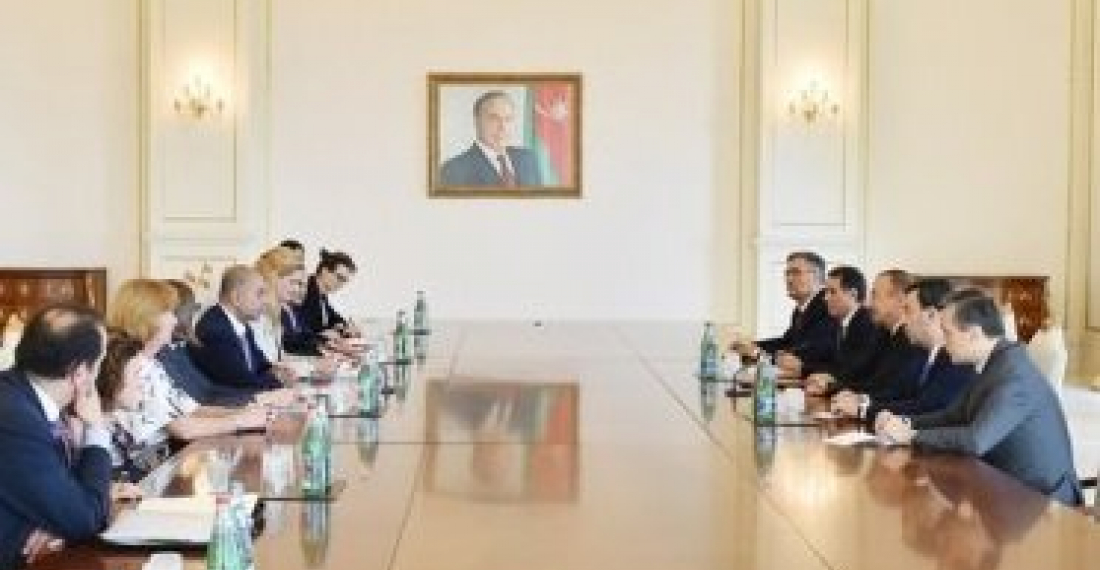
The statement makes a direct reference to the meeting between the members of the European parliament and President Ilham Aliev. In his meeting with the MEPs president Aliev was very candid in expressing his country’s displeasure at the attitude of various western institutions towards Azerbaijan. The statement says

“The PCC Co-Chairs welcome the open, critical and constructive expression of viewpoint by President Aliyev. Particular note is made of European Parliament resolution 2015/2840(RSP) of 10 September 2015 and Milli Majlis resolution dated 14 September 2015 and their consequences for the relations between the European Parliament and Milli Majlis. The delegation of the European Parliament regrets that for one year no dialogue took place between the European Parliament and Milli Majlis. Both sides hope moves to restore normal dialogue can be undertaken expeditiously.”

The final part of the statement refers to wider geo-political issues. It states,

“We clearly understand all the geopolitical realities and challenges that Azerbaijan faces today, notably the Armenian-Azerbaijani Nagorno Karabakh conflict and we have honour to clearly express that the European Parliament fully supports the territorial integrity and sovereignty of Azerbaijan, as stated by the European Parliament in its resolutions of 20 May 2010 and 23 October 2013 and UN Security Council resolutions 822, 853, 874 and 884 of 1993. “

Clearly, Azerbaijan does not dislike all that comes out of the European parliament in the past.

Opponents of the Azerbaijani government have criticised the visit of the MEPs to Baku. They are wrong. The Parliamentary Co-operation Committee between the European parliament and Azerbaijan exists so that issues and problems can be discussed, and should be the primary mechanism to review bilateral relations. That there are issues in the way Azerbaijan conducts its domestic politics, and shortcomings in the way it is implementing the commitments it took on as a member of the Council of Europe and the OSCE, that are of concern to European Parliamentarians, is without doubt. That the European Parliamentarians should raise these concerns unequivocally and as often as necessary is a must. But this needs to be done in a spirit of friendship not one of hostility. The political leadership of Azerbaijan on its part must stop being so paranoic of criticism, and show that it is ready to play by the rules that it has itself agreed to.

There is a lot of good-will towards Azerbaijan in Europe. Azerbaijan should not squander this. On the other hand, in Azerbaijan, many people, especially the younger generation, see Europe as a modernising force that is able to assist the country in its transformation, not only in the political but also in the economic sphere. It is the duty of European institutions, especially the European parliament, to reach out to the Azerbaijani people and this can only be done if there is a sustained dialogue with the Azerbaijani government and Azerbaijani institutions. As correctly emphasised in the statement issued at the end of the MEPs visit to Baku this week this must be based on “mutual respect, equality and understanding”.

One hopes this visit marks a new begining in EU-Azerbaijan relations.

source: This commentary was prepared by the political editore of commonspace.eu

photo: President Ilham Aliev with the official delegation of the European Parliament in Baku on 20 September 2016


Related articles

Editor's choice
News
Council of Europe launches new International Claims Commission for Ukraine

Council of Europe launches new International Claims Commission for Ukraine

Thirty-four countries and the European Union have signed a new convention establishing an International Claims Commission for Ukraine at a diplomatic conference co-hosted by the 46-nation Council of Europe and the Netherlands in the Hague. The diplomatic conference was attended by leaders and high-level representatives from over 50 states, including the President of Ukraine, Volodymyr Zelenskyy, the President of the Republic of Moldova, Maia Sandu, and the Prime Minister of the Netherlands, Dick Schoof.  “Today marks a major step forward in ensuring accountability for Ukraine. The International Claims Commission represents justice and hope for tens of thousands of victims—our determination that those who have suffered will not be forgotten. I call for quick ratifications so we can get the commission rapidly up and running for the people of Ukraine,” said Council of Europe Secretary General Alain Berset. Ukrainian President Volodymyr Zelenskyy said: “We expect that every mechanism for compensation from the Register of Damage and Claims Commission to the actual payments – will start working and receive strong and sufficient international support, so that people can truly feel that any kind of damage caused by the war can be compensated. This war, and Russia’s responsibility for it, MUST become a clear example – so that others learn not to choose aggression.” “Accountability is about creating the conditions for peace that endures. And therefore, accountability is a condition of security – today and for the future. But accountability is not only about Ukraine. And it is not only about one aggressor and one victim. Accountability is about Europe. About every country in Europe. It is about whether Europe, as a whole, is willing to defend its peace,” said Maia Sandu, President of the Republic of Moldova, which currently holds the Presidency of the Council of Europe’s Committee of Ministers. The Prime Minister of the Netherlands, Dick Schoof, said: “Every day Russia is deliberately bombarding homes, destroying businesses and damaging infrastructure in Ukraine. Russia must compensate Ukraine for the damage caused. That is why we have launched the International Claims Commission for Ukraine and we are honoured to host it.” The International Claims Commission will be the second part of a comprehensive compensation mechanism related to Russia’s war of aggression, building on the existing Register of Damage for Ukraine. The claims commission will be established within the framework of the Council of Europe and will also be open to other countries. The Register of Damage for Ukraine, created in 2023, collects and records compensation claims submitted by individuals, organisations and public bodies in Ukraine. Forty-four states and the European Union have so far joined the Register, which has already received 86,000 claims. The International Claims Commission will review, assess and decide upon claims submitted to the Register of Damage for Ukraine and determine the amount of compensation, if any, which is due in each case. The convention establishing the commission will enter into force once it has been ratified by 25 signatories, as long as sufficient funds have been secured to support its initial work.

Popular

Editor's choice
News
Council of Europe launches new International Claims Commission for Ukraine

Council of Europe launches new International Claims Commission for Ukraine

Thirty-four countries and the European Union have signed a new convention establishing an International Claims Commission for Ukraine at a diplomatic conference co-hosted by the 46-nation Council of Europe and the Netherlands in the Hague. The diplomatic conference was attended by leaders and high-level representatives from over 50 states, including the President of Ukraine, Volodymyr Zelenskyy, the President of the Republic of Moldova, Maia Sandu, and the Prime Minister of the Netherlands, Dick Schoof.  “Today marks a major step forward in ensuring accountability for Ukraine. The International Claims Commission represents justice and hope for tens of thousands of victims—our determination that those who have suffered will not be forgotten. I call for quick ratifications so we can get the commission rapidly up and running for the people of Ukraine,” said Council of Europe Secretary General Alain Berset. Ukrainian President Volodymyr Zelenskyy said: “We expect that every mechanism for compensation from the Register of Damage and Claims Commission to the actual payments – will start working and receive strong and sufficient international support, so that people can truly feel that any kind of damage caused by the war can be compensated. This war, and Russia’s responsibility for it, MUST become a clear example – so that others learn not to choose aggression.” “Accountability is about creating the conditions for peace that endures. And therefore, accountability is a condition of security – today and for the future. But accountability is not only about Ukraine. And it is not only about one aggressor and one victim. Accountability is about Europe. About every country in Europe. It is about whether Europe, as a whole, is willing to defend its peace,” said Maia Sandu, President of the Republic of Moldova, which currently holds the Presidency of the Council of Europe’s Committee of Ministers. The Prime Minister of the Netherlands, Dick Schoof, said: “Every day Russia is deliberately bombarding homes, destroying businesses and damaging infrastructure in Ukraine. Russia must compensate Ukraine for the damage caused. That is why we have launched the International Claims Commission for Ukraine and we are honoured to host it.” The International Claims Commission will be the second part of a comprehensive compensation mechanism related to Russia’s war of aggression, building on the existing Register of Damage for Ukraine. The claims commission will be established within the framework of the Council of Europe and will also be open to other countries. The Register of Damage for Ukraine, created in 2023, collects and records compensation claims submitted by individuals, organisations and public bodies in Ukraine. Forty-four states and the European Union have so far joined the Register, which has already received 86,000 claims. The International Claims Commission will review, assess and decide upon claims submitted to the Register of Damage for Ukraine and determine the amount of compensation, if any, which is due in each case. The convention establishing the commission will enter into force once it has been ratified by 25 signatories, as long as sufficient funds have been secured to support its initial work.

