The European Union has roundly deplored the United States for sanctioning four judges of the International Criminal Court (ICC), including one citizen from the bloc, Slovenia's Beti Hohler, further deepening the divide between transatlantic allies.
The sanctions, which also target nationals from Benin, Uganda and Peru, were announced on Thursday by US Secretary of State Marco Rubio, who said the decision was based on the court's "baseless and politicised" investigations of war crimes allegedly committed by US forces in Afghanistan and Israel in the Gaza Strip.
The second probe led to arrest warrants on Israel's Prime Minister Benjamin Natayanhu and former Defence Minister Yoav Gallant. Judge Hohler ruled in favour of the orders. "We call on our allies to stand with us against this disgraceful attack," Rubio said.
As a result of the measures the four judges will be unable to access their property and assets on US soil and will be blocked from making transactions with American entities. The ban risks hindering the magistrates' ability to perform their day-to-day work.
There was in Europe emphatic support for the Hague-based tribunal and forceful rejection of the sanctions.
"The ICC holds perpetrators of the world's gravest crimes to account & gives victims a voice. It must be free to act without pressure," said Ursula von der Leyen, the president of the European Commission.
"We will always stand for global justice & the respect of international law."
António Costa, the president of the European Council, voiced a similar message.
"The EU strongly supports the International Criminal Court, a cornerstone of international justice," Costa wrote on social media.
The ICC "does not stand against nations—it stands against impunity. We must protect its independence and integrity. The rule of law must prevail over the rule of power."
High Representative Kaja Kallas stressed the ICC "must remain free from pressure and true to its principles."
The Netherlands, which serves as the host country for the ICC, also expressed strong condemnation, stressing the tribunal's work must remain "as unhindered as possible".
"The Netherlands disapproves of the new sanctions against officials of the International Criminal Court," said Dutch Foreign Minister Caspar Veldkamp.
"Independent international courts and tribunals must be able to carry out their work without hindrance. We stand firmly behind the Court."
Rejecting outside "pressure on judicial institutions", the Slovenian government said it would provide Judge Beti Hohler with "all necessary support in the performance of her mandate in the current situation".
The country called on Brussels to immediately activate the so-called "blocking statute", a decades-long regulation meant to protect EU individuals and companies from the extraterritorial application of sanctions by non-EU countries.
The law was introduced in reaction to the sanctions that Washington introduced in 1996 against Cuba, Iran and Libya, which had ripple effects on European operators that engaged in legitimate trade with the three countries, particularly Cuba.
The blocking statute came back to the fore in 2018, when the first Donald Trump administration withdrew from the Iran nuclear deal, reintroduced sanctions that had been previously lifted and threatened to punish companies for doing business with Tehran, regardless of their geographic location or ownership.
Although Brussels tried to mitigate the damaging impact of these secondary sanctions, many European companies voluntarily cut off relations with Iran out of fear of losing access to America's highly profitable, dollar-based mark.
A Commission spokesperson said the executive would "closely monitor the implications before we decide on any next steps", such as the activation of the blocking statute, which is the Commission's prerogative but depends on a qualified majority among member states. "We have to take one step at a time," the spokesperson said.
The ICC insisted it would "continue its work undeterred, in strict accordance with the Rome Statute and the principles of fairness and due process".
"Targeting those working for accountability does nothing to help civilians trapped in conflict. It only emboldens those who believe they can act with impunity," it said.
"These sanctions are not only directed at designated individuals, they also target all those who support the Court, including nationals and corporate entities of States Parties. They are aimed against innocent victims in all situations before the Court."
The US, which is not a party to the 1998 Rome Statute, has long had tense relations with the ICC, viewing with suspicion its ability to conduct probes into nationals around the world.
Earlier this year, Hungary openly defied the ICC by ignoring the warrant and inviting Netanyahu to Budapest. Hungary later announced its intention to withdraw from the Rome Statute, becoming the first member state to do so.
source: commonspace.eu with Euronews and agencies
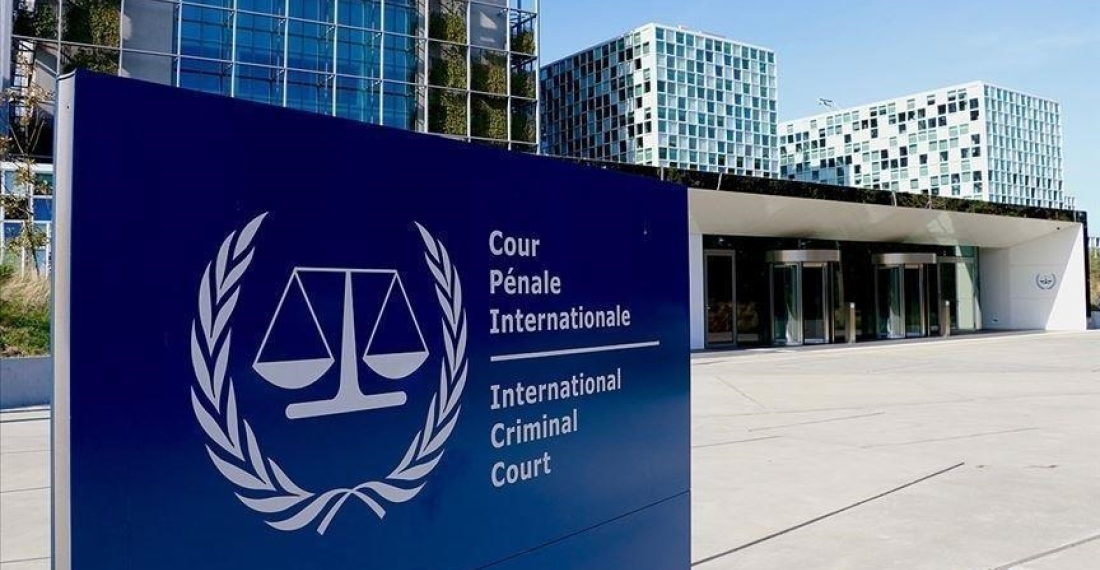
photo: The International Criminal Court building in The Hague