EU-Azerbaijan relations: "a partnership of equals and of mutual benefit"

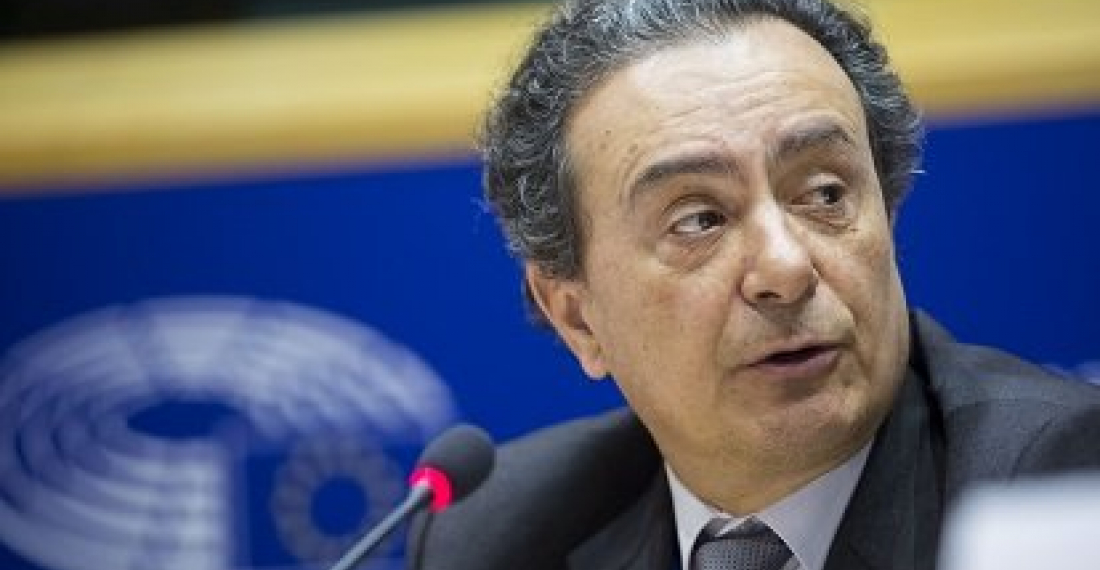
EEAS official Adriano Martins outlined the EU percpetion of its relations with Azerbaijan during a LINKS-EPC event at the European Parliament on 7 March.

"Azerbaijan is an important partner for the EU and is a partner within the Eastern Partnership where the six partners and the EU commited to uphold values of democracy, human rights and free market. We work together in this political and cooperation framework to address challenges and develop a closer relationship based on a partnership of equals and of mutual benefit." This was stated by Adriano Martins, Deputy Head of the Eastern partnership Division of the European Union External Action Service when he addressed the conference "EU-Azerbaijan relations: taking the relationship to a higher level", that was organised by LINKS and the EPC in the European Parliament on Tuesday, 7 March 2017.

Other speakers in the event included the Deputy Foreign Minister of Azerbaijan, Mahmud Mamed-Guliev; MEPs Heidi Hautala (Greens) and Andreijs Mamikins (S and D Group), Fuad Muradov MP, Head of the Azerbaijan Delegation to the Eurosnest Parliamentary Assembly; Cavanansir Feyziyev MP, Joint Chair of the Azerbaijan-EU Interparliamentary Committee; Rovzan Rzayev MP, Matthew Bryza (Atlantic Council), Ahmad Alili (CESD) and Dennis Sammut LINKS). Amanda Paul (EPC) chaired the event.

You may read more on the conference here

In his address to the conference Adriano Martins mentioned tangible results of the positive current trend in relations between the EU and Azerbaijan, including the successful visit of President Aliyev to Brussels on 6 February; the launch of negotiations on the new Agreement the day after; the resumption of contacts under the PCA, which has already resulted in all four subcommittee meetings (after a pause of two years); and the resumption of cooperation between the Azerbaijan Parliament and the European Parliament."I am convinced that the negotiations and the new agreement will contribute to deepening our relations raising them at the level of institutions, and bringing real and sustainable benefits to citizens. We are looking forward to discussing the text in our next round of negotiations at the end of April in Baku", Mr Martins told the gathering.


Speaking about the history of EU-Azerbaijan relations, Mr Martins said,

"In 2016 we celebrated 25 years of relations between independent Azerbaijan and the EU. We have travelled a long (and not always easy) way over those years, including previous attempts to update our current legal basis, but today we are both determined to advance our cooperation, in our mutual interest. The decision to open negotiations on a new agreement reflects an evolution of a continuous strengthening of our partnership, building on our first Partnership and Cooperation Agreement (PCA) which entered into force in 1999. Azerbaijan has changed much since then, and so has the EU.

The new agreement should also allow us to begin building on the existing PCA and to broaden the scope of our relations, taking account of the Review of the European Neighbourhood Policy as well as new global political and economic challenges we face together.

The launch of negotiations is also a result of Azerbaijan's draft proposal for an "Agreement for a Strategic Partnership" handed over during the Eastern Partnership summit in Riga and corresponds to your expressed interest in a rapid launch of negotiations. It should allow us to begin building on the existing Partnership and Cooperation Agreement between the EU and Azerbaijan to broaden the scope of our friendly relations, taking account of the Review of the European Neighbourhood Policy as well as new global political and economic challenges we face together.

Sectoral cooperation should be ambitious. New opportunities raise now in areas such as tourism, infrastructure and transportation links. Important aspects are the possibilities for EU companies to take part in public procurement. The EU stands ready to cooperate and support Azerbaijan in this respect and is open to broadening and opening new areas of cooperation."

Mr Martins touched on the issue of governance and human rights and laid down the position and expectations of the European Union:

"Expectations for a strong new partnership are high. In this respect, a well-functioning democracy with a solid system of checks and balances is vital. We believe that the negotiating process will be guided by a strong commitment to values of democracy, rule of law and respect for human rights, as well as principles of market economy. These expectations were expressed by the EU Member States on the occasion of our adoption of the negotiating mandate.

The EU remains concerned regarding human rights. Some activists are still in prison and some others have been detained and sentence with harsh sentences. The EU expects Azerbaijan to uphold its international commitments both as regards fundamental freedoms and due process.On the Constitutional amendments passed by referendum on 26 September 2016, we have encouraged AZ to take account of the opinion of the Council of Europe's Venice Commission, especially when it comes to implementation of these changes, both as regards their content and the surrounding process.

Speaking about the new agreement, Adriano Martins said, "political reforms and economic cooperation will be important aspects, at equal footing with our strategic energy relation and the importance of the Southern Gas Corridor's role in the EU's strategy to diversify our energy sources and transportation routes. At the same time, this agreement should help our citizens and companies to come closer together and to make the most out of new opportunities."

source: commonspace.eu
Related articles

Editor's choice
News
Council of Europe launches new International Claims Commission for Ukraine

Council of Europe launches new International Claims Commission for Ukraine

Thirty-four countries and the European Union have signed a new convention establishing an International Claims Commission for Ukraine at a diplomatic conference co-hosted by the 46-nation Council of Europe and the Netherlands in the Hague. The diplomatic conference was attended by leaders and high-level representatives from over 50 states, including the President of Ukraine, Volodymyr Zelenskyy, the President of the Republic of Moldova, Maia Sandu, and the Prime Minister of the Netherlands, Dick Schoof.  “Today marks a major step forward in ensuring accountability for Ukraine. The International Claims Commission represents justice and hope for tens of thousands of victims—our determination that those who have suffered will not be forgotten. I call for quick ratifications so we can get the commission rapidly up and running for the people of Ukraine,” said Council of Europe Secretary General Alain Berset. Ukrainian President Volodymyr Zelenskyy said: “We expect that every mechanism for compensation from the Register of Damage and Claims Commission to the actual payments – will start working and receive strong and sufficient international support, so that people can truly feel that any kind of damage caused by the war can be compensated. This war, and Russia’s responsibility for it, MUST become a clear example – so that others learn not to choose aggression.” “Accountability is about creating the conditions for peace that endures. And therefore, accountability is a condition of security – today and for the future. But accountability is not only about Ukraine. And it is not only about one aggressor and one victim. Accountability is about Europe. About every country in Europe. It is about whether Europe, as a whole, is willing to defend its peace,” said Maia Sandu, President of the Republic of Moldova, which currently holds the Presidency of the Council of Europe’s Committee of Ministers. The Prime Minister of the Netherlands, Dick Schoof, said: “Every day Russia is deliberately bombarding homes, destroying businesses and damaging infrastructure in Ukraine. Russia must compensate Ukraine for the damage caused. That is why we have launched the International Claims Commission for Ukraine and we are honoured to host it.” The International Claims Commission will be the second part of a comprehensive compensation mechanism related to Russia’s war of aggression, building on the existing Register of Damage for Ukraine. The claims commission will be established within the framework of the Council of Europe and will also be open to other countries. The Register of Damage for Ukraine, created in 2023, collects and records compensation claims submitted by individuals, organisations and public bodies in Ukraine. Forty-four states and the European Union have so far joined the Register, which has already received 86,000 claims. The International Claims Commission will review, assess and decide upon claims submitted to the Register of Damage for Ukraine and determine the amount of compensation, if any, which is due in each case. The convention establishing the commission will enter into force once it has been ratified by 25 signatories, as long as sufficient funds have been secured to support its initial work.

Popular

Editor's choice
News
Council of Europe launches new International Claims Commission for Ukraine

Council of Europe launches new International Claims Commission for Ukraine

Thirty-four countries and the European Union have signed a new convention establishing an International Claims Commission for Ukraine at a diplomatic conference co-hosted by the 46-nation Council of Europe and the Netherlands in the Hague. The diplomatic conference was attended by leaders and high-level representatives from over 50 states, including the President of Ukraine, Volodymyr Zelenskyy, the President of the Republic of Moldova, Maia Sandu, and the Prime Minister of the Netherlands, Dick Schoof.  “Today marks a major step forward in ensuring accountability for Ukraine. The International Claims Commission represents justice and hope for tens of thousands of victims—our determination that those who have suffered will not be forgotten. I call for quick ratifications so we can get the commission rapidly up and running for the people of Ukraine,” said Council of Europe Secretary General Alain Berset. Ukrainian President Volodymyr Zelenskyy said: “We expect that every mechanism for compensation from the Register of Damage and Claims Commission to the actual payments – will start working and receive strong and sufficient international support, so that people can truly feel that any kind of damage caused by the war can be compensated. This war, and Russia’s responsibility for it, MUST become a clear example – so that others learn not to choose aggression.” “Accountability is about creating the conditions for peace that endures. And therefore, accountability is a condition of security – today and for the future. But accountability is not only about Ukraine. And it is not only about one aggressor and one victim. Accountability is about Europe. About every country in Europe. It is about whether Europe, as a whole, is willing to defend its peace,” said Maia Sandu, President of the Republic of Moldova, which currently holds the Presidency of the Council of Europe’s Committee of Ministers. The Prime Minister of the Netherlands, Dick Schoof, said: “Every day Russia is deliberately bombarding homes, destroying businesses and damaging infrastructure in Ukraine. Russia must compensate Ukraine for the damage caused. That is why we have launched the International Claims Commission for Ukraine and we are honoured to host it.” The International Claims Commission will be the second part of a comprehensive compensation mechanism related to Russia’s war of aggression, building on the existing Register of Damage for Ukraine. The claims commission will be established within the framework of the Council of Europe and will also be open to other countries. The Register of Damage for Ukraine, created in 2023, collects and records compensation claims submitted by individuals, organisations and public bodies in Ukraine. Forty-four states and the European Union have so far joined the Register, which has already received 86,000 claims. The International Claims Commission will review, assess and decide upon claims submitted to the Register of Damage for Ukraine and determine the amount of compensation, if any, which is due in each case. The convention establishing the commission will enter into force once it has been ratified by 25 signatories, as long as sufficient funds have been secured to support its initial work.