Decision time for the future of the Iran nuclear deal

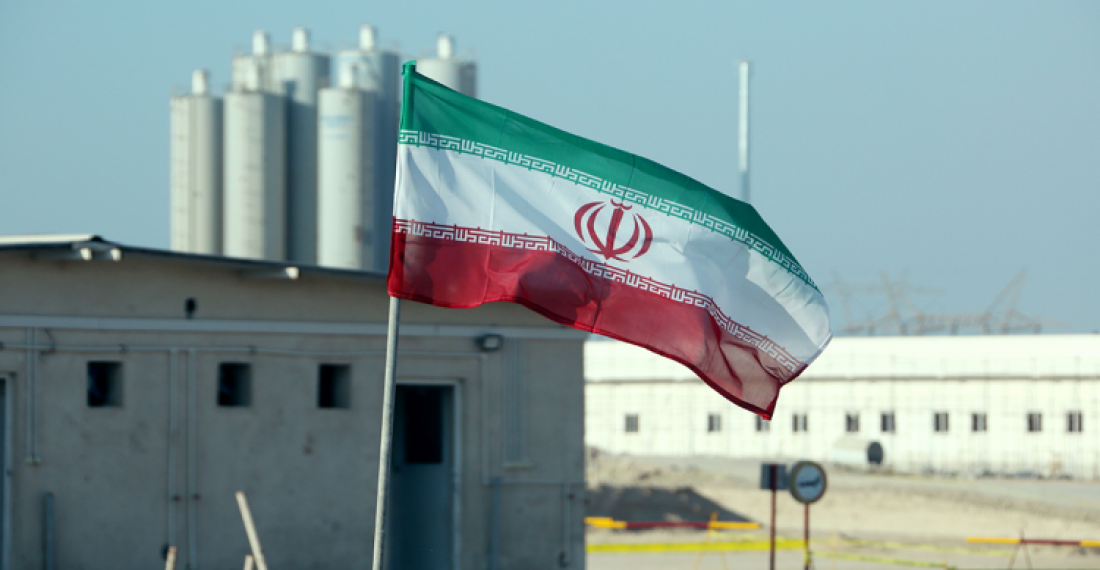
After years of uncertainty and negotiations, it is finally decision time for the future of the Iran nuclear deal, known as the Joint Comprehensive Plan of Action (JCPOA).

On Monday (8 August), the European Union submitted a “final text” at talks to salvage the 2015 deal aimed at reining in Iran’s nuclear ambitions. Tehran said it was reviewing the proposals.

Britain, China, France, Germany, Iran and Russia, as well as the United States indirectly, resumed talks on Thursday in Vienna, months after they had stalled.

The European Union has submitted a “final text,” a European official said on Monday. “We worked for four days and today the text is on the table,” the official told reporters on condition of anonymity. “The negotiation is finished, it’s the final text... and it will not be renegotiated.” “Now the ball is in the court of the capitals and we will see what happens,” the European official added. “No one is staying in Vienna.” The official said he hoped to see the “quality” text accepted “within weeks.”

AFP news agency quoted European diplomats as saying that the final draft tabled is non-negotiable, and “stretches us all to the limits of our flexibility.” 

According to  The Wall Street Journal correspondent Laurence Norman, senior EU official said that EU foreign policy chief Josep Borrell will send messages to participating states setting out the next steps. 

The EU has been co-ordinating the efforts to revive the JCPOA, which involved mediating indirect talks between Iran and the United States.

Iran said it was examining the 25-page document. “As soon as we received these ideas, we conveyed our initial response and considerations,” state news agency IRNA quoted an unnamed foreign ministry official as saying. “But naturally, these items require a comprehensive review, and we will convey our additional views and considerations.”

On Sunday, Iran demanded the UN nuclear watchdog “completely” resolve questions over nuclear material at undeclared sites. Iranian sources have suggested a key sticking point has been a probe by the International Atomic Energy Agency (IAEA) on traces of nuclear material found at undeclared Iranian sites. “That has nothing to do with” the Joint Comprehensive Plan of Action (JCPOA) agreement of 2015, the European official said. “I hope Iran and the IAEA will reach an agreement because that will facilitate a lot of things.”

The UN agency’s board of governors adopted a resolution in June, censuring Iran for failing to adequately explain the previous discovery of traces of enriched uranium at three previously undeclared sites.
“We believe that the agency should completely resolve the remaining safeguard issues from a technical route by distancing itself from irrelevant and unconstructive political issues, Iran’s foreign minister Hossein Amir-Abdollahian said on Sunday.
 
The EU-coordinated negotiations to revive the JCPOA began in April 2021 before coming to a standstill in March.

The 2015 accord gave Iran sanctions relief in exchange for curbs on its atomic program to guarantee Tehran could not develop a nuclear weapon — something it has always denied wanting to do.
But the unilateral withdrawal of the United States from the deal under president Donald Trump in 2018 and the re-imposition of biting economic sanctions prompted Iran to begin rolling back on its own commitments.
source: commonspace.eu with agencies

Related articles

Editor's choice
News
Council of Europe launches new International Claims Commission for Ukraine

Council of Europe launches new International Claims Commission for Ukraine

Thirty-four countries and the European Union have signed a new convention establishing an International Claims Commission for Ukraine at a diplomatic conference co-hosted by the 46-nation Council of Europe and the Netherlands in the Hague. The diplomatic conference was attended by leaders and high-level representatives from over 50 states, including the President of Ukraine, Volodymyr Zelenskyy, the President of the Republic of Moldova, Maia Sandu, and the Prime Minister of the Netherlands, Dick Schoof.  “Today marks a major step forward in ensuring accountability for Ukraine. The International Claims Commission represents justice and hope for tens of thousands of victims—our determination that those who have suffered will not be forgotten. I call for quick ratifications so we can get the commission rapidly up and running for the people of Ukraine,” said Council of Europe Secretary General Alain Berset. Ukrainian President Volodymyr Zelenskyy said: “We expect that every mechanism for compensation from the Register of Damage and Claims Commission to the actual payments – will start working and receive strong and sufficient international support, so that people can truly feel that any kind of damage caused by the war can be compensated. This war, and Russia’s responsibility for it, MUST become a clear example – so that others learn not to choose aggression.” “Accountability is about creating the conditions for peace that endures. And therefore, accountability is a condition of security – today and for the future. But accountability is not only about Ukraine. And it is not only about one aggressor and one victim. Accountability is about Europe. About every country in Europe. It is about whether Europe, as a whole, is willing to defend its peace,” said Maia Sandu, President of the Republic of Moldova, which currently holds the Presidency of the Council of Europe’s Committee of Ministers. The Prime Minister of the Netherlands, Dick Schoof, said: “Every day Russia is deliberately bombarding homes, destroying businesses and damaging infrastructure in Ukraine. Russia must compensate Ukraine for the damage caused. That is why we have launched the International Claims Commission for Ukraine and we are honoured to host it.” The International Claims Commission will be the second part of a comprehensive compensation mechanism related to Russia’s war of aggression, building on the existing Register of Damage for Ukraine. The claims commission will be established within the framework of the Council of Europe and will also be open to other countries. The Register of Damage for Ukraine, created in 2023, collects and records compensation claims submitted by individuals, organisations and public bodies in Ukraine. Forty-four states and the European Union have so far joined the Register, which has already received 86,000 claims. The International Claims Commission will review, assess and decide upon claims submitted to the Register of Damage for Ukraine and determine the amount of compensation, if any, which is due in each case. The convention establishing the commission will enter into force once it has been ratified by 25 signatories, as long as sufficient funds have been secured to support its initial work.

Popular