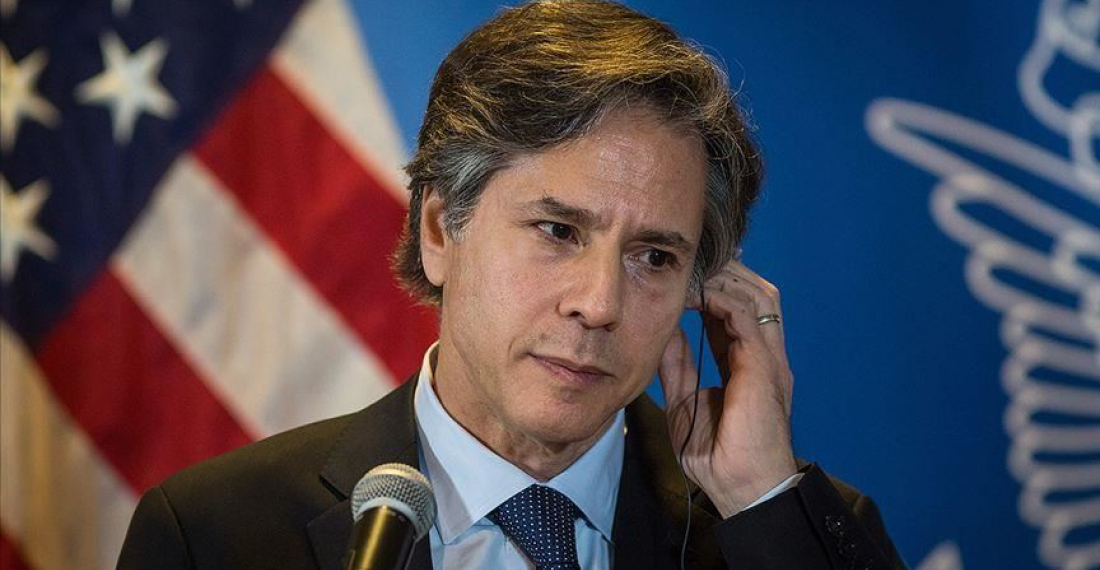
Only days in office as US Secretary of State, Antony Blinken has set up his stall of future US foreign policy positions in a long interview with Andrea Mitchell of MSNBC.
In the interview, Blinken addressed core challenges facing US foreign policy. Here are a few highlights:
- You can read a full transcript of the interview on the website of the US State Department, here
On China, Blinken highlighted the complexity of the challenge:
There’s no doubt that China poses the most significant challenge to us of any other country, but it’s a complicated one. There are adversarial aspects to the relationship, there’s certainly competitive ones, and there’s still some cooperative ones, too. But whether we’re dealing with any of those aspects of the relationship, we have to be able to approach China from a position of strength, not weakness.
And that strength, I think, comes from having strong alliances, something China does not have; actually engaging in the world and showing up in these international institutions, because we when pull back, China fills in and then they’re the ones writing the rules and setting the norms of these institutions; standing up for our values when China is challenging them, including in Xinjiang against the Uyghurs or democracy in Hong Kong; making sure that our military is postured so that it can deter Chinese aggression; and investing in our own people so that they can fully compete.
But the good news about each of these is that they’re fully within our control. And in many ways, the challenge posed by China is as much about some of our own self-inflicted weaknesses as it is about China’s emerging strength. But we can address those weaknesses. We can actually build back better in this area too when it comes to stronger alliances, when it comes to engaging in the world, standing up for our values, investing in our people, making sure our military is properly postured.
Blinken also spoke about relations with Russia in the light of the recent conversation between President Biden and President Putin. Blinken said
We have to be able to do two things at the same time: We have to be able to advance our interests, as we did in agreeing with Russia to extend the New START arms control agreement, which profoundly serves our own interests in keeping a cap on Russia’s core nuclear arsenal and also giving us a lot of inspection rights and visibility on what they’re doing; but also to stand up clearly for our interests when they are being threatened, attacked, or abused by Russia.
Blinken also addressed issues related to US policy in the Middle East. On Iran, the new US Secretary of State said the Iranians are getting closer to the point where they would be either a threshold nuclear power, or actually a nuclear power.
And that is profoundly against our interests. President Biden has been very clear on this. He’s said that if Iran returns to compliance with its obligations under the agreement, we would do the same thing. But then we would use that with our allies and partners. We’d once again be on the same side with our allies and partners, who were very distressed at us pulling out of the agreement. We would work with them to get something that is longer and stronger, and also deal with some of the other challenges that Iran poses, whether it’s its missile program, whether it’s its destabilizing activities in the region.
Referring to Iran's missile programme and distabilising activities, Blinken added:
We have to make sure that whether it’s part of a new agreement, whether it’s in parallel with a new agreement, that we are contending with that challenge that Iran poses. And that’s a threat to international peace and security, it’s a threat to our allies and partners as much as it is to us.
Blinken also referred to relations with Saudi Arabia, starting with a reference to the Kashoggi case:
The murder of Mr. Khashoggi was an outrageous act against a journalist, against someone resident in the United States. It was abhorrent, and I think it shocked the conscience of the world.
When it comes to Saudi Arabia, Saudi Arabia has been an important partner for us in counterterrorism, in trying to advance regional stability and deal with regional aggression. But we also have to make sure that that partnership is being conducted in a way that’s consistent with our interests and also with our values. And so the President has asked that we review the relationship to make sure it is doing just that, and that’s exactly what’s happening now.
One of the ones we’re looking at that’s related to Saudi Arabia is the designation of the Houthis in Yemen as a foreign terrorist organization. I have deep concerns about that because one of the things we have to focus on in this terrible war is – the President’s been – has said that we will stop our support for the Saudi-led military campaign in Yemen, but we also have to step up our ability to get humanitarian assistance to people in Yemen who are suffering terribly. Eighty percent of them live under Houthi control. We want to make sure that anything we do does not make it more difficult to get humanitarian assistance to the people of Yemen.