Editor's choice
This is a members’ functionality. Please
Sign upNews
Trending
Women emerge favourite to lead United Nations from next year, after straw-poll of UN Security Council members
1 August 2026
Two women have emerged as favourite to lead the United Nations as Secretary-General from 1 January 2027, when the term of the present incumbent, Antonio Gutteres, expires.
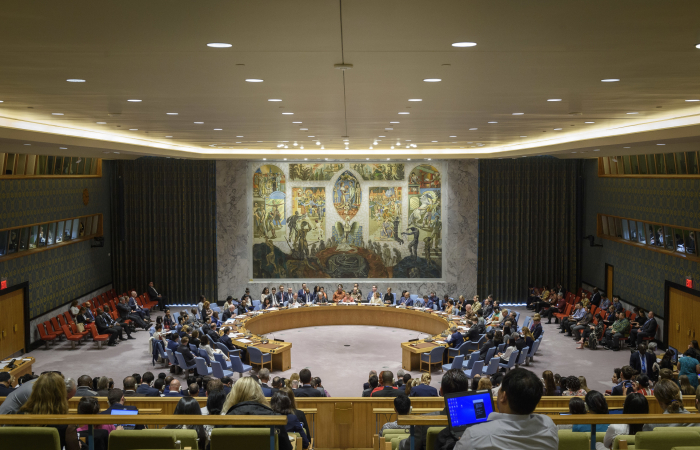
A straw poll of the members of the UN Security Council, held on Thursday, 30 July showed that of the seven candidates, Rebecca Grynspan of Costa Rica and Carolyn Rodriguez-Birkett of Guyana received ten and nine positive endorsements respectively, by the 15 members UN Security Council
Although the poll and its result are supposed to be secret, the result leaked within minutes, and was carried on world media outlets, such as Reuters. The result was as follows
Michelle Bachelet 6 encourage 5 discourage 4 no opinion
María Fernanda Espinosa 5 2 8
Rafael Grossi 7 2 6
Rebeca Grynspan 10 1 4
Olara Otunnu 2 5 8
Carolyn Rodrigues-Birkett 9 2 4
Macky Sall 6 7 2
Article 97 of the UN Charter states that the “Secretary-General shall be appointed by the General Assembly upon the recommendation of the Security Council”. Straw polls are informal ballots used to determine the viability of Secretary-General candidates.
The seven current candidates are:
Michelle Bachelet Jeria (Chile), who was nominated by Brazil, Chile, and Mexico on 2 February, with Chile withdrawing its nomination on 24 March;
María Fernanda Espinosa Garcés (Ecuador), who was nominated by Antigua and Barbuda on 11 May;
Rafael Mariano Grossi (Argentina), who was nominated by Argentina on 26 November 2025;
Rebeca Grynspan Mayufis (Costa Rica), who was nominated by Costa Rica on 3 March;
Olara Otunnu (Uganda), who was nominated by Uganda on 24 July;
Carolyn Rodrigues Birkett (Guyana), who was nominated by Guyana on 15 June; and
Macky Sall (Senegal), who was nominated by Burundi on 2 March. At Thursday's straw poll, there was no difference between the ballots presented to the five permanent members (P5) and the ten elected members (E10). Council members received one ballot per candidate, containing the candidate’s name followed by three options: “encouraged”, “discouraged”, and “no opinion expressed”.
It is ofcourse early days, and the straw poll is just an informal indication of the mood of the UN Security Council, but the strong showwing by the two womencandidates may be an indication that for the first time, the head of the UN can be a women. (click image to read more)