What was your impression about visit to the South Caucasus in July?
I had very in-depth discussions with the Presidents and the Foreign Ministers of both Azerbaijan and Armenia when I visited in July of this year. I also met with Ministers Mammadyarov and Nalbandian in New York in September on the margin of the UN General Assembly.
My messages to both Ministers from my side are similar. First, there is no alternative to a peaceful, negotiated solution for the Nagorno-Karabakh conflict on the basis of Madrid principles. Second, prerequisites for such a solution are the strict observance of the ceasefire regime, removing snipers from the line of contact and abstaining from retaliatory measures and militant rhetoric which could fuel further escalation of tensions. And the third point that I tried to put across is that no external actor – be it OSCE or any other international player – can resolve a conflict or impose a solution: it requires the political will, commitment and responsibility of the sides to find a lasting peaceful solution.
My visit in July to the region reinforced my conviction that the conflict continues to threaten regional stability, and inhibit the region’s economic and social development. The longer the conflict remains unresolved the more difficult it becomes to get political compromise and overcome the differences, including those in the minds of people. Today’s youth already has no experience of life without the conflict.
During an official visit to Azerbaijan, you emphasized the need for political will in negotiating a peaceful solution to the Nagorno-Karabakh conflict. How can you comment on the current situation of the conflict resolution?
I am concerned – as I am sure many others, too - about the absence of any tangible progress on the Nagorno-Karabakh settlement, and about the deterioration of the situation on the ground. As we all have witnessed , recent developments, including the situation around the pardoning of Ramil Safarov in August as well as the issue of opening an airport in Nagorno-Karabakh, have caused tensions and have not contributed to the peace process and restoration of trust between the sides.
For my part, I fully support the efforts of the OSCE Minsk Group and its Co-Chairs. It is essential to get back to the substance of negotiations and continue working towards reaching a peaceful settlement. At the same time, there is a need to strengthen the ceasefire regime and its monitoring, in order to create a more favourable environment for political talks. I am not only talking about an investigation mechanism, but one where local commanders can regularly sit together to discuss concerns such as shootings, troop movements, unmanned aerial vehicles over flights, and other factors that contribute to insecurity.
Our work on other protracted conflicts can present some useful examples here: one of the results of the OSCE-co-chaired Geneva International Discussions launched after the August 2008 conflict in Georgia was the establishment of the Ergneti Incident Prevention and Response Mechanism to look specifically at practical concerns of the sides, for example, exchange of detainees. This mechanism has proved effective, also for defusing potential tensions, and is hailed by all participants as successful.
I am also convinced that an important role in building trust can be played by the civil society, parliamentarians and the media.
Armenia intends to make flights to the occupied territories of Azerbaijan. How can you comment it?
I am aware that this is a controversial issue, which should also be discussed. My primary concern here is again a security one. In July this year, shortly after my visit to the region, the Co-Chairs of the OSCE Minsk Group received assurances from the sides that they would reject any threat or use of force against civil aircraft, pursue the matter through diplomatic steps, and refrain from politicizing the issue. Fulfilling these commitments is essential.
There is a lot of mistrust to the work of OSCE Minsk Group. Can other countries also be included in the peacekeeping process?
The OSCE Minsk Group is the only format that the parties agreed to and any changes are for the parties to agree. However, resolving the conflict is not about bringing more countries or international organizations into the peace process. Finding the solution lies with the parties themselves, and no imposed external solution is possible – neither would it be effective. What the OSCE can offer is to provide a forum for these negotiations to continue, and to facilitate building trust between the parties, including at people-to-people level.
Azerbaijan, this year celebrates 20 years in the OSCE. What can you say about Azerbaijan work in the Organization?
We work with Azerbaijan both in the framework of the political dialogue within the OSCE, where your country traditionally has a very active stance, and also in the field, through our Office in Baku, on a very wide range of issues in politico-military, economic and environmental, and human-rights-related issues. We look forward to continuing this co-operation, to the benefit of the country, its people and the OSCE community as a whole. As we move towards the Ministerial Council in Dublin, I note that the absence of progress on the Nagorno-Karabakh settlement is complicating discussions in certain areas, such as on a possible political declaration: however, it is my strong expectation that this will not result in additional difficulties in other fields of work of our organisation.
How do you see the future of OSCE?
Every organization, and the OSCE is no exception, evolves, to better respond to the changing realities of the outside world, as well as to the needs of its members. In Dublin, the Foreign Ministers of OSCE participating States, including Azerbaijan, will engage in a debate and hopefully adopt a document to launch a process aimed at defining the role of the OSCE in the establishment of a Euro-Atlantic and Eurasian security community. This process of re-focusing the agenda of our Organization, as we look forward the 40th anniversary of our founding document, the Helsinki Final Act, will take place during the next three years, under the Ukrainian, Swiss and Serbian Chairmanships of the OSCE.
News.Az
Interview
OPINION: Lamberto Zannier - "I am concerned about absence of any tangible progress on Karabakh settlement"
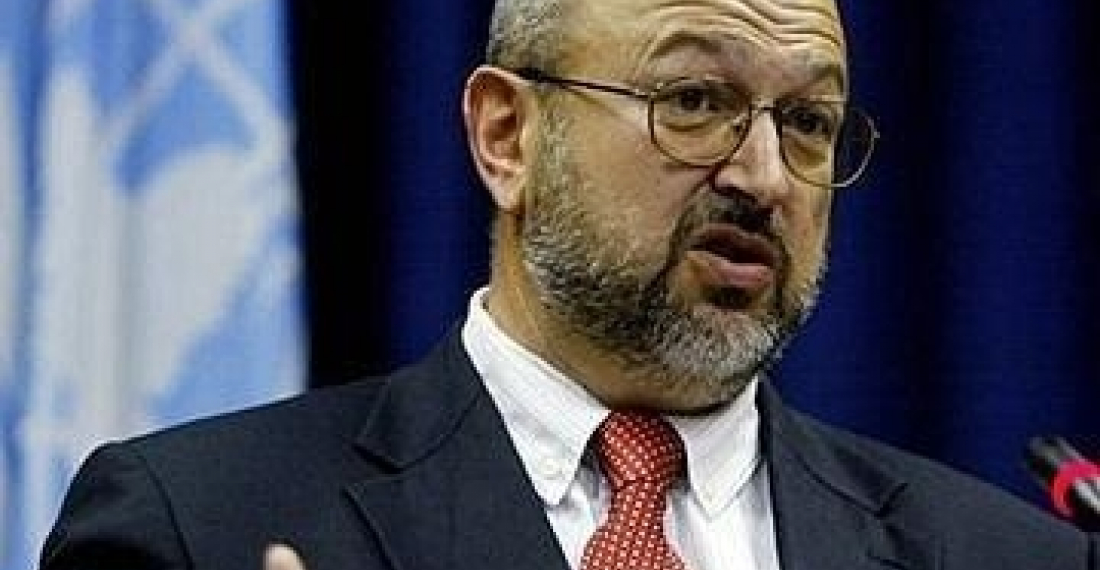
News.Az reprints from 1news.az an interview with OSCE Secretary General, Lamberto Zannier.