


Armenia is not an icon

Over the last years, Armenian Prime Minister Nikol Pashinyan, has taken to challenging a lot of the certainties and taboos that have characterised Armenian society for centuries, and that have also come to define the modern Armenian state, established after the collapse of the USSR in 1990. Pashinyan’s argument is that many of these certainties, which people have been asked to accept without questions, in fact, were used by an elite part of society to keep control over the rest. Pashinyan’s recent exchanges with the Armenian Apostolic Church, were in this vein, but there have been a number of similar “sacred cows” – from the Army to different episodes of history.

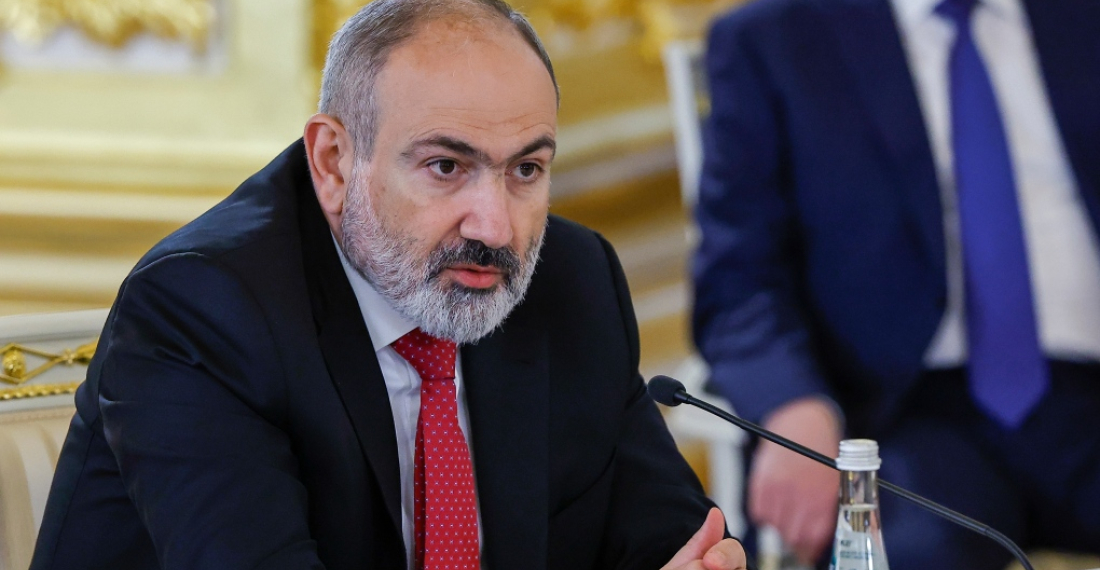
This week, the Armenian leader addressed the whole issue of how the state should be perceived. Armenia should not be perceived as an icon in front of which one lights a candle, but as a “living organism” that has its own positives and negatives and “can be loved in some places, and be unattractive in others”, he said. Pashinyan was speaking at a meeting with participants in the “iGorts” program to attract diaspora specialists to government bodies of Armenia. According to him, as quoted by the

media, a living organism can learn, improve and become better, but an icon is what it is.

“It’s in our nature to deify everything. We deify the state, too. The problem is that we are depriving ourselves of the opportunity to make our state better. We deprive ourselves of the vision that the state is an instrument for improving people's lives. We deified our army, and what did we achieve? What we saw in 2020 and after that happened because of the deification of our army. They said: be quiet, you can’t say anything bad, the army is a different organism, you can’t say anything bad about it. But at the same time, we all knew what was happening inside…” Pashinyan said.

The Prime Minister of Armenia also expressed doubt that there are 10 million Armenians living in the world: “I recently asked myself a question: they constantly write about 10 million Armenians, but is there a list of these Armenians somewhere? I'm sure not."

“This is a phenomenon of deification, this number is sacred, do not touch it. This number does not increase or decrease and cannot be changed. If someone says that this is not 10 million, but 10 million 561 thousand, everyone will attack and say: ignoramus, amateur, how do you know? If someone says: no, this is nine million two hundred thousand, they will tell him: “You belittle the global influence of the Armenians, you destroyed 800,000 Armenians with one stroke of the pen.” This is our reality,” said the Armenian leader.

Pashinyan is often accused of being naïve, inexperienced and lacking sophistication. Even his friends and allies often feel embarrassed by some of the things that he says. But in fact what Pashinyan is doing is clearing a lot of old webs as part of an effort to establishing a new Armenia. Most Armenian people appear to be amused rather than shocked with Pashinyan’s statements. They also reflect on what he is saying and tend to agree. Which is why issues such last month’s skirmish with the Armenian Apostolic Church, appear to have strengthened Pashinyan, rather than weakened him. Whatever it is, Pashinyan is engaged in a big conversation with the Armenian people, where there are no taboos anymore, and everything is up for discussion. It remains a big gamble for Pashinyan. But for the moment, he appears to have the pulse of the Armenian people much more than his opponents.


Source: This article was prepared by the editorial team of commonspace.eu. It was first published in the 20 June 2024 issue of the fortnightly digital newsletter, Caucasus Concise.

Related articles

Editor's choice
News
Borrell tells the European Parliament that the situation in Afghanistan was critical, but the EU will remain engaged

Borrell tells the European Parliament that the situation in Afghanistan was critical, but the EU will remain engaged

Borrell underlined that the European Union will make every effort to support the peace process and to remain a committed partner to the Afghan people. "Of course, we will have to take into account the evolving situation, but disengagement is not an option.  We are clear on that: there is no alternative to a negotiated political settlement, through inclusive peace talks.
Editor's choice
News
G7 foreign ministers issue wide ranging statement after their meeting in Canada

G7 foreign ministers issue wide ranging statement after their meeting in Canada

The Foreign Ministers of Canada, France, Germany, Italy, Japan, the United Kingdom, and the United States of America, and the High Representative of the European Union, met under Canada’s G7 Presidency, in Niagara, on November 11-12, 2025. The Foreign Ministers of Brazil, India, the Kingdom of Saudi Arabia, Mexico, the Republic of Korea, South Africa, and Ukraine, also joined the meeting for discussions on maritime security and prosperity, critical minerals, economic resilience and energy security. At the end of their meeting the G7 foreign ministers said: We reaffirmed our unwavering support for Ukraine in defending its territorial integrity and right to exist, and its freedom, sovereignty, and independence. We reiterated that an immediate ceasefire is urgently needed. We agreed that the current line of contact should be the starting point of negotiations. We remain committed to the principle that international borders must not be changed by force. We are increasing the economic costs to Russia, and exploring measures against countries and entities that are helping finance Russia’s war efforts. We condemned the provision to Russia of military assistance by DPRK and Iran, and the provision of weapons and dual-use components by China, a decisive enabler of Russia’s war. We acknowledged the ongoing discussions on a wide range of financing options, including further leveraging immobilised Russian Sovereign Assets in our jurisdictions in a coordinated way to support Ukraine. We strongly condemned Russia’s recent direct attacks on energy infrastructure and reaffirmed our support for Ukraine’s energy security. We reiterated our strong support for President Trump’s Comprehensive Plan to End the Gaza Conflict. We welcomed the ceasefire and the release of hostages. We stressed the urgency of returning the remains of deceased hostages. We also welcomed the increased flows of aid, but expressed concern about restrictions that remain in place. We called on all parties to allow for humanitarian assistance without interference at scale, through the United Nations and its agencies, and the Red Crescent, in addition to other international institutions and INGOs, as stipulated in President Trump’s plan. It is vital that all parties continue to engage constructively on the next steps outlined in the Comprehensive Plan, in pursuit of a political horizon for peaceful and prosperous co-existence for the Israeli and Palestinian peoples that advances comprehensive Middle East peace and stability. We will also continue to maintain attention on the situation in the West Bank. (click headline to read more)

Popular

Editor's choice
News
G7 foreign ministers issue wide ranging statement after their meeting in Canada

G7 foreign ministers issue wide ranging statement after their meeting in Canada

The Foreign Ministers of Canada, France, Germany, Italy, Japan, the United Kingdom, and the United States of America, and the High Representative of the European Union, met under Canada’s G7 Presidency, in Niagara, on November 11-12, 2025. The Foreign Ministers of Brazil, India, the Kingdom of Saudi Arabia, Mexico, the Republic of Korea, South Africa, and Ukraine, also joined the meeting for discussions on maritime security and prosperity, critical minerals, economic resilience and energy security. At the end of their meeting the G7 foreign ministers said: We reaffirmed our unwavering support for Ukraine in defending its territorial integrity and right to exist, and its freedom, sovereignty, and independence. We reiterated that an immediate ceasefire is urgently needed. We agreed that the current line of contact should be the starting point of negotiations. We remain committed to the principle that international borders must not be changed by force. We are increasing the economic costs to Russia, and exploring measures against countries and entities that are helping finance Russia’s war efforts. We condemned the provision to Russia of military assistance by DPRK and Iran, and the provision of weapons and dual-use components by China, a decisive enabler of Russia’s war. We acknowledged the ongoing discussions on a wide range of financing options, including further leveraging immobilised Russian Sovereign Assets in our jurisdictions in a coordinated way to support Ukraine. We strongly condemned Russia’s recent direct attacks on energy infrastructure and reaffirmed our support for Ukraine’s energy security. We reiterated our strong support for President Trump’s Comprehensive Plan to End the Gaza Conflict. We welcomed the ceasefire and the release of hostages. We stressed the urgency of returning the remains of deceased hostages. We also welcomed the increased flows of aid, but expressed concern about restrictions that remain in place. We called on all parties to allow for humanitarian assistance without interference at scale, through the United Nations and its agencies, and the Red Crescent, in addition to other international institutions and INGOs, as stipulated in President Trump’s plan. It is vital that all parties continue to engage constructively on the next steps outlined in the Comprehensive Plan, in pursuit of a political horizon for peaceful and prosperous co-existence for the Israeli and Palestinian peoples that advances comprehensive Middle East peace and stability. We will also continue to maintain attention on the situation in the West Bank. (click headline to read more)

