


ECHR ruling has implications for the Karabakh conflict and beyond.

On 16 June 2015, the Grand Chamber of the European Court of Human Rights (ECHR) in Strasbourg gave a judgment in the case of Chiragov and Others v. Armenia (application no. 13216/05). The Court held, by a majority that there had been "a continuing violation of Article 1 of Protocol No. 1 (protection of property) to the European Convention on Human Rights; a continuing violation of Article 8 (right to respect for private and family life) of the Convention; and a continuing violation of Article 13 (right to an effective remedy).

The case concerned the complaints by six Azerbaijani refugees that they were unable to return to their homes and property in the district of Lachin, in Azerbaijan, from where they had been forced to flee in 1992 during the Armenian-Azerbaijani conflict over Nagorno-Karabakh.

There are currently more than one thousand individual applications pending before the Court which were lodged by persons displaced during the conflict over Nagorno-Karabakh.

In the applicants' case, the Court confirmed that "Armenia exercised effective control over Nagorno Karabakh and the surrounding territories and thus had jurisdiction over the district of Lachin. The Court considered that there was no justification for denying the applicants access to their property without providing them with compensation. The fact that peace negotiations were ongoing did not free the Government from their duty to take other measures. What was called for was a property claims mechanism which would be easily accessible to allow the applicants and others in their situation to have their property rights restored and to obtain compensation."

You can read the ruling of the Court on the ECHR website here.

Initially, Armenia dismissed the ruling, and Armenian Foreign Minister Edward Nalbandian, addressing a meeting of the NATO Parliamentary Assembly in Yerevan two days later, said that only the OSCE Minsk Group had the mandate to concern itself with the Karabakh conflict and its settlement, and asked that other international organisations and institutions should not interfere in the process. Nalbandian said "The efforts towards the settlement of conflicts should be held in the frameworks of special negotiation formats and we should refrain from steps that could hinder these negotiation processes." You can read the speech of Minister nalbandian on the website of the Armenian Foreign Ministry, here.

It took Azerbaijan a while for it to give a proper assessment to the Court ruling. Azerbaijan is currently locked in a number of disputes with the Council of Europe, under whose jurisdiction the Court operates. The disputes concern primarily the domestic political situation in Azerbaijan, but also nuances in the Council's statements on the Karabakh conflict. Following the approval of a recent resolution on Azerbaijan in the Parliamentary Assembly of the Council of Europe (PACE) the head of the Delegation of Azerbaijan Samad Sayedov even said that Azerbaijan was considering leaving the Council of Europe. Currently Azerbaijan is also at odds with the OSCE and in the last days has closed its office in Baku.

However the ruling of the European Court in the Chiragov and others versus Armenia case is clearly of huge significance for Azerbaijan's claims for the restoration of the rights of refugees and IDPs displaced by the conflict in the 1990s.

Azerbaijan has now given its first comprehensive assessment of the ruling in a long interview that the Foreign Minister of Azerbaijan, Elmar Mammadyarov has given to the news agencies APA and Azertac. Mammadyarov described the judgement as "unprecedented" and having "far-reaching implications". The Azerbaijani Minister said "this is the first judgment of an authoritative Court that, while considering the merits of the case, provided impartial, third party analysis of the situation and legal assessment of the circumstances that led to the violation of fundamental human rights of Azerbaijani citizens guaranteed under the Convention. In particular, the Court reaffirmed the right of displaced persons to return to their homes or places of habitual residence and recalled the relevant standards and principles of international humanitarian and human rights law relating to the legal and technical issues surrounding housing and property restitution."

 Mammadyarov added that "the ruling of the Court reaffirmed that the right to return of the Azerbaijani population is undisputed and any solution will have to ensure effective exercise of this right. What should not be overlooked is that the said judgment of the Court's Grand Chamber is final and legally binding. The Council of Europe has a well-established mechanism to monitor the implementation of the Court's decisions. After the judgment of ECHR, the issue of protection of the rights of Azerbaijani population expelled from the occupied Nagorno-Karabakh and the other surrounding territories shall remain on the radar screen of the Council of Europe and its structures."

The Foreign Minister of Azerbaijan said that the judgement of the European Cout of Human Rights should also guide the OSCE Minsk Group co-Chair.

You can read the full interview of Foreign Minister Mammadyarov on the APA website here.

Commonspace.eu political editor said in a comment:

"The ruling of the ECHR took ten years to come, but for the displaced persons from the Karabakh conflict it is a welcome and highly significant development. For too long the plight of the refugees and IDPs from the conflicts in the South Caucasus has been marginalised as discussions centred on political and geo-political considerations, with too much emphasis on territory and not enough on people. The ECHR judgement changes all that - it brings people right back into the discussion, and all concerned need to take heed of this.

It took Azerbaijan three weeks to fully admit the importance and significance of the European court ruling, despite the fact that in this case the ruling was a welcome one for Baku. The ruling did not fit the narrative coming out of Baku in the last months which demonised Europe and European institutions and projected them as enemies of Azerbaijan.

On the other hand Armenia's attempt to downplay the ruling as irrelevant and to return the focus to the Minsk process is misplaced. As a member of the Council of Europe Armenia is obliged to abide by the Court's rulings. The ruling puts pressure on Armenia to clarify its policy towards the issue of refugees and IDPs.

The ruling of the ECHR therefore has implications all round, implications which will be with us for a long time."

Source: commonspace.eu

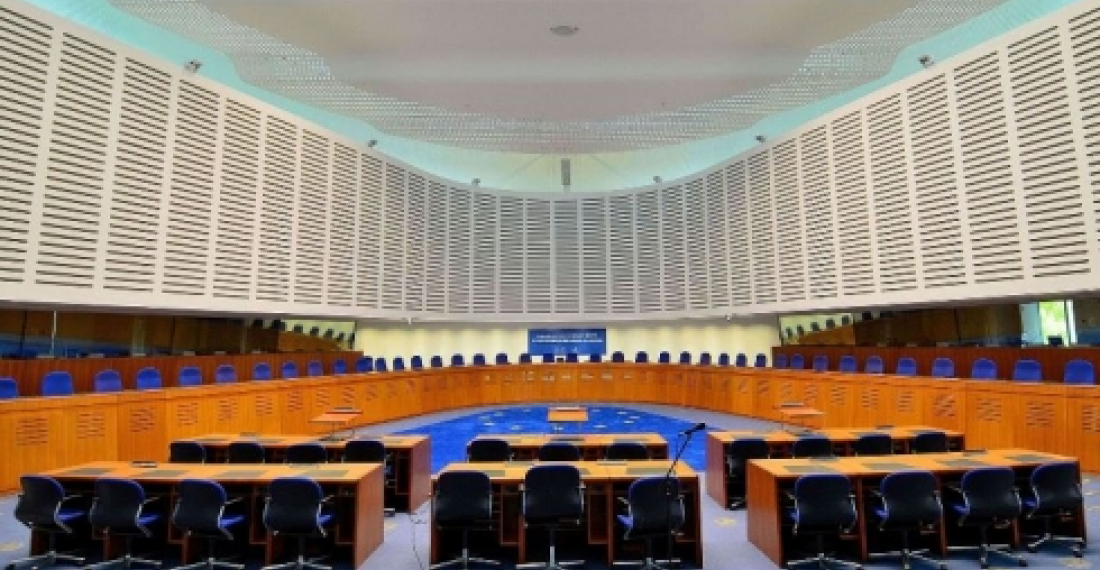
photo: The Grand Chamber of the European Court for Human Rights in Strasbourg.



Related articles

Editor's choice
News
Council of Europe launches new International Claims Commission for Ukraine

Council of Europe launches new International Claims Commission for Ukraine

Thirty-four countries and the European Union have signed a new convention establishing an International Claims Commission for Ukraine at a diplomatic conference co-hosted by the 46-nation Council of Europe and the Netherlands in the Hague. The diplomatic conference was attended by leaders and high-level representatives from over 50 states, including the President of Ukraine, Volodymyr Zelenskyy, the President of the Republic of Moldova, Maia Sandu, and the Prime Minister of the Netherlands, Dick Schoof.  “Today marks a major step forward in ensuring accountability for Ukraine. The International Claims Commission represents justice and hope for tens of thousands of victims—our determination that those who have suffered will not be forgotten. I call for quick ratifications so we can get the commission rapidly up and running for the people of Ukraine,” said Council of Europe Secretary General Alain Berset. Ukrainian President Volodymyr Zelenskyy said: “We expect that every mechanism for compensation from the Register of Damage and Claims Commission to the actual payments – will start working and receive strong and sufficient international support, so that people can truly feel that any kind of damage caused by the war can be compensated. This war, and Russia’s responsibility for it, MUST become a clear example – so that others learn not to choose aggression.” “Accountability is about creating the conditions for peace that endures. And therefore, accountability is a condition of security – today and for the future. But accountability is not only about Ukraine. And it is not only about one aggressor and one victim. Accountability is about Europe. About every country in Europe. It is about whether Europe, as a whole, is willing to defend its peace,” said Maia Sandu, President of the Republic of Moldova, which currently holds the Presidency of the Council of Europe’s Committee of Ministers. The Prime Minister of the Netherlands, Dick Schoof, said: “Every day Russia is deliberately bombarding homes, destroying businesses and damaging infrastructure in Ukraine. Russia must compensate Ukraine for the damage caused. That is why we have launched the International Claims Commission for Ukraine and we are honoured to host it.” The International Claims Commission will be the second part of a comprehensive compensation mechanism related to Russia’s war of aggression, building on the existing Register of Damage for Ukraine. The claims commission will be established within the framework of the Council of Europe and will also be open to other countries. The Register of Damage for Ukraine, created in 2023, collects and records compensation claims submitted by individuals, organisations and public bodies in Ukraine. Forty-four states and the European Union have so far joined the Register, which has already received 86,000 claims. The International Claims Commission will review, assess and decide upon claims submitted to the Register of Damage for Ukraine and determine the amount of compensation, if any, which is due in each case. The convention establishing the commission will enter into force once it has been ratified by 25 signatories, as long as sufficient funds have been secured to support its initial work.

Popular

Editor's choice
News
Council of Europe launches new International Claims Commission for Ukraine

Council of Europe launches new International Claims Commission for Ukraine

Thirty-four countries and the European Union have signed a new convention establishing an International Claims Commission for Ukraine at a diplomatic conference co-hosted by the 46-nation Council of Europe and the Netherlands in the Hague. The diplomatic conference was attended by leaders and high-level representatives from over 50 states, including the President of Ukraine, Volodymyr Zelenskyy, the President of the Republic of Moldova, Maia Sandu, and the Prime Minister of the Netherlands, Dick Schoof.  “Today marks a major step forward in ensuring accountability for Ukraine. The International Claims Commission represents justice and hope for tens of thousands of victims—our determination that those who have suffered will not be forgotten. I call for quick ratifications so we can get the commission rapidly up and running for the people of Ukraine,” said Council of Europe Secretary General Alain Berset. Ukrainian President Volodymyr Zelenskyy said: “We expect that every mechanism for compensation from the Register of Damage and Claims Commission to the actual payments – will start working and receive strong and sufficient international support, so that people can truly feel that any kind of damage caused by the war can be compensated. This war, and Russia’s responsibility for it, MUST become a clear example – so that others learn not to choose aggression.” “Accountability is about creating the conditions for peace that endures. And therefore, accountability is a condition of security – today and for the future. But accountability is not only about Ukraine. And it is not only about one aggressor and one victim. Accountability is about Europe. About every country in Europe. It is about whether Europe, as a whole, is willing to defend its peace,” said Maia Sandu, President of the Republic of Moldova, which currently holds the Presidency of the Council of Europe’s Committee of Ministers. The Prime Minister of the Netherlands, Dick Schoof, said: “Every day Russia is deliberately bombarding homes, destroying businesses and damaging infrastructure in Ukraine. Russia must compensate Ukraine for the damage caused. That is why we have launched the International Claims Commission for Ukraine and we are honoured to host it.” The International Claims Commission will be the second part of a comprehensive compensation mechanism related to Russia’s war of aggression, building on the existing Register of Damage for Ukraine. The claims commission will be established within the framework of the Council of Europe and will also be open to other countries. The Register of Damage for Ukraine, created in 2023, collects and records compensation claims submitted by individuals, organisations and public bodies in Ukraine. Forty-four states and the European Union have so far joined the Register, which has already received 86,000 claims. The International Claims Commission will review, assess and decide upon claims submitted to the Register of Damage for Ukraine and determine the amount of compensation, if any, which is due in each case. The convention establishing the commission will enter into force once it has been ratified by 25 signatories, as long as sufficient funds have been secured to support its initial work.


