A continent that had got accustomed to peace, reflects on the risks of war

This is a commonspace.eu  editorial comment

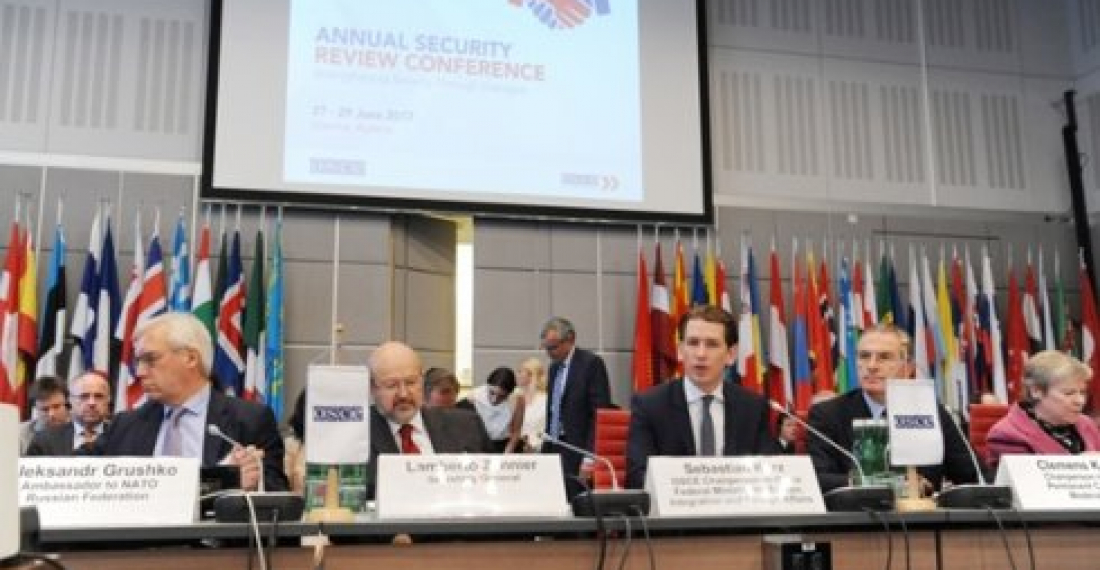
The Annual Security Review Conference in the framework of the OSCE - the Organisation for Security and Co-operation in Europe - provides a yearly opportunity for diplomats and military experts from the 57 member states of the organisation to take stock of the security situation in Europe. It receives hardly any media attention, but it does provide the opportunity for the bureaucrats to be exposed to opinions from civil society actors, such as think tanks and NGOs. This year's conference took place in Vienna 27-29 June, and was opened by Austrian Foreign Minister Sebastian Kurz, who is also the current Chairman-in-Office of the organisation.

The atmosphere at the Hofburg Palace during this year's proceedings was rather sombre. Kurz himself, one of Europe's youngest foreign ministers, set the tone in his opening remarks saying that his generation grew up thinking that war in Europe was a thing of the history books, but different crises on the continent had shattered this illusion. Kurz reminded the audience that the conflict in Ukraine had resulted in more than 10,000 casualties, and 38 million people needed humanitarian aid as a result of the conflict.

The extent to which the situation in Ukraine has cast a dark cloud over Europe was clearly seen in Vienna this week. There were harsh words for Russia, and delegation after delegation lined up to denounce Russia's annexation of Crimea and its meddling in the Donbass. Russian diplomats were unruffled. "We have our interests" they insisted, accusing western countries of trying to encroach on Russia's security. Peace in Europe since the 1975 Helsinki Final Act has been held together by a series of treaties and agreements aimed at controlling the proliferation of arms, reducing misperception and providing for confidence between adversaries. The end of the cold war in 1991 was hailed as a new beginning, but Russia claims that the situation that ensued created new dangers to its security. Its new assertiveness, and the war in Georgia in 2008 and the crisis in Ukraine since 2013 have unsettled its neighbours. Many of the agreements now need renewal, and those that remain in force are often violated.

Referring to this, Lamberto Zannier, OSCE Secretary General, said one of the major objectives is to identify avenues to overcome the long-standing impasse in the discussions on conventional arms control and confidence- and security-building measures.

"We really have no choice but to intensify our efforts to find ways for pragmatic engagement on common challenges and to pursue the long-term aim of reviving co-operative security as we once knew it," said Zannier

Whilst experienced diplomats do not think a large continental war is likely, there are concerns that incidents can escalate quickly. Russia and some other countries are accused of failing to give prior warning of large scale military manoeuvres.

Within the framework of the OSCE there have been several attempts to try to reverse the trend, including an on-going initiative called "structured dialogue". Referring to this, Lamberto Zannier, OSCE Secretary General, said that one of the Structured Dialogue's major objectives is to identify avenues to overcome the long-standing impasse in the discussions on conventional arms control and confidence- and security-building measures."We really have no choice but to intensify our efforts to find ways for pragmatic engagement on common challenges and to pursue the long-term aim of reviving co-operative security as we once knew it," said Zannier.

But whilst diplomats fret on the minutiae in Vienna, back in the capitals the politicians have yet to find the will to engage in the sort of hard political negotiations that are now clearly required. The OSCE therefore finds itself with the thankless task of trying to keep the lid on a number of crises - from Ukraine to Georgia, from Nagorno-Karabakh to Transdniestr, with hardly any prospect of a solution in sight.

The time has come for a major new initiative - a 21st century version of the Helsinki Final Act, and while this will be hard and difficult to achieve it is necessary that European leaders make a commitment to move towards this, with a view to at least launch the process by 2020. If not, the likelihood that the security situation in Europe will continue to deteriorate is high, with all the risks attached with that.

source: commonspace.eu

photo: Austrian Foreign Minister Sebastian Kurz opening the Annual Security Review Conference of the OSCE in Vienna on 27 June 2017 (picture courtesy of the press service of the OSCE)
Related articles

Editor's choice
News
UAE says it will withdraw from Yemen, but division emerges in Yemeni presidential council

UAE says it will withdraw from Yemen, but division emerges in Yemeni presidential council

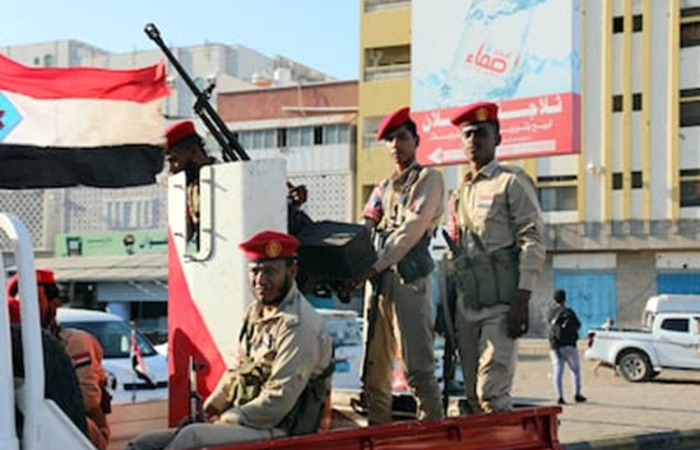
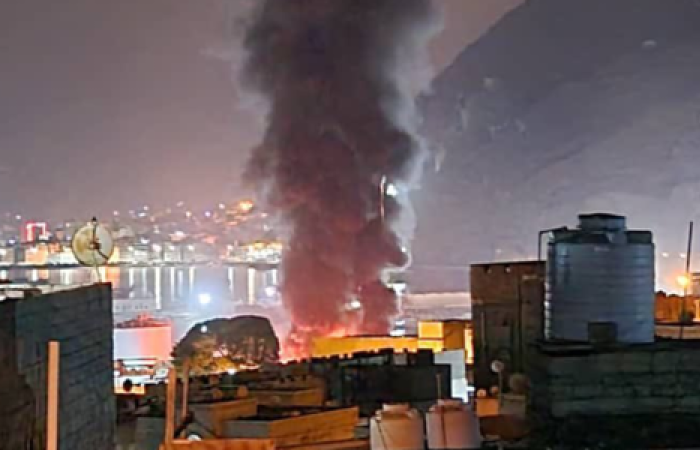
In a move seen as an attempt to de-escalate a crises with Saudi Arabia, the United Arab Emirates, on Tuesday (30th December) announced that it was heeding a call to withdraw its troops from Southern Yemen. UAE says that its presence included counter-terrorism teams that were crucial in fighting against Islamist groups. UAE sources said that parts of Yemen not controlled by the Houthis have had Al Qaeda in the Arab Peninsula (AQAP) operatives using the territory to launch attacks on Europe, the US and Middle East. UAE teams have co-ordinated with American and British special forces and intelligence. The sources added that Emirati forces and their Yemeni allies also helped reverse Houthi gains in the south. including the liberation of Aden port. The small UAE contingent has remained in place since the UAE withdrew most of its military personnel in 2019. The leading English-language newspaper in Abu Dhabi, The National, said that the main UAE force was based at Riyan Mukalla International Airport, with access to fixed-wing aircraft and helicopters, but also operated smaller contingents in the port town Balhaf and Shabwa. "It is understood it also flew a number of drones from the airbase that were able to track terrorist movements, pass information back to its allies and assisted special forces' missions." Meanwhile a division has emerged in Yemen's presidential council after four members denounced what they called the 'unilateral decisions' by the chairman. Four of Yemen’s eight Presidential Leadership Council members on Tuesday denounced an announcement by the council’s chairman accusing him of breaching the governing agreement. Tension between Yemeni leaders has been rising for weeks, underscoring the fragility of the country's already fractured political landscape and further complicating efforts to confront the Iran-backed Houthi rebels. The latest rift took an unprecedented turn on Tuesday morning, marked by a Saudi-led coalition “limited operation” striking combat vehicles Riyadh linked to the Southern Transitional Council, which has three members in the PLC. The PLC Chairman, Rashad al Alimi, on Tuesday said that he was seeking to cancel the joint defence agreement with the UAE. “What has been issued … constitutes a clear violation of the Declaration of the Transfer of Power [agreement], which explicitly stipulates that the Presidential Leadership Council is a collective body whose decisions are taken by consensus, or by majority when consensus is not possible,” the statement by the four members said. “It does not, under any circumstances, allow for unilateral decision-making on sovereign, military, or major political matters." The statement was signed by STC chief Aidarous Al Zubaidi, Faraj Al Bahsani, Tariq Saleh and Abu Zaraa al Muharrami. (click the picture to read the full article).

Popular

Editor's choice
News
UAE says it will withdraw from Yemen, but division emerges in Yemeni presidential council

UAE says it will withdraw from Yemen, but division emerges in Yemeni presidential council

In a move seen as an attempt to de-escalate a crises with Saudi Arabia, the United Arab Emirates, on Tuesday (30th December) announced that it was heeding a call to withdraw its troops from Southern Yemen. UAE says that its presence included counter-terrorism teams that were crucial in fighting against Islamist groups. UAE sources said that parts of Yemen not controlled by the Houthis have had Al Qaeda in the Arab Peninsula (AQAP) operatives using the territory to launch attacks on Europe, the US and Middle East. UAE teams have co-ordinated with American and British special forces and intelligence. The sources added that Emirati forces and their Yemeni allies also helped reverse Houthi gains in the south. including the liberation of Aden port. The small UAE contingent has remained in place since the UAE withdrew most of its military personnel in 2019. The leading English-language newspaper in Abu Dhabi, The National, said that the main UAE force was based at Riyan Mukalla International Airport, with access to fixed-wing aircraft and helicopters, but also operated smaller contingents in the port town Balhaf and Shabwa. "It is understood it also flew a number of drones from the airbase that were able to track terrorist movements, pass information back to its allies and assisted special forces' missions." Meanwhile a division has emerged in Yemen's presidential council after four members denounced what they called the 'unilateral decisions' by the chairman. Four of Yemen’s eight Presidential Leadership Council members on Tuesday denounced an announcement by the council’s chairman accusing him of breaching the governing agreement. Tension between Yemeni leaders has been rising for weeks, underscoring the fragility of the country's already fractured political landscape and further complicating efforts to confront the Iran-backed Houthi rebels. The latest rift took an unprecedented turn on Tuesday morning, marked by a Saudi-led coalition “limited operation” striking combat vehicles Riyadh linked to the Southern Transitional Council, which has three members in the PLC. The PLC Chairman, Rashad al Alimi, on Tuesday said that he was seeking to cancel the joint defence agreement with the UAE. “What has been issued … constitutes a clear violation of the Declaration of the Transfer of Power [agreement], which explicitly stipulates that the Presidential Leadership Council is a collective body whose decisions are taken by consensus, or by majority when consensus is not possible,” the statement by the four members said. “It does not, under any circumstances, allow for unilateral decision-making on sovereign, military, or major political matters." The statement was signed by STC chief Aidarous Al Zubaidi, Faraj Al Bahsani, Tariq Saleh and Abu Zaraa al Muharrami. (click the picture to read the full article).