Creation of confederation of Azerbaijan-Turkey or Turkey-Azerbaijan-Georgia or even the Confederation Georgia-Azerbaijan has been discussed intensively lately. For example, in his recent statement to Georgian mass media, Deputy Foreign Minister of this country Nino Kalandadze stated readiness of her state to unite into a confederation with Azerbaijan. What do you think about it, as an official representative of the presidential administration?
You know, it is not an easy question. Certainly, such ideas exist, in different periods they were voiced by these or those politicians and it became the object of discussions. The example of confederation has been earlier in the South Caucasus. At that time, before three South Caucasus countries joined the USSR in separate, there was the South Caucasus confederation. Similar ideas were voiced in the next periods.
The European Union also voices ideas that after the South Caucasus countries settle all conflict situations between them and join into a single confederation, make the borders transparent and facilitate their customs issues, entry-exit issues and so on, the future integration of these countries to EU is quite possible.
Today the experience of confederations of interstate unions is either studied or applied in different parts of the Earth. Such issues are being discussed but they are not that simple. In case such issues became pressing, they will require serious discussion. This issue must become an object of serious discussions by the public, parliaments, sociopolitical circles of the state and it is necessary to define all of its positive and negative aspects. In this view, it is currently impossible to say clear ‘yes’ or ‘no’ to this idea. There are ideas, discussions are underway, future will show whether this idea is true, whether the probability of its implementation is high and which positive or negative features it may have.
Do you think that if the process comes close to being realized, it may cause a stiff reaction and pressure of our northern and southern neighbors?
I do not want to give any predictions about what is inexistent yet. This issue is unreal so far and there is no serious reaction to it. Certainly, in case this idea is realized, some circles will take actions based on their interests.
For example, at the recent conference in Batumi, I stated existence of definite circles and powers that are not interested in peace, stability and international friendship between the South Caucasus and keen on constant conflicts between these peoples and states. But after peoples and nations and states define the clear circle of their interests and come to a definite solution, external powers will not be able to influence them. Therefore, I don’t want to comment on what does not exist. We’ll see.
By saying external powers, do you imply official circles or any power centers?
I wouldn’t like to specify them. Among them, there will be either states or sociopolitical circles and groups. For example, let’s say, in every country there are different communities. There are nationalists, internationalists and there are those who sacrifice the interests of separate countries in favor of their own.
There are also those who offer to occupy the whole world and again divide it between 3-4 powers of influence. There may be different powers, but I wouldn’t specify them.
1news.az
Confederation in South Caucasus unreal yet - Ali Hasanov
Confederation in South Caucasus unreal yet - Ali Hasanov
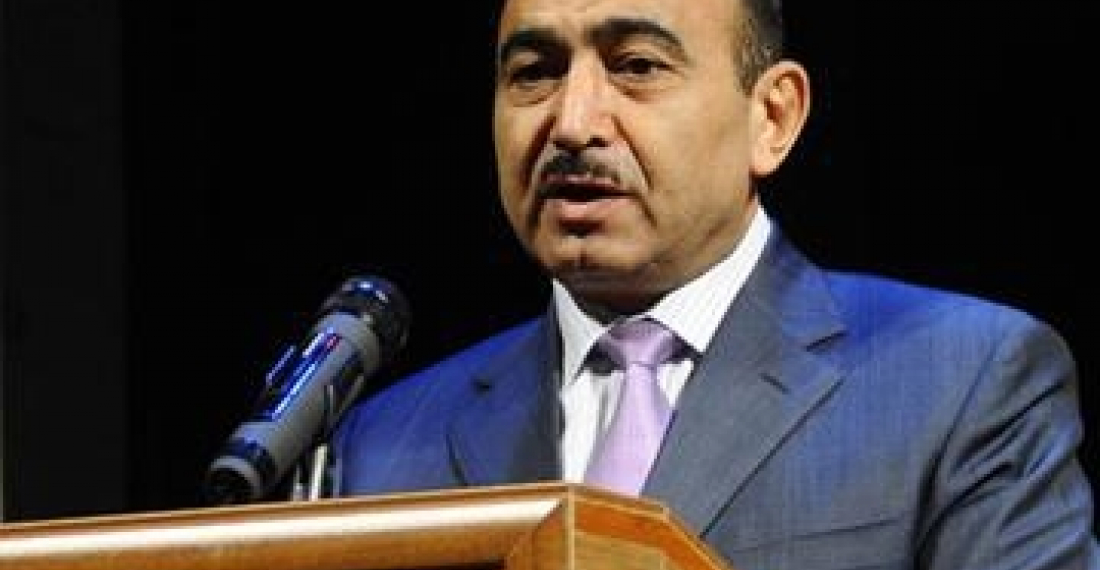
1news.az interviewed Ali Hasanov, Head of the public policy department of the Presidential Administration of Azerbaijan.