


US Secretary of State John Kerry is currently on a tour of all five Central Asian countries heralding a new chapter in relations with the region.
The United States has embarked on a comprehensive charm offensive aimed at the states of Central Asia. US Secretary of State John Kerry is currently visiting the region, in an unprecedented tour that will see him visiting all the five Central Asian Countries, meeting their leaders and engaging with different parts of the societies.
Kerry kicked off his trip in Bishkek where he met President Atambaev. Kerry described Kyrgyzstan as "a vital partner in a growing Central Asia". He also presided over the official opening of the new campus of the American University of Central Asia, an increasingly important academic hub for the whole region.
From Bishkek Kerry travelled to Tashkent for a meeting with Uzbek President Islam Karimov for what he described as "a good discussion". Kerry characterised Uzbekistan as "an important partner in bringing peace [and] prosperity to Central Asia".
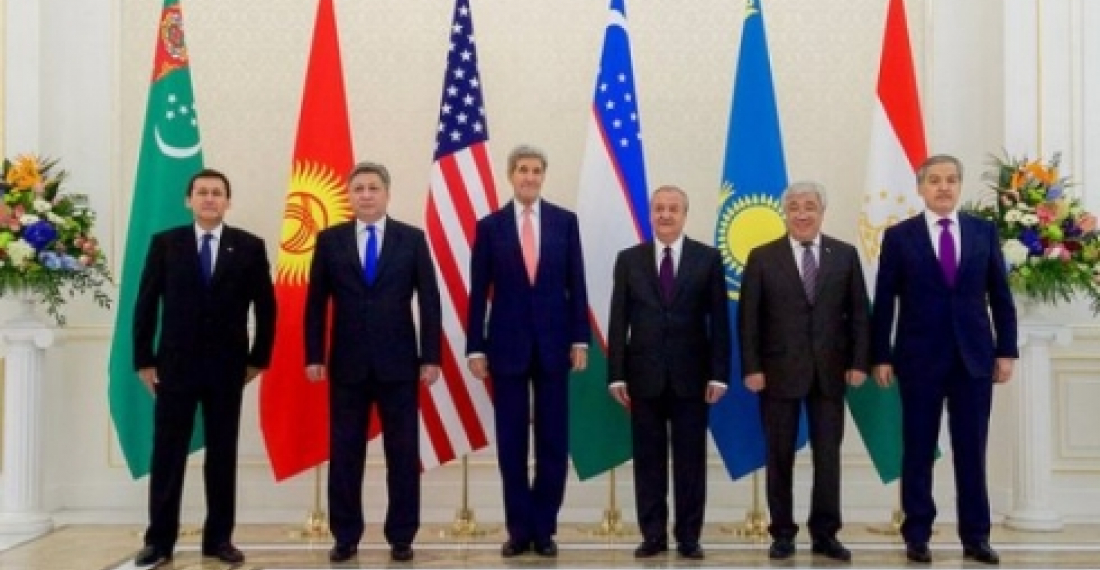
In Tashkent, Kerry also had a meeting with the foreign ministers of the five Central Asian states in a new 5 + 1 formula, emphasising that the United States is looking at relations with the region in both a bilateral as well as multilateral format.
On Monday Kerry was in Kazakhstan for a "wide-ranging meeting" with President Nazarbaev. Kerry said that Kazakhstan has a "solid record of leadership in region", and is a "valued partner.
Kerry is also expected to visit Turkmenistan and Tadjikistan in the next days.
The visit of John Kerry to Central Asia heralds a new chapter in US relations with the region. During his visit Kerry had to navigate around a number of issues that in one way or the other in the past were an obstacle to a more robust American relationship. The region's human rights record and Russia's dominating influence in the region were some of them. Kerry has tried to address these issues during his visit to the region, emphasising the need to look forward. Speaking at Nazarbaev University in Astana, John Kerry stated:
"........ the United States of America is aware that security and stability in Central Asia is an important building block for global security. Your neighborhood includes, obviously, Russia, Iran, Afghanistan, and China - that's your neighborhood. And you sit at the connection of some of the most significant foreign policy and security challenges anywhere on the planet.
But America's stake in Central Asia, I want to emphasize to you, extends far beyond security. This is, after all, the region where globalization truly began. For centuries, your countries - long before we even existed as a country, you were an integral part of a vital economic artery that stretched from Istanbul to Shanghai, and you provided opportunities for trade, for transport, for travel between and across civilizations. You helped to define those civilizations, and those defined - those civilizations have defined all of us today. And today what we want to see is not a struggle between China and Russia and the United States in a zero-sum game. What we want to see is a Central Asia that claims its place as an engine of growth at the heart of a modern and dynamic Asia. And when we invest in each other, all our societies benefit.
Now, of course, we have learned over time that both stability and prosperity are closely linked to good governance - governance that is powered by participatory, accountable institutions and guided by the rule of law.
We know and we have learned - sometimes the hard way - that holding elections, as important as they are, is just one element of real democracy. And this is a lesson we have learned in the United States over more than 200 years. Elections matter little if they are not free and fair, with all political parties competing on a level playing field. And promises contained in constitutions and laws - they don't amount to much unless those promises are actually kept. That's why accountable governance is also measured by the independence of a judiciary; by the health of the civil society; by the ability of every individual to enjoy basic freedoms of thought, speech, and religion, and to engage in political expression of political views.
Now, no democracy is perfect, and obviously, we know that through our own experience. We see it every day. It's a continuing journey. It's why we think of democracy not as a final destination but as an endless pursuit. Every country, including the United States, has room to improve.
Now, obviously, the future of Kazakhstan and this region will be determined and should be determined by the people who live here, not by the United States or any other country. But we want to partner with you how, where, and when we can. And we know that there is a strong platform that you have built on which we can now build together.
A Kazakh proverb teaches that nothing is as remote as yesterday and nothing is as close as tomorrow. In other words, the future is coming whether you're ready for it or not. So we'd better do everything that we can, all of us, to take every moment to prepare ourselves. And particularly in this new world that we live today, where everybody is connected 24/7; where even in the poorest places people have smartphones which gives them access to ideas, to products, to people, to aspirations - and that changes politics everywhere."
Commonspace.eu political editor said in a comment that “Kerry’s visit is of huge significance and places the United States as a stakeholder in the region’s development. For the last decade the US presence in the region looked very much faded. Russia has tried to crawl back some of the influence that it had in the region before the collapse of the USSR. Times however are different. Russia’s biggest challenge in the region at the moment is not from the United States but rather from China. Other Asian countries also vie for influence. The five central Asian states have also developed their own way of managing relations with Russia, re-assuring Moscow on the one hand, but also seeking to maintain room for manoeuvre in their international relations. They have therefore been keen to roll out the red carpet to Kerry, not least because the Secretary of State has adopted a more pragmatic approach to their domestic political circumstances. Whilst this has opened him for some criticism from human rights activists and sections of the media, observers of the region think that a more robust engagement is much more likely to result in positive changes than simply ignoring or isolating the region.”
Source: commonspace.eu with @JohnKerry and the US Department of State press office.
Photo: US Secretary of State John Kerry with the Foreign Ministers of the five Central Asian states at their meeting in Tashkent on Sunday, 1 November 2015. (Picture courtesy of the US State department).



