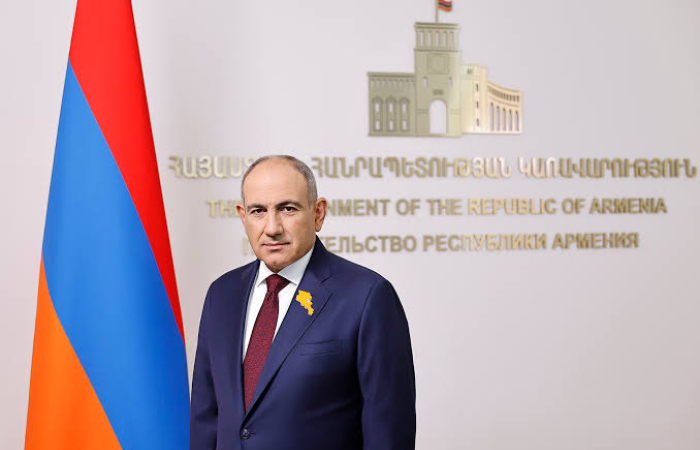
It started innocently enough. On Saturday 23 July, the Armenian President Serzh Sargsyan attended the "5th All Armenian Olympiad on Armenian Language, Literature and Armenian studies" where he presented certificates to the young participants. Participants than asked him questions.
According to the web site of the Armenian President, the last question was asked by Grigor Hambartsumian from the Shahumian school in Ararat marz. "Mr. President, Armenia is one of the ancient countries of the world and once also used to be one of the most powerful states, in Tigran the Great’s times. However, the same cannot be said about the Armenia of our days. My question is: will our future be reminiscent of Batum agreement, when in a German diplomat’s words, we were left with a territory just enough to swim in Lake Sevan, but with no room for drying up, or it will be a future which will return the Western Armenia, along with Ararat?"
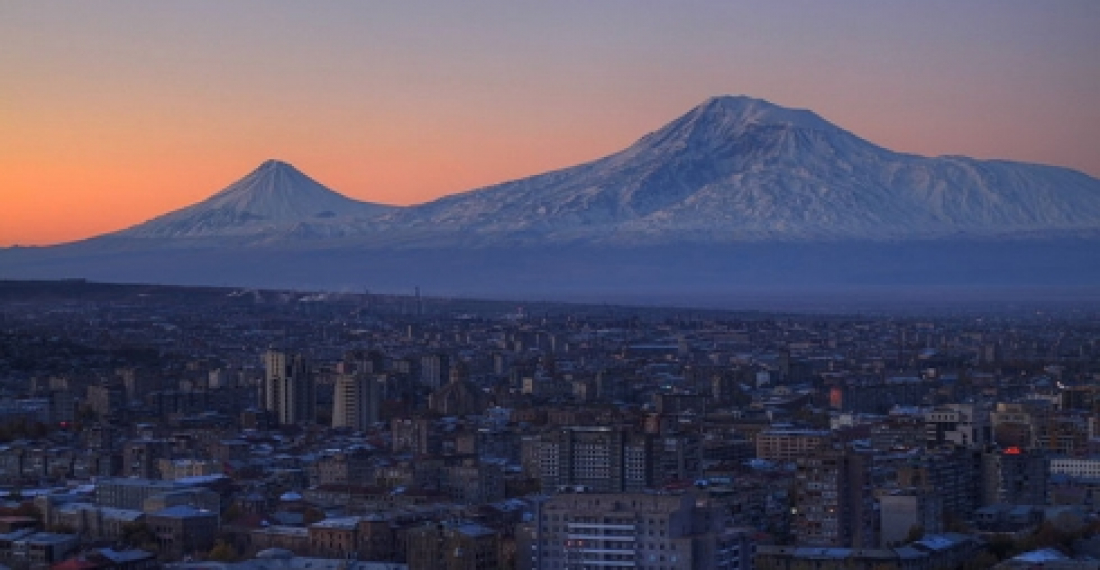
It was a question loaded with symbolism and the heavy baggage of history. Mount Ararat - considered by the Armenians as the spiritual symbol of their nation is in Turkey, as are the lands the Armenians sometimes call Western Armenia.
It is not known if this was a planted question or if the young man was just simply reflecting a thought that came out of the course he had just finished. Very likely the latter.
Sargsyan's answer, according to the President's website was as follows:
"It depends on you and your generation. I believe, my generation has fulfilled the task in front of us; when it was necessary in the beginning of the 90-s to defend part of our fatherland – Karabakh – from the enemy, we did it. I am not telling this to embarrass anyone: my point is that each generation has its responsibilities and they have to be carried out, with honor. If you, boys and girls of your generation spare no effort, if those older and younger than you act the same way, we will have one of the best countries in the world. Trust me, in many cases the country’s standing is not conditioned by its territory: the country should be modern, it should be secure and prosperous, and these are conditions which allow any nation to sit next to the respectable, powerful and reputed nations of the world. We simply must fulfill our duty, must be active, industrious, must be able to create bounty. And we can do that, we very easily can do that, and we have done it more than once in our history. I am certain about it, and I want you to be certain too. We are a nation that always rises from the ashes like phoenix – again and again".
Was Sargsyan ditching the question, or did his answer imply that Armenia had territorial ambitions on Turkey. The Turks certainly thought so.
On Tuesday, the spokesperson of the Turkish Foreign Ministry issued the following terse statement:
"We strongly condemn the reply given by President Sargsyan to a question from a student during the Armenian language and literature competition held in Armenia on 25 July 2011.
Preparing his society, in particular the youth, for a peaceful, serene and prosperous future should be the primary duty of statesmen. Giving advice to the youth and the next generations with a quite opposite approach and in a way that will provoke an ideology of hostility and hatred among societies is an extremely irresponsible behavior.
At a time when the quest of establishing peace has accelerated in the region, the statements Mr. Sargsyan has given without finding them harmful, indicate that he does not intend to work for peace.
We believe that everyone who has exerted effort to ensure peace and stability in the region will deduce the right conclusions from Mr. Sargsyan's unfortunate statements that we find regrettable".
Since than there has been a free for all exchange between Yerevan and Ankara, with Baku weighing in on the Turkish side. Aliev and Sargsyan traded insults against each other and other officials joined the fray. Nationalists on both sides have been pouring oil over the fire.
Some have described the incident as a storm in a tea cup, and indeed if anybody else had made the "offending" remarks they would have probably gone unnoticed. However the fact that they were made by the President, even if they were unscripted, gave them a lot of significance. The timing was also sensitive. Prime Minister Erdogan paid an offical visit to Baku this weeK - an ocassion for pan Turkic solidarity despite the differences that are emerging between Baku and Ankara. The Karabakh peace process is also in limbo since the Kazan summit. For Sargsyan to hint that the issue of the border with Turkey was somehow something for a future generation to solve was unfortunate and will be used by hard liners in Turkey in the future to prove Armenian bad intentions.
The incident needs however to be seen also in context. The atmosphere in the region has been poisoned for some time. Efforts to normalise Armenia-Turkish relations and to resolve the Karabakh conflict have so far failed. There is an arms race going on - part overt, part covert. Attempts at building confidence have not been very successful, despite some heroic efforts, especially by civil society actors.
The latest exchanges once more highlight the need for a much broader and comprehensive effort to deal with the post cold war order in the wider caucasus region. A new generation of leaders and citizens need to go through the process of negotiating, agreeing and embracing their version of the Helsinki Final Act, as their predecessors did in 1975. It is in that Act which came to symbolise the new Europe, that the answer to the question put by young Grigor to President Sargsyan can be found.
This commentary was contributed by LINKS for commonspace.eu
(c) commonspace.eu