


Monday Commentary: In South Ossetia high global politics and local feuds blend together

Dennis Sammut discusses the recent death of a Georgian whilst in detention in South Ossetia and says the incident has taken international ramifications and needs to be defused as soon as possible

Ten years after a short war between Georgia and Russia brought it to the forefront of world attention South Ossetia is once more in the news for the wrong reasons. A small territory that seceded from Georgia as the Soviet Union was dissolved in 1991, South Ossetia is today the quintessential place where high global politics and local village squabbles blend together, often very badly.

The death, on 23 February. of a local Georgian whilst in the custody of the de facto authorities that run South Ossetia, unfortunate as it is, could in other circumstances have been explained, managed and dealt with. Instead it quickly turned into an international incident, yet unresolved.

Archil Tatunashvili was a small local trader who originally hailed from Akhalgori, a small town with a mainly Georgian population, but which in the 2008 war was occupied by Russian troops and later handed over to the South Ossetian authorities. Many of the Georgian population subsequently crossed over to the Georgian side, adding to the hundreds of thousands of displaced persons in the South Caucasus. Tatunashvili and his family were among them.

The Georgian narrative is that Tatunashvili crossed over the boundary line that these days separates South Ossetia from Georgia in order to go back to check on his home, and to sell some goods. The Ossetian narrative is that Tatunashvili was involved in illegal trading, and was likely spying for the Georgian authorities. Neither narrative explains or justifies his death, and not unexpectedly Tatunashvili's family and friends were incensed. The Georgian government cried foul, and their claims appeared justified when South Ossetia refused to hand over the body. The international community (minus Russia) weighed in on behalf of the Georgians. An incident in Akhalgori whose roots probably lays in decades of local squabbles is now the stuff of high diplomacy. So why, and who is to blame?

Whilst the Russians cannot be blamed for all the problems of the Caucasus, their shadow is everywhere. On this occasion their responsibility is more direct. Not only are they the patrons of their protectorate in South Ossetia, which they recognised as an independent state in 2008, but they have also tried to take a perverse legal approach to this act of illegality. In 2008, in blatant violation of the cease fire agreement brokered by the European Union, they refused to return the situation to a status quo ante, and instead stretched out Tskhinvali's control to every centimetre of territory that was nominally part of what in Soviet times was the South Ossetia Autonomous Oblast - including Akhalgori which until then was firmly under Georgian control. Thousands of Russian troops busily protect this new border" which is also being demarcated for the first time in history.

Having said that, the Russians are probably furious with the South Ossetians for causing the death of Tatunashvili. The Kremlin continuous to be incensed how this tiny territory on which they have spent so much money, continues to be a source of headaches. Over the last decade there were scandals with corruption and misuse of Russian aid, turmoil over election fraud, and constant clan bickering. Now, what was likely a local feud, has spiralled into an international incident. A case of the tail waging the dog, some may say.

Unlike in 2008, the European Union this time round finds itself on the front line of the dispute. Today Georgia is an EU associated state, and hundreds of EU officials monitor the situation with the secessionist territories as members of a monitoring mission. The EU also leads as co-chair of the Geneva discussions that try to bring the sides together and manage the situation. Very soon after Tatunashvili's death was announced the EU expressed its "grave concern" - Brussels equivalent of raising the threat perception to Defcon 3. The US, UK and other countries followed suit.

It is highly unlikely that the situation will develop beyond harsh rhetoric, but it needs to be defused just the same.

Instead of stonewalling, the Ossetians now need to hand over Tatunashvili's body to his family immediately, issue a public apology, and privately re-assure the Georgians that they have taken measures for such an incident not to be repeated.

The Georgians on their part need to lower their rhetoric. The Foreign Ministry particularly, has yet to master the art of subtlety. Some of their actions over the last year in handling issues related to the secessionist territories were disappointing.

The international community needs to react firmly to the death of Tatunashvili, using it to remind the Russians of their failure to implement the Sarkozy - Medvedev agreements, and pushing them to move the Geneva negotiations from conflict management to conflict resolution. But they must also caution restrain to the Georgians. The current government in Tbilisi is very different to the one in 2008, but the odd hot head still appears every now and then.

And as for the Russians? The Kremlin has enough on its plate at the moment, and does not need another little incident in the Caucasus, however it may not be ready yet for a shift in position. But clear heads in the Kremlin understand that in South Ossetia they have a situation that is never going to lead to anything any good. How they handle the Tatunashvili case may be a good indicator of how the wind is blowing.

source: Dennis Sammut is the Director of LINKS (Dialogue, Analysis and Research). His Monday Commentary is published weekly on commonspace.eu.

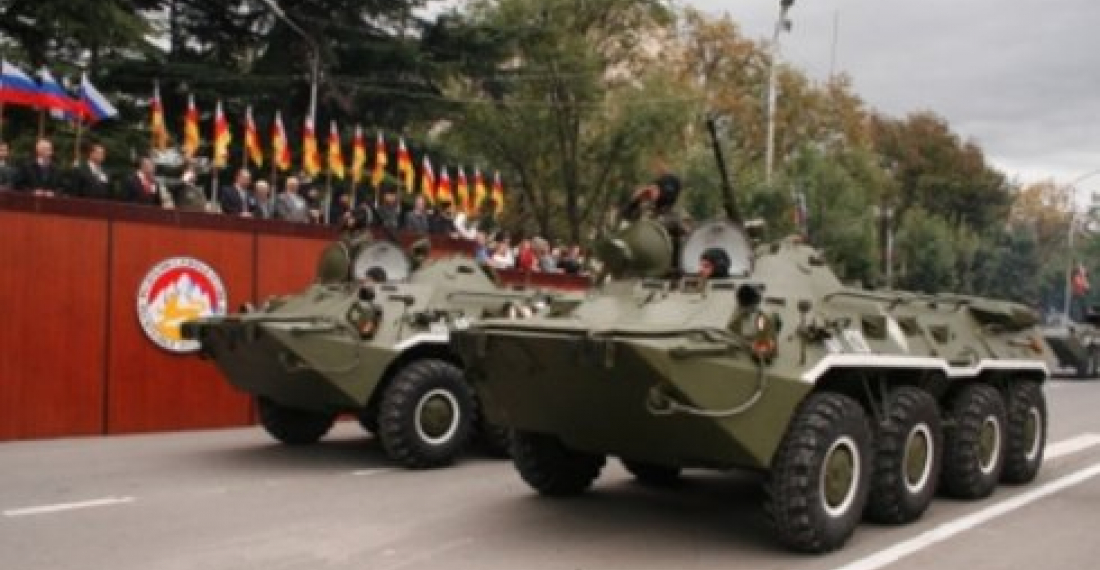
photo: Russian troops parade in Tskhinvali, the administrative capital of South Ossetia to mark Independence Day.  
 

Related articles

Editor's choice
News
Council of Europe launches new International Claims Commission for Ukraine

Council of Europe launches new International Claims Commission for Ukraine

Thirty-four countries and the European Union have signed a new convention establishing an International Claims Commission for Ukraine at a diplomatic conference co-hosted by the 46-nation Council of Europe and the Netherlands in the Hague. The diplomatic conference was attended by leaders and high-level representatives from over 50 states, including the President of Ukraine, Volodymyr Zelenskyy, the President of the Republic of Moldova, Maia Sandu, and the Prime Minister of the Netherlands, Dick Schoof.  “Today marks a major step forward in ensuring accountability for Ukraine. The International Claims Commission represents justice and hope for tens of thousands of victims—our determination that those who have suffered will not be forgotten. I call for quick ratifications so we can get the commission rapidly up and running for the people of Ukraine,” said Council of Europe Secretary General Alain Berset. Ukrainian President Volodymyr Zelenskyy said: “We expect that every mechanism for compensation from the Register of Damage and Claims Commission to the actual payments – will start working and receive strong and sufficient international support, so that people can truly feel that any kind of damage caused by the war can be compensated. This war, and Russia’s responsibility for it, MUST become a clear example – so that others learn not to choose aggression.” “Accountability is about creating the conditions for peace that endures. And therefore, accountability is a condition of security – today and for the future. But accountability is not only about Ukraine. And it is not only about one aggressor and one victim. Accountability is about Europe. About every country in Europe. It is about whether Europe, as a whole, is willing to defend its peace,” said Maia Sandu, President of the Republic of Moldova, which currently holds the Presidency of the Council of Europe’s Committee of Ministers. The Prime Minister of the Netherlands, Dick Schoof, said: “Every day Russia is deliberately bombarding homes, destroying businesses and damaging infrastructure in Ukraine. Russia must compensate Ukraine for the damage caused. That is why we have launched the International Claims Commission for Ukraine and we are honoured to host it.” The International Claims Commission will be the second part of a comprehensive compensation mechanism related to Russia’s war of aggression, building on the existing Register of Damage for Ukraine. The claims commission will be established within the framework of the Council of Europe and will also be open to other countries. The Register of Damage for Ukraine, created in 2023, collects and records compensation claims submitted by individuals, organisations and public bodies in Ukraine. Forty-four states and the European Union have so far joined the Register, which has already received 86,000 claims. The International Claims Commission will review, assess and decide upon claims submitted to the Register of Damage for Ukraine and determine the amount of compensation, if any, which is due in each case. The convention establishing the commission will enter into force once it has been ratified by 25 signatories, as long as sufficient funds have been secured to support its initial work.

Popular

Editor's choice
News
Council of Europe launches new International Claims Commission for Ukraine

Council of Europe launches new International Claims Commission for Ukraine

Thirty-four countries and the European Union have signed a new convention establishing an International Claims Commission for Ukraine at a diplomatic conference co-hosted by the 46-nation Council of Europe and the Netherlands in the Hague. The diplomatic conference was attended by leaders and high-level representatives from over 50 states, including the President of Ukraine, Volodymyr Zelenskyy, the President of the Republic of Moldova, Maia Sandu, and the Prime Minister of the Netherlands, Dick Schoof.  “Today marks a major step forward in ensuring accountability for Ukraine. The International Claims Commission represents justice and hope for tens of thousands of victims—our determination that those who have suffered will not be forgotten. I call for quick ratifications so we can get the commission rapidly up and running for the people of Ukraine,” said Council of Europe Secretary General Alain Berset. Ukrainian President Volodymyr Zelenskyy said: “We expect that every mechanism for compensation from the Register of Damage and Claims Commission to the actual payments – will start working and receive strong and sufficient international support, so that people can truly feel that any kind of damage caused by the war can be compensated. This war, and Russia’s responsibility for it, MUST become a clear example – so that others learn not to choose aggression.” “Accountability is about creating the conditions for peace that endures. And therefore, accountability is a condition of security – today and for the future. But accountability is not only about Ukraine. And it is not only about one aggressor and one victim. Accountability is about Europe. About every country in Europe. It is about whether Europe, as a whole, is willing to defend its peace,” said Maia Sandu, President of the Republic of Moldova, which currently holds the Presidency of the Council of Europe’s Committee of Ministers. The Prime Minister of the Netherlands, Dick Schoof, said: “Every day Russia is deliberately bombarding homes, destroying businesses and damaging infrastructure in Ukraine. Russia must compensate Ukraine for the damage caused. That is why we have launched the International Claims Commission for Ukraine and we are honoured to host it.” The International Claims Commission will be the second part of a comprehensive compensation mechanism related to Russia’s war of aggression, building on the existing Register of Damage for Ukraine. The claims commission will be established within the framework of the Council of Europe and will also be open to other countries. The Register of Damage for Ukraine, created in 2023, collects and records compensation claims submitted by individuals, organisations and public bodies in Ukraine. Forty-four states and the European Union have so far joined the Register, which has already received 86,000 claims. The International Claims Commission will review, assess and decide upon claims submitted to the Register of Damage for Ukraine and determine the amount of compensation, if any, which is due in each case. The convention establishing the commission will enter into force once it has been ratified by 25 signatories, as long as sufficient funds have been secured to support its initial work.

