


Monday Commentary: Reversing the brain drain in the South Caucasus

"The South Caucasus is full of talented people, and among the younger generations one can also find many of the skills needed to address the current needs of society. Governments have a responsibility to create conditions for these people to fulfil their capacities, writes Dennis Sammut in his regular Monday Commentary

The collapse of the Soviet Union in 1991 brought with it a period of turmoil in all the successor states. The three republics of the South Caucasus were among the worst hit. The populations of Armenia, Azerbaijan and Georgia not only had to cope with total economic collapse, and the years of painful transition away from the Soviet command economy, but they were also devastated by the internal conflicts which erupted, and which displaced hundreds of thousands. The 1990s were not a good time to be living in the region, and many voted with their feet moving to Russia and to other countries.

The situation has since stabilised. All three countries are experiencing some sort of economic growth. Governments are more stable, and in all three there is more awareness of the need to create opportunities for the younger generation. But anecdotal evidence suggests that whilst mass outward migration is stable, those with higher education continue seeking a life outside the region, and that they are much more likely to move to western countries than to Russia. Whilst some continue to extol the benefits of migration - especially seasonal migration to Russia, since they see it as a source of much needed external remittances, few are counting the costs of the continuing exodus of the better educated and younger migrants now leaving for the US and Europe.

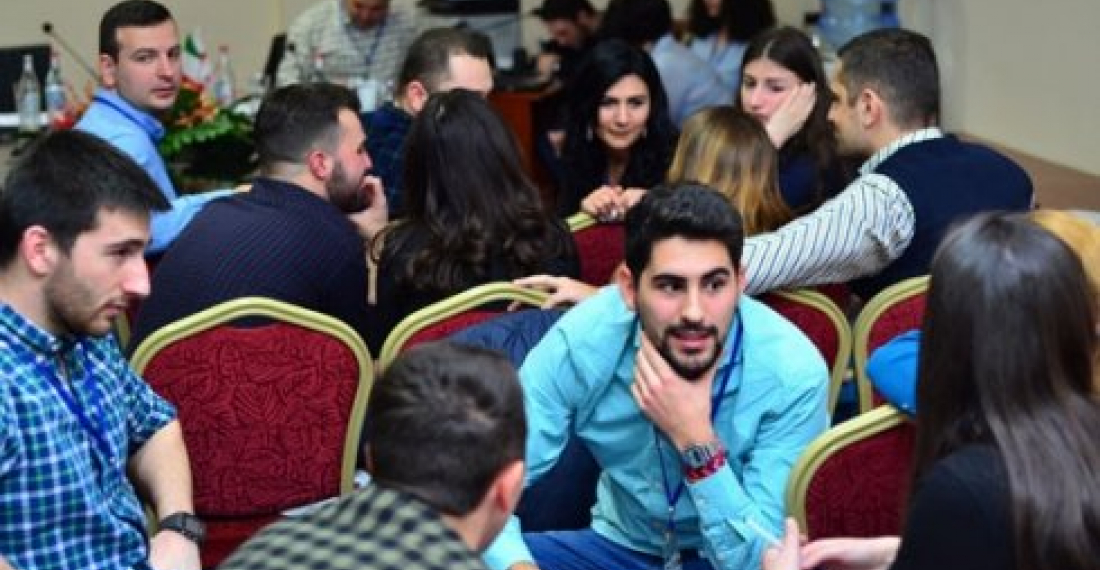
Over the years I had the opportunity to meet and speak with hundreds of young people in the region on their life and aspirations. What always struck me was that their frustrations were not related with their inability to become rich, but rather with the failed systems that prevented them from using their full potential. In the region many young people are involved in work that they have not been trained for, and which gives them little satisfaction. Many wait for the first opportunity to move out.

It is positive that an important feature of the Association Agreement that the European Union has signed with Georgia, and the Comprehensive and Enhanced Partnership Agreement signed with Armenia, is the recognition of the role of Small and Medium sized Enterprises (SMEs). It is likely that this will also feature in the new agreement between the EU and Azerbaijan currently being negotiated. Support for SMEs needs to be tangible - in the regulatory framework, through financing, and through broader respect for the rule of law. The concept of business parks and hubs is still not properly understood in the region, and whilst the potential for agro-business is recognised, governments have way to go in galvanising the full potential of this sector.

Many of the reasons why not more has been done in these sectors are related to vested interests, as oligarchs - large and small - who benefitted from the chaos of the Soviet Union's collapse, try to protect their privileged positions. There is also an inherent fear within some of the ruling circles, that a young, well educated and thriving middle class will be less amenable to the sort of political manipulations that the region has witnessed over the years.

Part of the problem may be sheer incompetence, although the advent of a more professional governing class in all three countries has started addressing this problem.

The South Caucasus is full of talented people, and among the younger generations one can also find many of the skills needed to address the current needs of society. Governments have a responsibility to create conditions for these people to fulfil their capacities. They must also start attracting back those who have left over the last two decades. Many of those who have gone to western countries have gained valuable experiences, most have accumulated some capital, and all can play a crucial role in taking the region forward and improving the quality of life of their societies.

source: Dennis Sammut is the Director of LINKS (Dialogue, Analysis and Research) His Monday Commentary is published weekly on commonspace.eu. The views expressed in opinion pieces and commentaries do not necessarily reflect the position of commonspace.eu or its partners

photo: Young Entrepreneurs at a the Youth Entrepreneurship Conference held recently in Yerevan financed by the Erasmus+ programme of the European Union

Related articles

Editor's choice
News
Council of Europe launches new International Claims Commission for Ukraine

Council of Europe launches new International Claims Commission for Ukraine

Thirty-four countries and the European Union have signed a new convention establishing an International Claims Commission for Ukraine at a diplomatic conference co-hosted by the 46-nation Council of Europe and the Netherlands in the Hague. The diplomatic conference was attended by leaders and high-level representatives from over 50 states, including the President of Ukraine, Volodymyr Zelenskyy, the President of the Republic of Moldova, Maia Sandu, and the Prime Minister of the Netherlands, Dick Schoof.  “Today marks a major step forward in ensuring accountability for Ukraine. The International Claims Commission represents justice and hope for tens of thousands of victims—our determination that those who have suffered will not be forgotten. I call for quick ratifications so we can get the commission rapidly up and running for the people of Ukraine,” said Council of Europe Secretary General Alain Berset. Ukrainian President Volodymyr Zelenskyy said: “We expect that every mechanism for compensation from the Register of Damage and Claims Commission to the actual payments – will start working and receive strong and sufficient international support, so that people can truly feel that any kind of damage caused by the war can be compensated. This war, and Russia’s responsibility for it, MUST become a clear example – so that others learn not to choose aggression.” “Accountability is about creating the conditions for peace that endures. And therefore, accountability is a condition of security – today and for the future. But accountability is not only about Ukraine. And it is not only about one aggressor and one victim. Accountability is about Europe. About every country in Europe. It is about whether Europe, as a whole, is willing to defend its peace,” said Maia Sandu, President of the Republic of Moldova, which currently holds the Presidency of the Council of Europe’s Committee of Ministers. The Prime Minister of the Netherlands, Dick Schoof, said: “Every day Russia is deliberately bombarding homes, destroying businesses and damaging infrastructure in Ukraine. Russia must compensate Ukraine for the damage caused. That is why we have launched the International Claims Commission for Ukraine and we are honoured to host it.” The International Claims Commission will be the second part of a comprehensive compensation mechanism related to Russia’s war of aggression, building on the existing Register of Damage for Ukraine. The claims commission will be established within the framework of the Council of Europe and will also be open to other countries. The Register of Damage for Ukraine, created in 2023, collects and records compensation claims submitted by individuals, organisations and public bodies in Ukraine. Forty-four states and the European Union have so far joined the Register, which has already received 86,000 claims. The International Claims Commission will review, assess and decide upon claims submitted to the Register of Damage for Ukraine and determine the amount of compensation, if any, which is due in each case. The convention establishing the commission will enter into force once it has been ratified by 25 signatories, as long as sufficient funds have been secured to support its initial work.

Popular

Editor's choice
News
Council of Europe launches new International Claims Commission for Ukraine

Council of Europe launches new International Claims Commission for Ukraine

Thirty-four countries and the European Union have signed a new convention establishing an International Claims Commission for Ukraine at a diplomatic conference co-hosted by the 46-nation Council of Europe and the Netherlands in the Hague. The diplomatic conference was attended by leaders and high-level representatives from over 50 states, including the President of Ukraine, Volodymyr Zelenskyy, the President of the Republic of Moldova, Maia Sandu, and the Prime Minister of the Netherlands, Dick Schoof.  “Today marks a major step forward in ensuring accountability for Ukraine. The International Claims Commission represents justice and hope for tens of thousands of victims—our determination that those who have suffered will not be forgotten. I call for quick ratifications so we can get the commission rapidly up and running for the people of Ukraine,” said Council of Europe Secretary General Alain Berset. Ukrainian President Volodymyr Zelenskyy said: “We expect that every mechanism for compensation from the Register of Damage and Claims Commission to the actual payments – will start working and receive strong and sufficient international support, so that people can truly feel that any kind of damage caused by the war can be compensated. This war, and Russia’s responsibility for it, MUST become a clear example – so that others learn not to choose aggression.” “Accountability is about creating the conditions for peace that endures. And therefore, accountability is a condition of security – today and for the future. But accountability is not only about Ukraine. And it is not only about one aggressor and one victim. Accountability is about Europe. About every country in Europe. It is about whether Europe, as a whole, is willing to defend its peace,” said Maia Sandu, President of the Republic of Moldova, which currently holds the Presidency of the Council of Europe’s Committee of Ministers. The Prime Minister of the Netherlands, Dick Schoof, said: “Every day Russia is deliberately bombarding homes, destroying businesses and damaging infrastructure in Ukraine. Russia must compensate Ukraine for the damage caused. That is why we have launched the International Claims Commission for Ukraine and we are honoured to host it.” The International Claims Commission will be the second part of a comprehensive compensation mechanism related to Russia’s war of aggression, building on the existing Register of Damage for Ukraine. The claims commission will be established within the framework of the Council of Europe and will also be open to other countries. The Register of Damage for Ukraine, created in 2023, collects and records compensation claims submitted by individuals, organisations and public bodies in Ukraine. Forty-four states and the European Union have so far joined the Register, which has already received 86,000 claims. The International Claims Commission will review, assess and decide upon claims submitted to the Register of Damage for Ukraine and determine the amount of compensation, if any, which is due in each case. The convention establishing the commission will enter into force once it has been ratified by 25 signatories, as long as sufficient funds have been secured to support its initial work.

