


Monday Commentary: Davos and the process of modernising the South Caucasus

Monday Commentary

"There needs to be a Davos in Yerevan, Baku and Tbilisi, and in every town and village in the South Caucasus for ideas to be generated, visions to be formed, and for the momentum for modernisation to gather speed" writes Dennis Sammut in this week's Monday Commentary.

Leaders from the three South Caucasus countries were in Davos last week, participating in the World Economic Forum. President Aliyev of Azerbaijan is a usual attendee - I don't think he missed one in the last decade. Also present this year were the prime ministers of Armenia and Georgia, Karen Karapetyan and Giorgi Kvirikashvili.

Davos is an unusual gathering of world leaders given the overall informality of the proceedings. Plenty of snow means less choreographed protocol. The mingling of the leaders of politics with the heavyweights in business and industry and some of the top thinkers of the moment is also refreshingly unusual.  The Davos World Economic Forum  is one big buffet of around 400 events - some public, some not - which participants can choose from. It is also an excellent place for networking.

This is the sort of international event that the leaders of the three South Caucasus countries need to engage in as they address the biggest challenges facing them for the next two or three decades, namely how to accelerate the process of modernisation of their economies and societies, and how best to interconnect with the rest of the world and use their geographic positions and geo-political postures to their best advantage.

Modernisation is often a misunderstood term. Some people mistakenly assume that it is simply technological development, or can be expressed through bombastic buildings and construction. Modernising a country requires a much deeper process of restructuring which in turn requires time and commitment. Reforms in three important sectors need to be synchronised - the political institutions, the economy and education. Georgia, Armenia and Azerbaijan emerged from the centralised political institutions, command economy, and ideologised education system that characterised the Soviet Union to newly achieved statehood in 1991. Successive governments in the three countries have since put efforts to modernising all three sectors, with mixed results. None can claim to have succeeded yet, but seeds for success have been sown. The process must now be speeded up.

There are many obstacles on the way - some internal where many vested interests slow down the process of change; some external such as the negative impact from the three larger neighbours: Russia, Turkey and Iran, as they struggle with similar problems, only on a larger scale.

The unresolved conflicts in the region have also taken a heavy toll on all aspects of life over the last three decades. They can still destroy all that has already been achieved, and prevent the process of modernisation from continuing.

But I remain convinced that the potential of the three countries - standing alone, or if they ever manage to get around to it, working together - is far from having been maximised or exhausted. The challenge facing the governments is how to galvanise and unleash this potential.

One hopes that the entrepreneurial spirit of Davos rubs off on the participants from the South Caucasus. Not that in Davos there were solutions to all the problems of the South Caucasus, let alone the world. The biggest lesson from Davos is the value of open and inclusive debate on the most difficult issues, with the possibility that the opinion of even the most mighty being challenged with arguments. There needs to be a Davos in Yerevan, Baku and Tbilisi, and in every town and village in the South Caucasus for ideas to be generated, visions to be formed, and for the momentum for modernisation to gather speed.

source: Dennis Sammut is the Director of LINKS (DAR). The Monday Commentary appears weekly on commonspace.eu

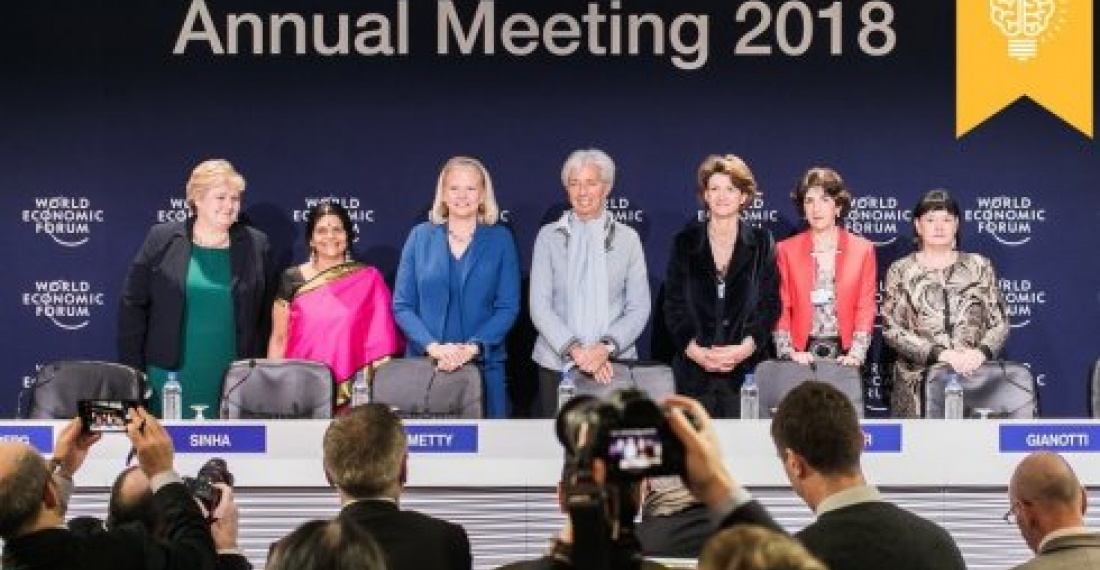
photo: Women co-chaired the leading panels in this year's World Economic Forum held in Davos 23-26 January 2018
 

Related articles

Editor's choice
News
Council of Europe launches new International Claims Commission for Ukraine

Council of Europe launches new International Claims Commission for Ukraine

Thirty-four countries and the European Union have signed a new convention establishing an International Claims Commission for Ukraine at a diplomatic conference co-hosted by the 46-nation Council of Europe and the Netherlands in the Hague. The diplomatic conference was attended by leaders and high-level representatives from over 50 states, including the President of Ukraine, Volodymyr Zelenskyy, the President of the Republic of Moldova, Maia Sandu, and the Prime Minister of the Netherlands, Dick Schoof.  “Today marks a major step forward in ensuring accountability for Ukraine. The International Claims Commission represents justice and hope for tens of thousands of victims—our determination that those who have suffered will not be forgotten. I call for quick ratifications so we can get the commission rapidly up and running for the people of Ukraine,” said Council of Europe Secretary General Alain Berset. Ukrainian President Volodymyr Zelenskyy said: “We expect that every mechanism for compensation from the Register of Damage and Claims Commission to the actual payments – will start working and receive strong and sufficient international support, so that people can truly feel that any kind of damage caused by the war can be compensated. This war, and Russia’s responsibility for it, MUST become a clear example – so that others learn not to choose aggression.” “Accountability is about creating the conditions for peace that endures. And therefore, accountability is a condition of security – today and for the future. But accountability is not only about Ukraine. And it is not only about one aggressor and one victim. Accountability is about Europe. About every country in Europe. It is about whether Europe, as a whole, is willing to defend its peace,” said Maia Sandu, President of the Republic of Moldova, which currently holds the Presidency of the Council of Europe’s Committee of Ministers. The Prime Minister of the Netherlands, Dick Schoof, said: “Every day Russia is deliberately bombarding homes, destroying businesses and damaging infrastructure in Ukraine. Russia must compensate Ukraine for the damage caused. That is why we have launched the International Claims Commission for Ukraine and we are honoured to host it.” The International Claims Commission will be the second part of a comprehensive compensation mechanism related to Russia’s war of aggression, building on the existing Register of Damage for Ukraine. The claims commission will be established within the framework of the Council of Europe and will also be open to other countries. The Register of Damage for Ukraine, created in 2023, collects and records compensation claims submitted by individuals, organisations and public bodies in Ukraine. Forty-four states and the European Union have so far joined the Register, which has already received 86,000 claims. The International Claims Commission will review, assess and decide upon claims submitted to the Register of Damage for Ukraine and determine the amount of compensation, if any, which is due in each case. The convention establishing the commission will enter into force once it has been ratified by 25 signatories, as long as sufficient funds have been secured to support its initial work.

Popular

Editor's choice
News
Council of Europe launches new International Claims Commission for Ukraine

Council of Europe launches new International Claims Commission for Ukraine

Thirty-four countries and the European Union have signed a new convention establishing an International Claims Commission for Ukraine at a diplomatic conference co-hosted by the 46-nation Council of Europe and the Netherlands in the Hague. The diplomatic conference was attended by leaders and high-level representatives from over 50 states, including the President of Ukraine, Volodymyr Zelenskyy, the President of the Republic of Moldova, Maia Sandu, and the Prime Minister of the Netherlands, Dick Schoof.  “Today marks a major step forward in ensuring accountability for Ukraine. The International Claims Commission represents justice and hope for tens of thousands of victims—our determination that those who have suffered will not be forgotten. I call for quick ratifications so we can get the commission rapidly up and running for the people of Ukraine,” said Council of Europe Secretary General Alain Berset. Ukrainian President Volodymyr Zelenskyy said: “We expect that every mechanism for compensation from the Register of Damage and Claims Commission to the actual payments – will start working and receive strong and sufficient international support, so that people can truly feel that any kind of damage caused by the war can be compensated. This war, and Russia’s responsibility for it, MUST become a clear example – so that others learn not to choose aggression.” “Accountability is about creating the conditions for peace that endures. And therefore, accountability is a condition of security – today and for the future. But accountability is not only about Ukraine. And it is not only about one aggressor and one victim. Accountability is about Europe. About every country in Europe. It is about whether Europe, as a whole, is willing to defend its peace,” said Maia Sandu, President of the Republic of Moldova, which currently holds the Presidency of the Council of Europe’s Committee of Ministers. The Prime Minister of the Netherlands, Dick Schoof, said: “Every day Russia is deliberately bombarding homes, destroying businesses and damaging infrastructure in Ukraine. Russia must compensate Ukraine for the damage caused. That is why we have launched the International Claims Commission for Ukraine and we are honoured to host it.” The International Claims Commission will be the second part of a comprehensive compensation mechanism related to Russia’s war of aggression, building on the existing Register of Damage for Ukraine. The claims commission will be established within the framework of the Council of Europe and will also be open to other countries. The Register of Damage for Ukraine, created in 2023, collects and records compensation claims submitted by individuals, organisations and public bodies in Ukraine. Forty-four states and the European Union have so far joined the Register, which has already received 86,000 claims. The International Claims Commission will review, assess and decide upon claims submitted to the Register of Damage for Ukraine and determine the amount of compensation, if any, which is due in each case. The convention establishing the commission will enter into force once it has been ratified by 25 signatories, as long as sufficient funds have been secured to support its initial work.

