


EU seeks treaty relationship with Azerbaijan and Turkmenistan on the building of a Trans Caspian Pipeline System

The European Union has adopted a mandate to negotiate a legally binding treaty between the EU, Azerbaijan and Turkmenistan to build a Trans Caspian Pipeline System. This is the first time that the European Union has proposed a treaty in support of an infrastructure project.

The 27 member states of the EU have mandated the European Commission to lead the negotiations on the Treaty on their behalf.

This decision is a direct follow-up of the visit of President José Manuel Barroso and Energy Commissioner Günther Oettinger to Baku and Ashgabat in January 2011 and their meetings with Presidents Aliyev and Berdimuhamedov. It constitutes a milestone in the realisation of the Southern Corridor and is the first operational decision as part of a co-ordinated and united external energy strategy, announced by the European Union earlier this month. (read it here)

Energy Commissioner Oettinger stated that: "Europe is now speaking with one voice. The trans-Caspian pipeline is a major project in the Southern Corridor to bring new sources of gas to Europe. We have the intention of achieving this as soon as possible."

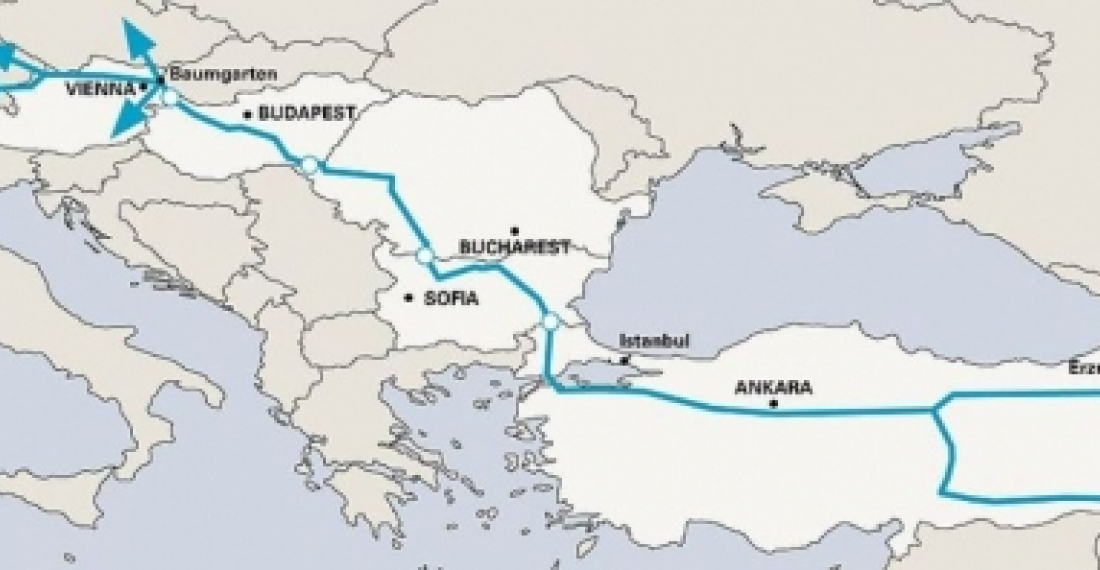
The Trans-Caspian Pipeline agreement will set the basis for the construction of a submarine pipeline connecting Turkmenistan to Azerbaijan, and in turn link this pipeline to infrastructure that will bring gas from Central Asia to the EU.

source: European Commission, with additional reporting by commonspace.eu

Picture: Map of the proposed Nabucco Pipeline. The proposed Trans Caspian Pipeline pipeline is expected to connect to Nabucco through Azerbaijan, Georgia and Turkey.


Related articles

Editor's choice
News
European leaders set out their plan for Ukraine

European leaders set out their plan for Ukraine

The leaders of Germany, Denmark, Finland, France, Italy, Netherlands, Norway, Poland, Sweden, and United Kingdom, together with the President of the European Council, and the President of the European Commission, o  Monday (15 December) issued a statement, outlining their plan for Ukraine. In their statement, Chancellor Merz, Prime Minister Frederiksen, President Stubb, President Macron, Prime Minister Meloni, Prime Minister Schoof, Prime Minister Støre, Prime Minister Tusk, Prime Minister Kristersson, Prime Minister Starmer, as well as President Costa and President von der Leyen spoke about "Peace for Ukraine". The Leaders welcomed significant progress on President Trump’s efforts to secure a just and lasting peace in Ukraine. They also welcomed the close work between President Zelenskyy’s and President Trump’s teams as well as European teams over the recent days and weeks. They agreed to work together with President Trump and President Zelenskyy to get to a lasting peace which preserves Ukrainian sovereignty and European security. Leaders appreciated the strong convergence between the United States, Ukraine and Europe. Leaders agreed that ensuring the security, sovereignty, and prosperity of Ukraine was integral for wider Euro-Atlantic security. They were clear that Ukraine and its people deserved a prosperous, independent, and sovereign future, free from fear of future Russian aggression. Both the US and European leaders committed to work together to provide robust security guarantees and economic recovery support measures for Ukraine in the context of an agreement on ending the war. This would include commitments to: Provide sustained and significant support to Ukraine to build its armed forces, which should remain at a peacetime level of 800,000 to be able to deter conflict and defend Ukraine’s territory. A European-led ‘multinational force Ukraine’ made up from contributions from willing nations within the framework of the Coalition of the Willing and supported by the US. It will assist in the regeneration of Ukraine’s forces, in securing Ukraine’s skies, and in supporting safer seas, including through operating inside Ukraine. (Click the image to read the statement in full).

Popular

