Eleven Parliamentarians of Turkish origin have been elected to the Bundestag.

Eleven parliamentarians of Turkish origin have been elected to the Bundestag, Germany's lower house of Parliament, following the general elections held on 22 September in which Chancellor Angela Merkel registered a historic victory and was only short by a few votes from securing an overall majority for the first time in decades. The election was also notable because for the first time Merkel's Christian Democratic Union (CDU) parliamentary group also includes a person of Turkish and Muslim origin. The Turkish newspaper Hurriyet Daily News said that "Cemile Giousouf, one of the 11 elected, not only completed a successful journey into the Parliament, but also achieved a historic milestone as she became the first ever Turkish and Muslim candidate to have emerged from Merkel's conservatives."

Commonspace.eu political editor said in a comment:

"The Turkish community in Germany is often characterised as being backward and isolated from the rest of German society. Whilst this is certainly not true economically, it is now clear that it is not true politically either. The Turkish community is playing an important role in German political life and has started making an impact. What is interesting is that the eleven members of parliament elected now represent a wide cross section of political opinion, including the two major political parties the CDU/CSU and the social democratic SPD, who now have five MPs from the Turkish community. Other MPs elected represent the Greens and the left wing Die Linke, with three and two MPs of Turkish origin respectively. This development helps much to dispel criticism that the Turkish community in Germany is marginalised. These eleven MPs now have a chance to work both within their respective political parties as well as nation-wide not only for their community but for the whole German nation.

Despite isolated incidents that should not be ignored, Europe is not a xenophobic society. Most European countries are multi-ethnic and multi-faith and Europe continues to find ways in which it turns its diversity into strength."

Source: commonspace.eu

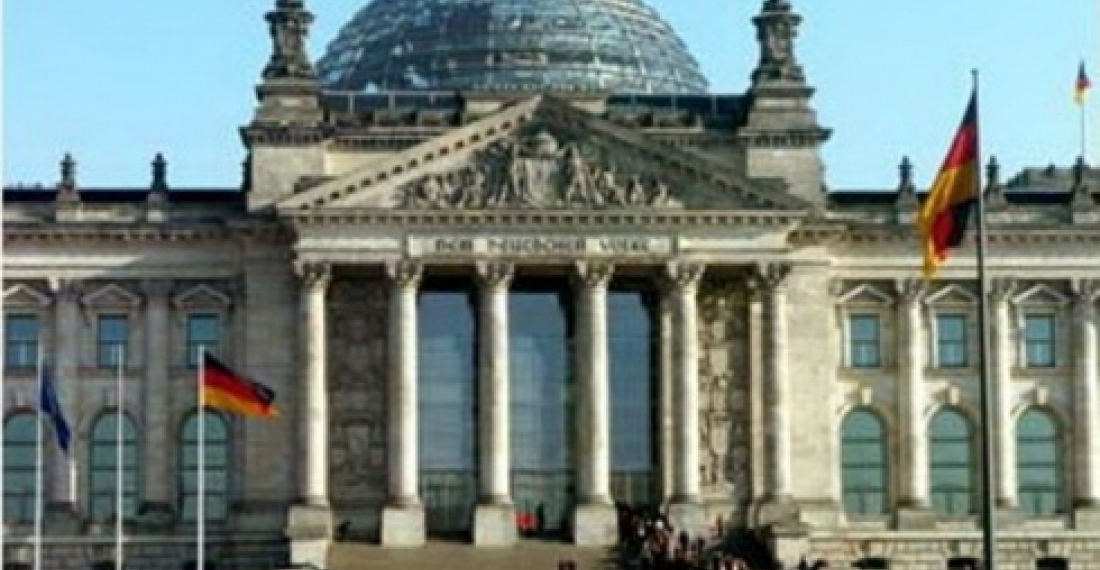
Photo: The German Bundestag in Berlin (archive picture).

Related articles

Editor's choice
News
European leaders set out their plan for Ukraine

European leaders set out their plan for Ukraine

The leaders of Germany, Denmark, Finland, France, Italy, Netherlands, Norway, Poland, Sweden, and United Kingdom, together with the President of the European Council, and the President of the European Commission, o  Monday (15 December) issued a statement, outlining their plan for Ukraine. In their statement, Chancellor Merz, Prime Minister Frederiksen, President Stubb, President Macron, Prime Minister Meloni, Prime Minister Schoof, Prime Minister Støre, Prime Minister Tusk, Prime Minister Kristersson, Prime Minister Starmer, as well as President Costa and President von der Leyen spoke about "Peace for Ukraine". The Leaders welcomed significant progress on President Trump’s efforts to secure a just and lasting peace in Ukraine. They also welcomed the close work between President Zelenskyy’s and President Trump’s teams as well as European teams over the recent days and weeks. They agreed to work together with President Trump and President Zelenskyy to get to a lasting peace which preserves Ukrainian sovereignty and European security. Leaders appreciated the strong convergence between the United States, Ukraine and Europe. Leaders agreed that ensuring the security, sovereignty, and prosperity of Ukraine was integral for wider Euro-Atlantic security. They were clear that Ukraine and its people deserved a prosperous, independent, and sovereign future, free from fear of future Russian aggression. Both the US and European leaders committed to work together to provide robust security guarantees and economic recovery support measures for Ukraine in the context of an agreement on ending the war. This would include commitments to: Provide sustained and significant support to Ukraine to build its armed forces, which should remain at a peacetime level of 800,000 to be able to deter conflict and defend Ukraine’s territory. A European-led ‘multinational force Ukraine’ made up from contributions from willing nations within the framework of the Coalition of the Willing and supported by the US. It will assist in the regeneration of Ukraine’s forces, in securing Ukraine’s skies, and in supporting safer seas, including through operating inside Ukraine. (Click the image to read the statement in full).

Popular