Commentary: Beware of Putin’s Syria revenge, it may come much closer to home

This is a commentary prepared by the political editor of commonspace.eu


The US missile strike on Syria, despite Russia's protection, has left president Putin licking his wounds. His response may be closer to home, in Ukraine or Georgia, where Russia still has plenty of assets, and room for manoeuvre

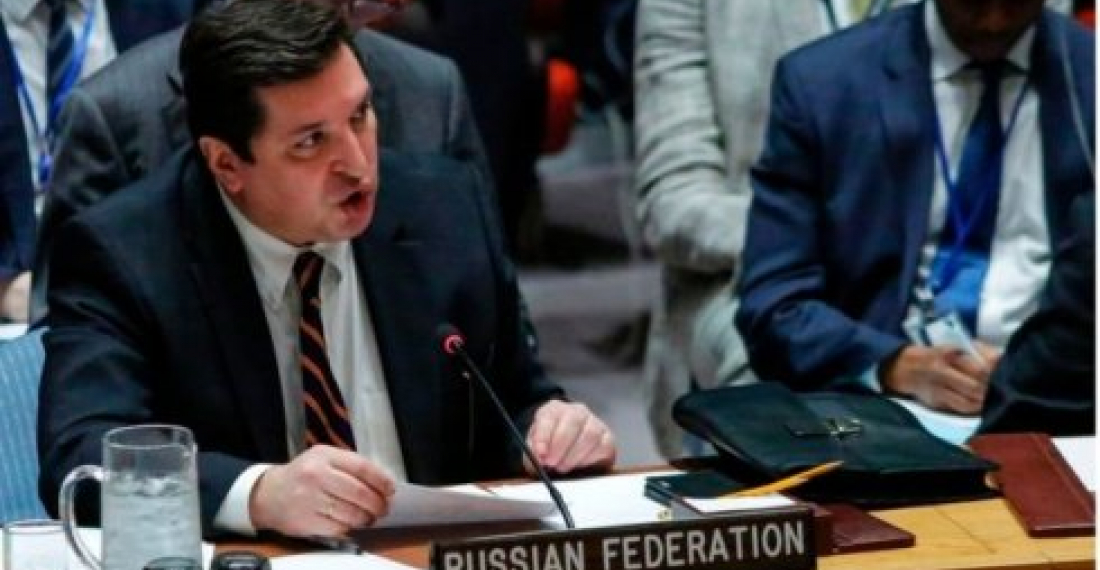
The US airstrikes on Syria last week, whilst it was under the protection of the Kremlin, has left Russia's President Putin humiliated and licking his wounds. One had only to listen to the rantings of Russia's representative at an animated United Nations Security Council meeting on Friday (7 April) to understand the extent to which Russia felt humiliated. "Stop insulting Russia", warned Vladimir Sofronkov, The thinly veiled warnings aired in that meeting, and subsequently by other senior Russian officials, need to be taken seriously. The rhetoric increased rather than deflated during the visit of US Secretary of State Rex Tillerson in Moscow over the last days.

Given the current frame of mind of the Russian leadership, and Putin's own obsession with his macho image, it is likely that the Kremlin will respond quickly to the new situation with its own "shock and awe" move. This move may however not be in Syria.

Russia's political and military capacity, and space for manoeuvre, in Syria are limited. Putin may therefore opt for a response closer to home, in places where Russian assets remain plentiful, and where the Russian military remain stronger than their competitors. Ukraine and Georgia, already victims of Russian aggression in the last decade are two obvious places for the next round of Russian adventurism. Neither is a member of NATO, so unlike the Baltic states they are not guaranteed the protection of the United States and its allies.

In Ukraine Russia can escalate tension at any time through its current posture in Eastern Ukraine. If Russia's full diplomatic recognition of the separatist regions of Donetsk and Lugansk was until now a possibility, events in the last days have made it a probability. Recognition will immediately lead to a military escalation, but the proximity to Russia makes it much easier for Putin to support his allies here than in Syria.

In Georgia too, Russia maintains military superiority. With Turkey in political turmoil, and given NATO's limited capacity for action in the Black Sea, even if it wants to,  Georgia remains exposed to Russian threats. So far these have been political - rumblings about a possible outright annexation of South Ossetia, fuelled by recent political developments in that territory; and Russian threats to withdraw from the Geneva Process that since 2008 has sought to keep Russia within the boundaries of diplomatic rules when it comes to Georgia.  

In both scenarios further Russian land-grab cannot be excluded.

Over the next days Putin will weigh the risk of doing that, and worsening further his relations with the west, against the risk of not doing anything after Syria, and the harm that may do to his reputation as a tough kid on the block who will not be pushed around

It is only by making it clear that the cost of more adventurism is going to be high, very high, can western countries prevent Ukraine and Georgia from becoming yet again victims of their neighbours imperial appetite.

This commentary was prepared by the political editor of commonspace.eu.

Photo: Vladimir Sofronkov, Russia's Acting Permanent Representative to the UN, addressing the United Nations Security Council on 7 April 2017.
Related articles

Editor's choice
News
Council of Europe launches new International Claims Commission for Ukraine

Council of Europe launches new International Claims Commission for Ukraine

Thirty-four countries and the European Union have signed a new convention establishing an International Claims Commission for Ukraine at a diplomatic conference co-hosted by the 46-nation Council of Europe and the Netherlands in the Hague. The diplomatic conference was attended by leaders and high-level representatives from over 50 states, including the President of Ukraine, Volodymyr Zelenskyy, the President of the Republic of Moldova, Maia Sandu, and the Prime Minister of the Netherlands, Dick Schoof.  “Today marks a major step forward in ensuring accountability for Ukraine. The International Claims Commission represents justice and hope for tens of thousands of victims—our determination that those who have suffered will not be forgotten. I call for quick ratifications so we can get the commission rapidly up and running for the people of Ukraine,” said Council of Europe Secretary General Alain Berset. Ukrainian President Volodymyr Zelenskyy said: “We expect that every mechanism for compensation from the Register of Damage and Claims Commission to the actual payments – will start working and receive strong and sufficient international support, so that people can truly feel that any kind of damage caused by the war can be compensated. This war, and Russia’s responsibility for it, MUST become a clear example – so that others learn not to choose aggression.” “Accountability is about creating the conditions for peace that endures. And therefore, accountability is a condition of security – today and for the future. But accountability is not only about Ukraine. And it is not only about one aggressor and one victim. Accountability is about Europe. About every country in Europe. It is about whether Europe, as a whole, is willing to defend its peace,” said Maia Sandu, President of the Republic of Moldova, which currently holds the Presidency of the Council of Europe’s Committee of Ministers. The Prime Minister of the Netherlands, Dick Schoof, said: “Every day Russia is deliberately bombarding homes, destroying businesses and damaging infrastructure in Ukraine. Russia must compensate Ukraine for the damage caused. That is why we have launched the International Claims Commission for Ukraine and we are honoured to host it.” The International Claims Commission will be the second part of a comprehensive compensation mechanism related to Russia’s war of aggression, building on the existing Register of Damage for Ukraine. The claims commission will be established within the framework of the Council of Europe and will also be open to other countries. The Register of Damage for Ukraine, created in 2023, collects and records compensation claims submitted by individuals, organisations and public bodies in Ukraine. Forty-four states and the European Union have so far joined the Register, which has already received 86,000 claims. The International Claims Commission will review, assess and decide upon claims submitted to the Register of Damage for Ukraine and determine the amount of compensation, if any, which is due in each case. The convention establishing the commission will enter into force once it has been ratified by 25 signatories, as long as sufficient funds have been secured to support its initial work.

Popular

Editor's choice
News
Council of Europe launches new International Claims Commission for Ukraine

Council of Europe launches new International Claims Commission for Ukraine

Thirty-four countries and the European Union have signed a new convention establishing an International Claims Commission for Ukraine at a diplomatic conference co-hosted by the 46-nation Council of Europe and the Netherlands in the Hague. The diplomatic conference was attended by leaders and high-level representatives from over 50 states, including the President of Ukraine, Volodymyr Zelenskyy, the President of the Republic of Moldova, Maia Sandu, and the Prime Minister of the Netherlands, Dick Schoof.  “Today marks a major step forward in ensuring accountability for Ukraine. The International Claims Commission represents justice and hope for tens of thousands of victims—our determination that those who have suffered will not be forgotten. I call for quick ratifications so we can get the commission rapidly up and running for the people of Ukraine,” said Council of Europe Secretary General Alain Berset. Ukrainian President Volodymyr Zelenskyy said: “We expect that every mechanism for compensation from the Register of Damage and Claims Commission to the actual payments – will start working and receive strong and sufficient international support, so that people can truly feel that any kind of damage caused by the war can be compensated. This war, and Russia’s responsibility for it, MUST become a clear example – so that others learn not to choose aggression.” “Accountability is about creating the conditions for peace that endures. And therefore, accountability is a condition of security – today and for the future. But accountability is not only about Ukraine. And it is not only about one aggressor and one victim. Accountability is about Europe. About every country in Europe. It is about whether Europe, as a whole, is willing to defend its peace,” said Maia Sandu, President of the Republic of Moldova, which currently holds the Presidency of the Council of Europe’s Committee of Ministers. The Prime Minister of the Netherlands, Dick Schoof, said: “Every day Russia is deliberately bombarding homes, destroying businesses and damaging infrastructure in Ukraine. Russia must compensate Ukraine for the damage caused. That is why we have launched the International Claims Commission for Ukraine and we are honoured to host it.” The International Claims Commission will be the second part of a comprehensive compensation mechanism related to Russia’s war of aggression, building on the existing Register of Damage for Ukraine. The claims commission will be established within the framework of the Council of Europe and will also be open to other countries. The Register of Damage for Ukraine, created in 2023, collects and records compensation claims submitted by individuals, organisations and public bodies in Ukraine. Forty-four states and the European Union have so far joined the Register, which has already received 86,000 claims. The International Claims Commission will review, assess and decide upon claims submitted to the Register of Damage for Ukraine and determine the amount of compensation, if any, which is due in each case. The convention establishing the commission will enter into force once it has been ratified by 25 signatories, as long as sufficient funds have been secured to support its initial work.