


Azerbaijan’s Parallel worlds. Part 1: The Successes. LINKS Analysis, looks at the achievements of Azerbaijan in the last decade.

LINKS analysis, looks at the achievements of Azerbaijan in the last decade and what the Azerbaijan government would like foreigners to see when they visit the country.  

The Eurovision Song Festival is in in full swing in Baku, and thousands of journalists, musicians and fans are in the Azerbaijani capital for the occasion. Most of them would not have heard that there existed a country called Azerbaijan until recently, let alone that they would visit it.

When it became known last year that Azerbaijan had won the Eurovision festival, and that it would host the 2012 event, the Azerbaijani government immediately made it clear that it would use the occasion to show-case the new Azerbaijan to the world. It was too good an opportunity to be missed, with tens of millions of viewers throughout the world. And there was indeed a lot to show.

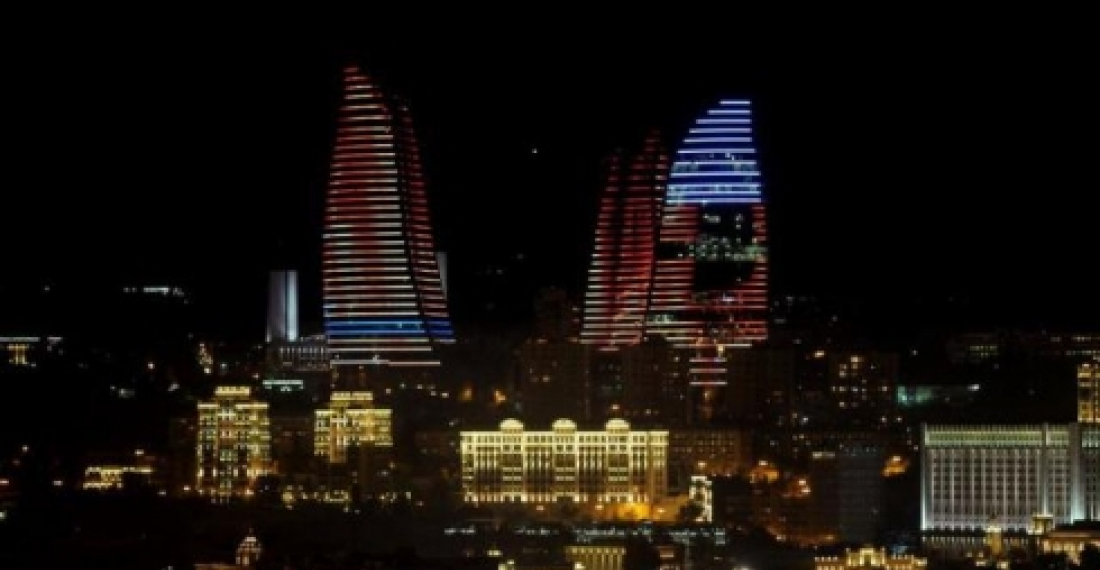
Thanks to the oil wealth of recent years Azerbaijan has been going through a period of transformation. On the surface this reflects itself through the changing Baku skyline. Soviet Baku was a functional, rather than a pretty city, and the Azerbaijani government set out to change this. Dozens of iconic buildings sprang up throughout the capital. New cultural facilities have been mushrooming over the last years, and hundreds of old residential buildings have been spruced up. The architectural feel of the city has changed. Yet this outside change is only part of the story.

Azerbaijanis have been changing too. In Soviet times Azerbaijan was generally considered backward. The Communist leadership of the Azerbaijani SSR had to struggle with Moscow to secure places for Azerbaijani students at top Soviet Universities through a quota system rather than on qualification. The first years after independence were years of political turbulence, culminating in a massive defeat in the war with Armenians which resulted in the loss of large chunks of territory. Tens of thousands of displaced people descended on Baku and other towns adding to the misery of people.

Tackling these issues has been the main challenge that the government of Azerbaijan, headed first by Heidar Aliev, and afterwards by his son Ilham, set for itself.

The government had one big advantage: the revenue from oil. Managing the oil sector was therefore the first objective. An agreement with Western companies and countries, known as the “deal of the century”, secured a smooth production process. The construction of the Baku-Tbilisi-Ceyhan pipeline ensured the transportation of oil to European markets, bypassing the Russian bottle neck. Revenues started flowing in, first in small amounts, but in the last five years in billions.

From being the country of losers and refugees the government sought to turn Azerbaijan into a country of winners. A new sense of confidence was encouraged.

This reflected itself in foreign policy, where the government became much more assertive on the international arena. The message to Turkey, the US, Russia, Iran and others in the last years was not to take Azerbaijan fore-granted. Friendship was reciprocal and Azerbaijan expected to get as much as it would give. The election of Azerbaijan to the UN Security Council at the end of 2011 was seen as the culmination of this successful policy.

On the domestic front the government moved to rehouse refugees, to start building the non-oil sector of the economy, to invest heavily in defence spending and to implement a cadre policy aimed at preparing a new generation of Azerbaijanis technocrats. Hundreds of young Azerbaijanis were sent to study overseas, and specialised institutions, such as the Azerbaijan Diplomatic Academy were established.

Success was also sought in the fields of sports and culture. Sports facilities were brought up to world standard and various international events were held in Baku. Azerbaijani started winning gold medals in competitions.  The Eurovision victory symbolised yet another benchmark reached.

The government of Azerbaijan feels that it has achieved the objectives that it set out to achieve. The country’s statehood is secured, the country is on the road to development and it is now a respected international player.

Tomorrow, in part 2: The failures.

Source: This is the first of a three part special report prepared exclusively for commonspace.eu by LINKS analysis ©


Related articles

Editor's choice
News
Borrell tells the European Parliament that the situation in Afghanistan was critical, but the EU will remain engaged

Borrell tells the European Parliament that the situation in Afghanistan was critical, but the EU will remain engaged

Borrell underlined that the European Union will make every effort to support the peace process and to remain a committed partner to the Afghan people. "Of course, we will have to take into account the evolving situation, but disengagement is not an option.  We are clear on that: there is no alternative to a negotiated political settlement, through inclusive peace talks.
Editor's choice
News
NATO Chief says war is on Europe's doorstep, and warns against complacency

NATO Chief says war is on Europe's doorstep, and warns against complacency

Russia could attack a Nato country within the next five years, the Secretary General of NATO, Mark Rutte, said in a stark new warning. "Nato's own defences can hold for now," Rutte warned in Berlin, but conflict was "next door" to Europe and he feared "too many are quietly complacent, and too many don't feel the urgency, too many believe that time is on our side. "Russia is already escalating its covert campaign against our societies," Rutte said in a speech in Germany. "We must be prepared for the scale of war our grandparents or great-grandparents endured." Earlier this month, Russia's President Vladimir Putin said his country was not planning to go to war with Europe, but it was ready "right now" if Europe wanted to - or started a war. But similar reassurances were given by Moscow in 2022, just before 200,000 Russian troops crossed the border and invaded Ukraine. Putin has accused European countries of hindering US efforts to bring peace in Ukraine - a reference to the role Ukraine's European allies have recently played in trying to change a US peace plan to end the war, whose initial draft was seen as favouring Russia. But Putin was not sincere, Nato's secretary-general said in the German capital, Berlin. Supporting Ukraine, he added, was a guarantee for European security. "Just imagine if Putin got his way; Ukraine under the boot of Russian occupation, his forces pressing against a longer border with Nato, and the significantly increased risk of an armed attack against us." Russia's economy has been on a war footing for more than three years now - its factories churn out ever more supplies of drones, missiles and artillery shells. According to a recent report by the Kiel Institute for the World Economy, Russia has been producing each month around 150 tanks, 550 infantry fighting vehicles, 120 Lancet drones and more than 50 artillery pieces. The UK, and most of its Western allies, are simply not anywhere near this point. Analysts say it would take years for Western Europe's factories to come close to matching Russia's mass-production of weapons. "Allied defence spending and production must rise rapidly, our armed forces must have what they need to keep us safe," the Nato chief said.

Popular

Editor's choice
News
NATO Chief says war is on Europe's doorstep, and warns against complacency

NATO Chief says war is on Europe's doorstep, and warns against complacency

Russia could attack a Nato country within the next five years, the Secretary General of NATO, Mark Rutte, said in a stark new warning. "Nato's own defences can hold for now," Rutte warned in Berlin, but conflict was "next door" to Europe and he feared "too many are quietly complacent, and too many don't feel the urgency, too many believe that time is on our side. "Russia is already escalating its covert campaign against our societies," Rutte said in a speech in Germany. "We must be prepared for the scale of war our grandparents or great-grandparents endured." Earlier this month, Russia's President Vladimir Putin said his country was not planning to go to war with Europe, but it was ready "right now" if Europe wanted to - or started a war. But similar reassurances were given by Moscow in 2022, just before 200,000 Russian troops crossed the border and invaded Ukraine. Putin has accused European countries of hindering US efforts to bring peace in Ukraine - a reference to the role Ukraine's European allies have recently played in trying to change a US peace plan to end the war, whose initial draft was seen as favouring Russia. But Putin was not sincere, Nato's secretary-general said in the German capital, Berlin. Supporting Ukraine, he added, was a guarantee for European security. "Just imagine if Putin got his way; Ukraine under the boot of Russian occupation, his forces pressing against a longer border with Nato, and the significantly increased risk of an armed attack against us." Russia's economy has been on a war footing for more than three years now - its factories churn out ever more supplies of drones, missiles and artillery shells. According to a recent report by the Kiel Institute for the World Economy, Russia has been producing each month around 150 tanks, 550 infantry fighting vehicles, 120 Lancet drones and more than 50 artillery pieces. The UK, and most of its Western allies, are simply not anywhere near this point. Analysts say it would take years for Western Europe's factories to come close to matching Russia's mass-production of weapons. "Allied defence spending and production must rise rapidly, our armed forces must have what they need to keep us safe," the Nato chief said.

