


Azerbaijani public diplomacy activists opt for transparency as best defence. Official Baku says that public diplomacy is wrong, but civil society activists in Azerbaijan and worldwide are not impressed.

Azerbaijani civil society activists that are, or have been involved in public diplomacy projects together with counterparts from Armenia, are increasingly opting for tansparency as the best means of defending themselves against accusations of treason levelled at them by official sources.

In recent years the Government of Azerbaijan was tolerant, even if discouraging, to initiatives where Armenians and Azerbaijanis met in an effort to open a dialogue between societies and establish a much needed mood of confidence that is considered necessary for a solution to the decades long Karabakh conflict. Meetings of this nature have been organised in dozens of countries, and much more rarely in Armenia and Azerbaijan as well. They have involved civil society leaders, journalists and professionals, and on ocassions also politicians and members of parliament.

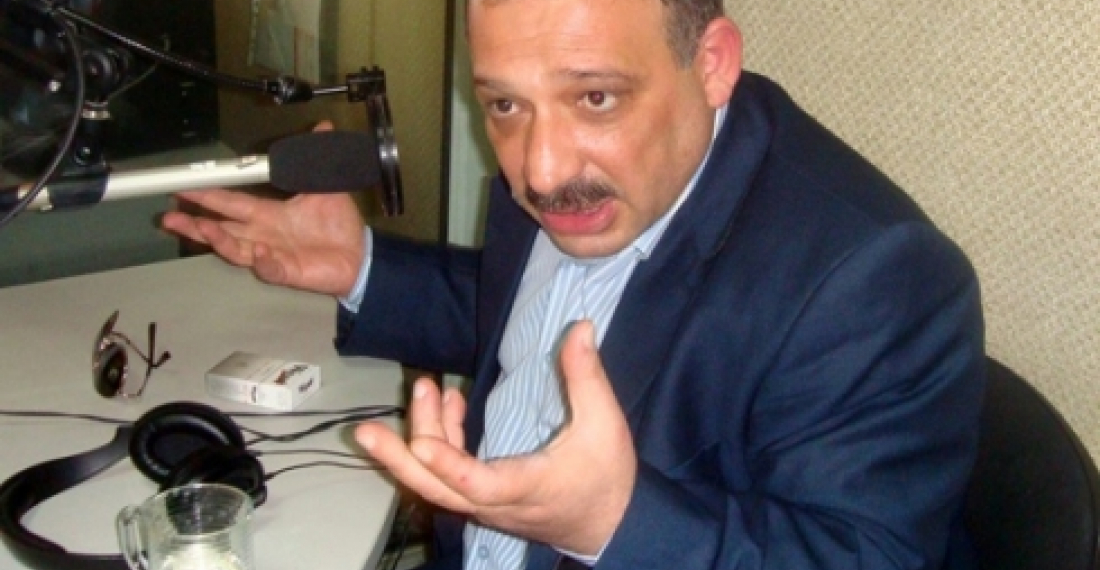
The Baku authorities have however recently taken a much more negative view of these sort of meetings and contacts. In recent weeks the negative rhetoric increased considerably, especially after the arrest of journalist Rauf Mirkadirov who has been accused of working for Armenian intelligence after his participation in a public diplomacy event in Yerevan.

Commenting on his arrest the Chairman of the Azerbaijani Parliament's Committee on Legal Policy and State Building, Ali Huseynli, told the Azerbaijani News Agency APA that "The fact that some lawyers and human rights activists are trying to explain the activity of journalist Rauf Mirkadirov, who was arrested over treason, as "people's diplomacy" is wrong. The public should know that the negotiations on the Armenia-Azerbaijan conflict over Nagorno-Karabakh are conducted by officials." Huseynli noted that in accordance with law the negotiations on the Nagorno-Karabakh settlement are conducted at the level of presidents and foreign ministers: "Only in exceptional cases, Azerbaijani parliamentarians can pay mutual visits within the framework of international organizations." Husseynli added that "projects implemented by the West and the United States under the guise of 'people's policy' are not only pointless, but also dangerous. Our public should know it. "People's diplomacy is possible only after the occupied territories of Azerbaijan are liberated, a peace treaty is signed and Armenia officially apologizes for the crimes it committed in Azerbaijan, including the Khojaly genocide. Only once, after the statements issued by Russian President Dmitry Medvedev and Azerbaijani President Ilham Aliyev, a group of Azerbaijani intellectuals visited Armenia with the support of Moscow. But it did not continue, because Azerbaijan-Armenia talks stopped again after a certain period."

Husseynli insisted that the contacts of journalists, representatives of NGOs and other civil societies under the pretence of "people's diplomacy" cannot be effective: "On the contrary, the incident on Rauf Mirkadirov showed that it is dangerous, Armenian special service took advantage of this opportunity. The visits and meetings of representatives of NGOs and other civil societies, individuals, journalists under the guise of "people's diplomacy" served the interests of Armenian special services. Perhaps, it happened without their knowledge. Huseynli said that "people's diplomacy" can only be done by persons who received a mandate from the people.

Civil society activists both in Azerbaijan and outside are not impressed, and there has been heavy criticism of the Azerbaijan government over the arrest of Mirkadirov, and a few days later the detention of Leyla and Arif Yunus as they were about to board a plane at Baku airport. Political observers have noted that given the great harm that is being done to Azerbaijan's image every time such incidents happen, it makes one wonder what the real motives are behind this new policy.

In the meantime Azerbaijani activists have concluded that the best defence against such accusations is transparency.  One such person is Zardush Alizadeh, who in the last days informed the media of his public diplomacy activity in  the past, the present and the future. Alizadeh told APA that neither the Constitution of Azerbaijan nor any other laws,  forbid "public diplomacy". He also noted that he had played an active role in public diplomacy since 1989 and that he had regularly been attending events in Russia, Georgia, and Armenia. Alizadeh said that he and others who participate in public diplomacy meetings do not have state secrets. He said that the aim of Azerbaijani participants in such meetings is to encourage Karabakhi Armenians to live together in peace. 

source: commonspace.eu with APA and other news agencies.

Photo: Rauf Mirkadirov (picture courtesy of RFE/RL.org)

Related articles

Editor's choice
News
Borrell tells the European Parliament that the situation in Afghanistan was critical, but the EU will remain engaged

Borrell tells the European Parliament that the situation in Afghanistan was critical, but the EU will remain engaged

Borrell underlined that the European Union will make every effort to support the peace process and to remain a committed partner to the Afghan people. "Of course, we will have to take into account the evolving situation, but disengagement is not an option.  We are clear on that: there is no alternative to a negotiated political settlement, through inclusive peace talks.
Editor's choice
News
Germany accuses Russia of cyberattacks and disinformation campaign

Germany accuses Russia of cyberattacks and disinformation campaign

The German government holds Russia responsible for a cyberattack on German air traffic control, and for targeted disinformation campaigns before the last federal election. According to the German Foreign Office in Berlin, the incidents could be clearly attributed to the Russian military intelligence service, the GRU. In response, the Russian ambassador to Berlin was summoned to the Foreign Ministry. "We have been observing a massive increase in threatening hybrid activities by Russia for some time now," a spokesperson for the Foreign Ministry stated. These range from disinformation campaigns and espionage to cyberattacks and sabotage attempts. The aim is to divide society, sow distrust, and undermine confidence in democratic institutions. The spokesperson added that with these actions, Russia is "very concretely threatening our security, not only through its war of aggression against Ukraine, but also here in Germany."  The Foreign Ministry spokesperson explained that the cyberattack on air traffic control in August 2024 was clearly attributed to the hacker collective "APT28," known as "Fancy Bear," and to the responsibility of the Russian military intelligence service, the GRU. Furthermore, it could now be "conclusively stated" that Russia had attempted "to influence and destabilize both the last Federal election and the ongoing internal affairs of the Federal Republic of Germany." There was "absolutely irrefutable evidence" for this". The so-called "Storm 1516" campaign, which has been running since 2024, is allegedly backed by "reliable information" that the Moscow-based think tank "Center for Geopolitical Expertise" is behind it. The Center is also said to be supported by Russian military intelligence. Its primary aim is to influence democratic elections in the West. (Click the image to read more).

Popular

Editor's choice
News
Germany accuses Russia of cyberattacks and disinformation campaign

Germany accuses Russia of cyberattacks and disinformation campaign

The German government holds Russia responsible for a cyberattack on German air traffic control, and for targeted disinformation campaigns before the last federal election. According to the German Foreign Office in Berlin, the incidents could be clearly attributed to the Russian military intelligence service, the GRU. In response, the Russian ambassador to Berlin was summoned to the Foreign Ministry. "We have been observing a massive increase in threatening hybrid activities by Russia for some time now," a spokesperson for the Foreign Ministry stated. These range from disinformation campaigns and espionage to cyberattacks and sabotage attempts. The aim is to divide society, sow distrust, and undermine confidence in democratic institutions. The spokesperson added that with these actions, Russia is "very concretely threatening our security, not only through its war of aggression against Ukraine, but also here in Germany."  The Foreign Ministry spokesperson explained that the cyberattack on air traffic control in August 2024 was clearly attributed to the hacker collective "APT28," known as "Fancy Bear," and to the responsibility of the Russian military intelligence service, the GRU. Furthermore, it could now be "conclusively stated" that Russia had attempted "to influence and destabilize both the last Federal election and the ongoing internal affairs of the Federal Republic of Germany." There was "absolutely irrefutable evidence" for this". The so-called "Storm 1516" campaign, which has been running since 2024, is allegedly backed by "reliable information" that the Moscow-based think tank "Center for Geopolitical Expertise" is behind it. The Center is also said to be supported by Russian military intelligence. Its primary aim is to influence democratic elections in the West. (Click the image to read more).


