Voting took place on Sunday (22 November) in presidential and parliamentary elections in Burkina Faso, a landlocked country in the Sahel Region of Africa. The elections were overshadowed by violence from an Islamist insurgency. President Kabore is expected to win reelection, while opposition candidates have warned of "massive electoral fraud." Official results are not expected for some days.
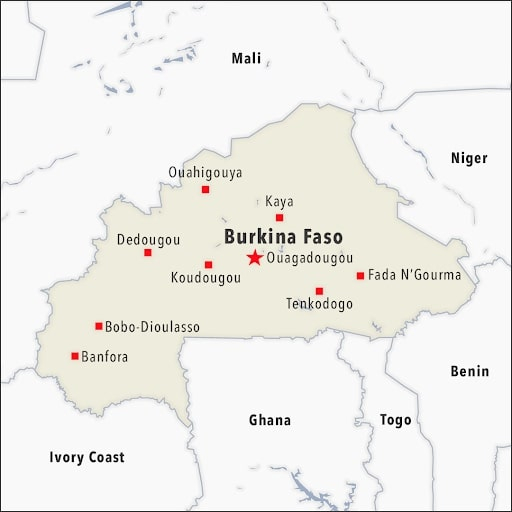
Voting was not possible in the “three borders” area with Niger and Mali since terrorist groups control the area and have issued threats. Those unable to vote in the northern areas account for around 7% or 400,000 of the electorate. The northern border areas are some of the worst-hit by insurgents’ presence and attacks, a major spillover of the wider Sahelian insurgency that reached its peak in Burkina Faso during the last two years.
In Burkina Faso, groups such as Jama’at Nasr al-Islam wal Muslimin (JNIM) who pledges allegiance to Al-Qaeda, and the Islamic State in the Greater Sahara (ISGS) who pledges to the Islamic state have escalated their attacks since 2015. This month, ahead of elections, a driver for an MP was killed and a road ambush killed more than a dozen people. The stakes for the incumbent president, Roch Kabore, in the election are high. Kabore has ruled since 2015 and his term saw some improvements yet the unfinished task was tackling the terrorist insurgency. A total of 13 candidates contend for the presidency in two rounds.
The electoral process itself on election day was a challenging task. There seemed to be fewer ballots than needed, and crowds lined up before sunrise. All stages of voting, counting and checking were accompanied by an armed escort.
Polling stations like this one in Ouagadougou are heavily guarded to protect voters. People in #BurkinaFaso elect both a President and members of the parliament. However violence limits access to polling stations in nearly half of 13 regions. @dwnews @dw_francais #BurkinaVote2020 pic.twitter.com/oiTB875mZ2
— Fanny Facsar (@FannyFacsar) November 22, 2020
The challenge of violence also coincides with a local democratic and political challenge. The opposition was warned against tampering with results and threatened to deny the results. President Kabore’s party (People’s Movement for Progress) said that the opposition failed to unite its forces and there is no reason for tampering with the results. Any mistakes in the democratic process can give the terrorist insurgents a fair chance to act against the government.
On Sunday, the elections proceeded in a smooth manner yet the threat does not end.
Burkina Faso is a landlocked country in West Africa bordering Mali to the north and west, Ghana/Togo/Benin to the South and Niger to the East. The North of Burkina Faso is part of the Sahel. Burkina Faso was ruled by Blaise Compaore for 27 years until an uprising in 2015 ended his presidency which was characterised by lack of freedom of expression and worsening living conditions. The democratic goals of the uprising are still a priority for many Burkenese yet the government failed to deliver on all promises. Some analysts describe the political void created in 2015 as the main reason for the spillover of the Sahel insurgency into Burkina Faso, Some Africa experts, say that the Burkenese government had no preparation or understanding on dealing with complex security challenges, unlike other Sahelian government who have faced the problem for longer.
Fighting insurgency is, however, not only Burkinese’ problem says Saidou Maïga, mayor of the rural Burkinabè commune of Falagountou near the border with Niger.
This is not a question that Burkina Faso alone can answer. As long as together (with Niger and Mali, editor's note) we do not control these three borders, it will not work.
Many of the insurgents are from the local areas and they are more familiar with the local terrain. A coalition of foreign and local forces (G-5 Sahel, the French Force Barkhane and the European Force Takuba), are trying to restore order. Unfortunately, many who join local counterinsurgency forces are there for the salaries and not to serve national agenda.
Burkina Faso is a mining-rich agricultural country which was once an important tourist destination in Africa since it gained independence in 1960. Much like its Sahelian neighbours, the recent waves of terrorist attacks and political tensions in the past 5 years have taken their social and economic toll on the population. It has a very young population, with the average age being 17.6 years,
Despite everything, young Burkinese look optimistically to the second democratic elections in the country in about half a century. Despite the social tensions that the insurgency has caused in the past five years, more young people want to become an effective part of the country’s future.
The EU has allocated €200 million for humanitarian aid in Burkina Faso since 2007 and the EU is actively involved in the anti Islamist insurgency in the wider Sahel Region.
source: Noman Ahmed is Research Associate at LINKS Europe focusing on conflicts in Europe's Neighbourhood South.
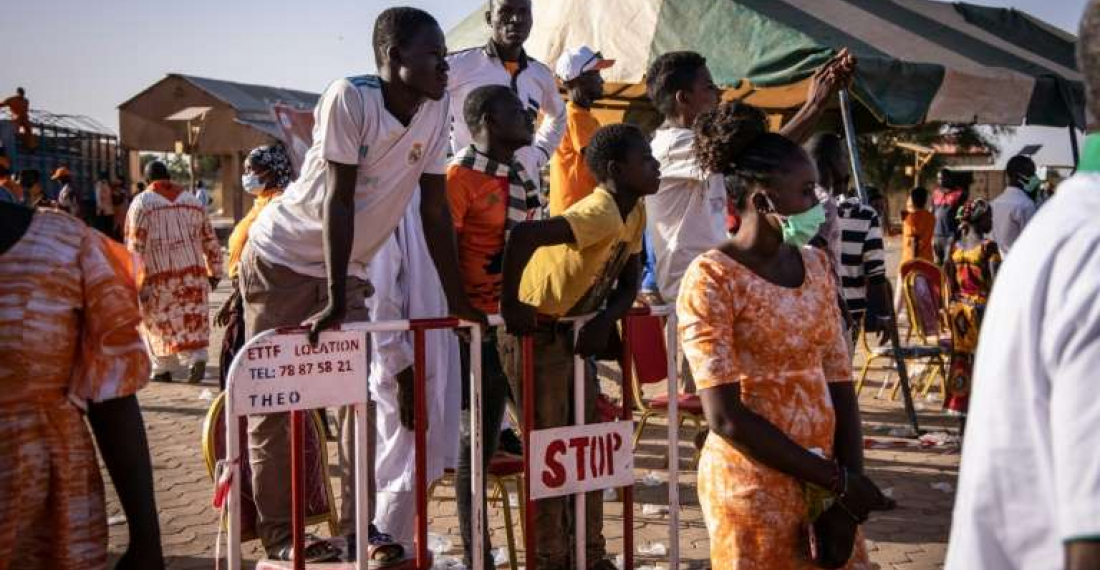
Photo: A group of people wait for an electoral rally for President-candidate Roch Marc Christian Kaboré on November 10, 2020 in Dori, in northern Burkina Faso (OLYMPIA DE MAISMONT).